Khaberni - Ankle sprains are among the most common injuries across all age groups, whether they regularly engage in sports or perform normal daily activities. The Family Health Care Institute (one of the King Hussein Foundation institutes) provides essential information in the following article about the causes, symptoms, diagnosis, and treatment of ankle sprains, as well as first aid for such injuries, the complications of neglecting them, and necessary preventive measures.
This injury occurs due to a sudden twist or abnormal movement of the ankle joint causing the ligaments that connect the bones together, maintaining the joint’s stability, to stretch or tear. Although many consider an ankle sprain a minor injury, neglecting its treatment or an early return to physical activity can lead to long-term complications that affect movement and quality of life.
What is an Ankle Sprain?
The ankle is the joint that connects the leg to the foot and depends on a set of strong ligaments that prevent excessive joint movement. Sprains occur when these ligaments are excessively stretched or torn due to sudden movement, a fall, or incorrectly placing the foot.
Most sprains occur when the foot suddenly turns inward, causing injury to the ligaments on the outer side of the ankle. The severity of the injury can range from a mild stretch to a complete tear in severe cases.
Causes of Ankle Sprains:
An ankle sprain can occur in many everyday and sports situations, with prominent causes including:
- Walking or running on uneven surfaces.
- Landing incorrectly after a jump.
- Changing direction abruptly while moving.
- Wearing inappropriate or high-heeled shoes.
- Weak leg and foot muscles.
- Having a previous untreated ankle injury.
- Losing balance or tripping while walking.
Certain factors also increase the likelihood of an injury, such as obesity, poor physical fitness, and lack of balance and strengthening exercises.
Symptoms of Ankle Sprains:
Symptoms vary depending on the degree of injury, but the most common signs include:
- Sudden pain in the ankle area.
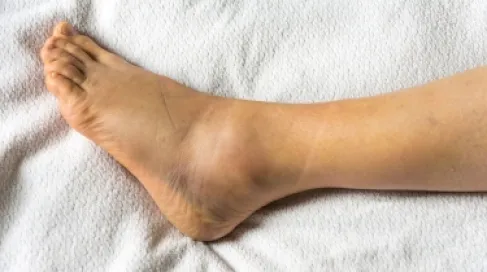
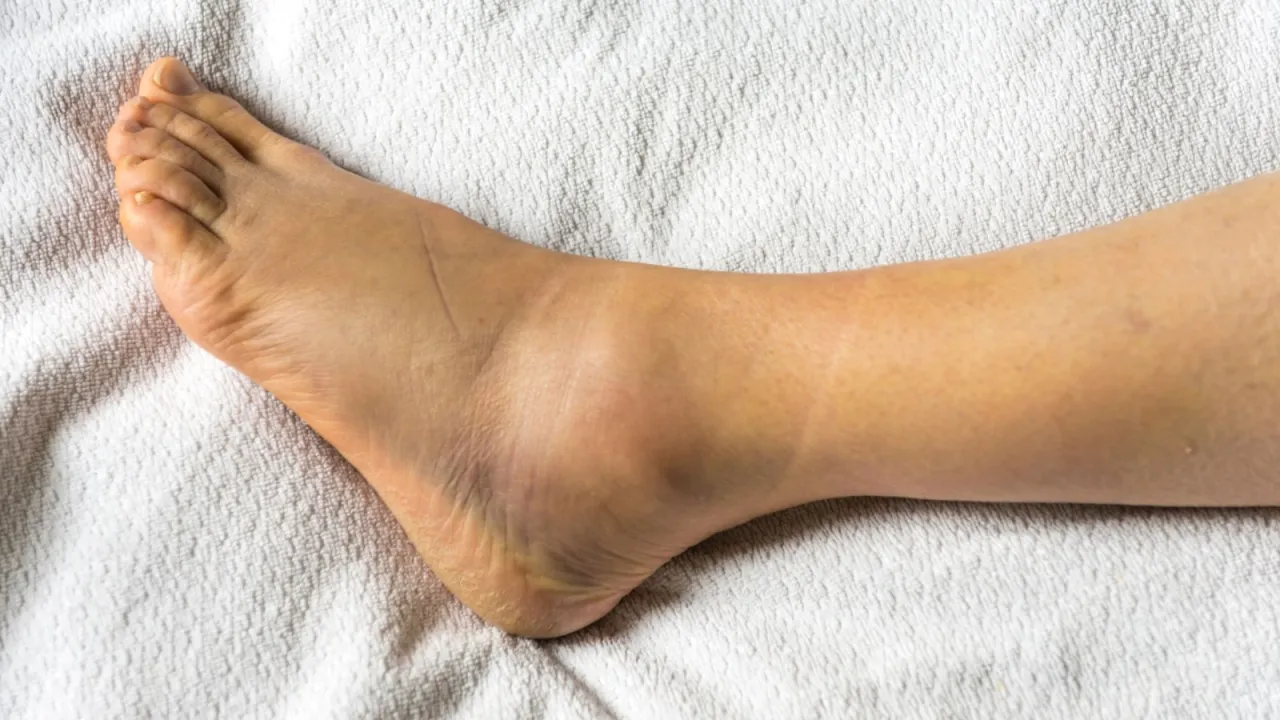
- Swelling and puffiness around the joint.
- Appearance of bruises or skin discoloration to blue or violet.
- Difficulty walking or bearing weight on the injured foot.
- Feeling of joint instability.
- Limited motion and pain when moving the foot.
In severe cases, the injured may hear a popping sound at the time of injury or be completely unable to stand on the injured foot.
Degrees of Ankle Sprains:
Doctors classify ankle sprains into three main grades:
- Grade I (Mild):
Involves mild stretching of the ligaments without obvious tearing. The injured person experiences mild pain and limited swelling, usually being able to walk with some discomfort.
- Grade II (Moderate):
Occurs due to a partial tear in the ligaments, and the pain and swelling are more pronounced, with difficulty in walking and moving the joint.
- Grade III (Severe):
Involves a complete tear in one or more ligaments, accompanied by severe pain, significant swelling, and joint instability. The injured may require specialized medical intervention and an intensive rehabilitation program.
Diagnosing the Injury:
Diagnosis depends on the medical history and clinical examination, where the doctor assesses the pain, swelling, joint movement, and stability. In some cases, additional tests may be requested such as:
- X-rays to rule out bone fractures.
- MRI scans to assess the ligaments and soft tissues.
- Ultrasound in some cases to evaluate the injured tissues.
Accurate diagnosis helps determine the appropriate treatment plan and speed up the recovery process.
First Aid:
Early intervention is important in reducing pain, swelling, and improving recovery chances. It is advised to follow these steps during the first hours of injury:
Rest:
Avoid activities that increase pain and refrain from bearing weight on the injured foot as much as possible.
Cooling:
Applying cold compresses or ice packs wrapped in a cloth to the injured area for 15 to 20 minutes every two or three hours during the first 48 hours is recommended.
Compression:
Using an elastic compression bandage can help reduce swelling, with care not to tighten it excessively.
Elevation:
It is preferable to elevate the foot above the level of the heart when sitting or lying down to help reduce swelling.
Medical Treatment:
Treatment depends on the severity of the injury, and therapeutic options include:
Conservative treatment:
In most mild and moderate cases, the treatment includes:
- Temporary rest.
- Pain relief and anti-inflammatory medications as needed.
- Use of ankle supports or braces.
- Physiotherapy and rehabilitation.
Physical therapy:
Physical therapy plays a key role in restoring ankle function and preventing re-injury. It includes:
- Exercises to improve range of motion.
- Strengthening exercises for the leg and foot muscles.
- Balance and stability exercises.
- Gradual training to return to normal activity.
Surgical intervention:
Surgery is considered rare and usually limited to severe cases involving complete ligament tears or chronic joint instability after conservative treatment has failed.
Complications of Neglecting Treatment:
Ignoring the injury or returning early to physical activity can lead to several complications, such as:
- Chronic ankle instability.
- Frequent recurrence of sprains.
- Muscle weakness around the joint.
- Chronic pain and difficulty in movement.
- Increased risk of joint arthritis in the future.
Therefore, it is important to adhere to the treatment and rehabilitation plan even in cases of mild sprains.
Preventing Ankle Sprains:
The risk of injury can be reduced by following a set of preventive measures, including:
- Performing warm-up exercises before physical activity.
- Regularly strengthening the leg and ankle muscles.
- Performing balance and coordination exercises.
- Wearing suitable footwear that provides good foot support.
- Avoiding walking or running on uneven surfaces as much as possible.
- Using an ankle brace if needed, especially for those who have previously been injured.
- Gradually returning to activity after an injury and not rushing to resume exercises.
When Should You Visit a Doctor?
Medical care should be sought in the following situations:
- Inability to walk or stand on the injured foot.
- Visible deformation of the joint.
- Severe pain or increasing swelling.
- Symptoms persisting for more than a few days without improvement.
- Frequent feelings of ankle instability.
- Suspected fractures or other accompanying injuries.