Khaberni - Many people notice that when they were children, summer vacations seemed very long, and days passed relatively slowly, while today they feel that weeks and months pass very quickly, and this feeling may recur as they age until it seems that the years themselves have become shorter than they were in the past.
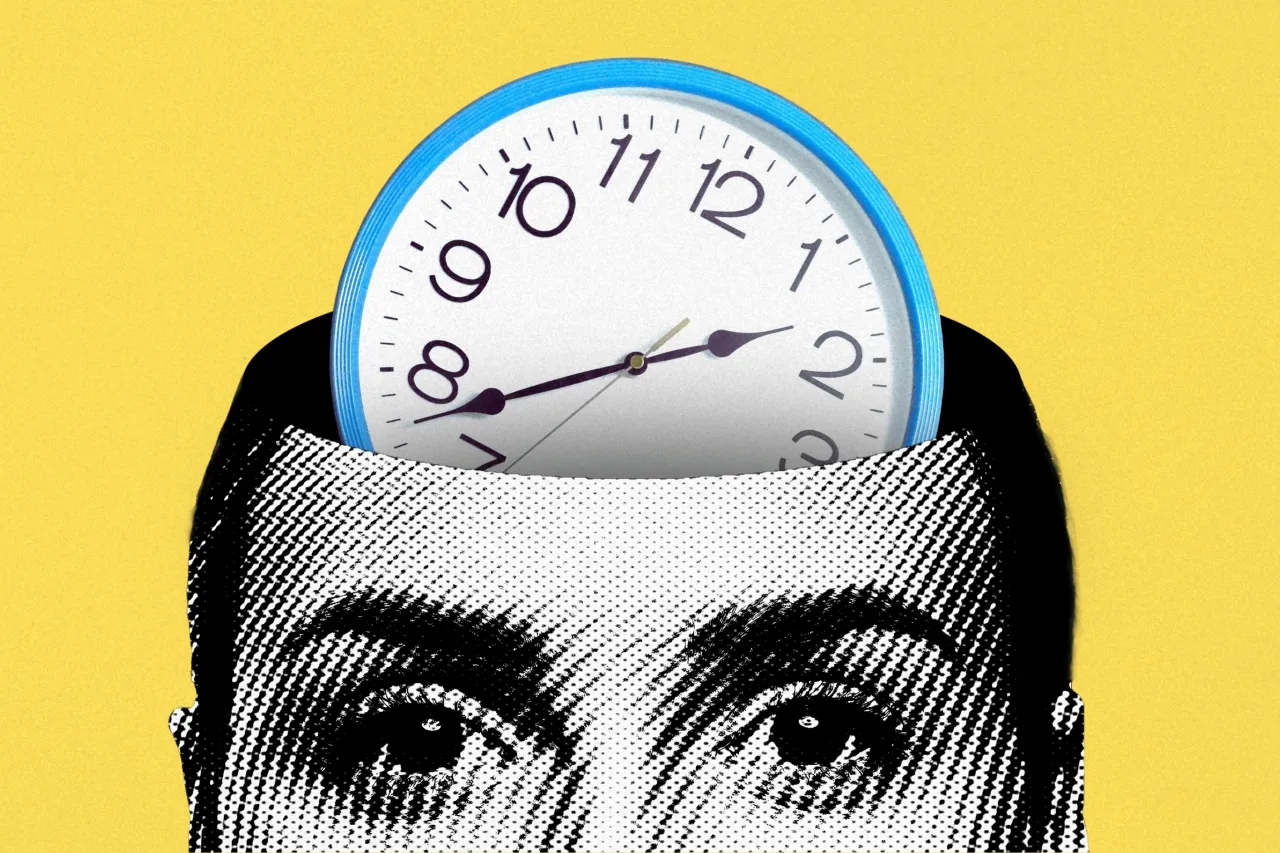
Although time passes at the same speed for everyone from a scientific standpoint, the way the brain perceives the passage of time differs from one age stage to another. For this reason, many believe that time has become faster as they get older.
Does time actually pass faster?
Physically, the rate at which time passes does not change with age, as a minute remains sixty seconds whether the person is ten years old or sixty years old.
But what changes is the mental sensation of time. Since the brain does not measure time the way clocks do, but relies on how events, memories, and everyday experiences are processed, making some periods seem long and others short.
Years become a smaller ratio of life
One popular theory to explain this phenomenon relies on the concept of ratio.
When a child is ten years old, one year represents about 10% of their entire life, so it seems like a long and eventful period. However, when a person turns fifty, one year represents only 2% of their age.
Because of this relative difference, the passing years may seem faster with age, even if time itself hasn't changed.
Daily routine plays a significant role
In childhood and early youth, a person goes through many new experiences constantly. There are new schools, new friends, hobbies, and different experiences that make the days full of details.
As one ages, however, routines may become more stable, where the same activities are repeated day after day. When days are similar, the brain tends to store fewer distinctive details about them.
As a result, a month or year may seem to have passed quicker than expected.
The relationship between memories and the perception of time
1. Our sense of the passage of time largely depends on the number of memories we create over a specific period.
2. When we experience new and diverse experiences, the brain records more details, making us later feel that that period was long and rich with events.
3. However, periods where days are very similar may leave fewer distinctive memories, and therefore seem shorter when looked back upon.
Why do trips and vacations seem longer?
Some might notice that traveling to a new place or undergoing a different experience makes time seem slower when remembering it later.
This is because the brain is more attentive to new details such as:
• Unfamiliar places.
• New people.
• Different activities.
• Non-routine situations.
All these elements create a larger number of memories, giving the sense that the period was longer and more filled with events.
Life pressures and responsibilities
As one ages, responsibilities associated with work, family, and daily commitments increase, making many people focus on completing tasks more than noticing the details of the days.
When a person is constantly busy, they may feel that time slips away quickly between meetings, appointments, and various commitments, until they are surprised that the week or month has ended without feeling it.
The impact of technology on the sense of time
• Technology has become a part of daily life, bringing with it new factors that may affect the perception of time.
• Rapid switching between apps, continuous content watching, and consuming large amounts of information in a short time can make the hours pass unnoticed.
• Often, people are surprised to find they've spent much more time than they thought browsing the internet or using social media.
Can we make time seem slower?
Although stopping time is impossible, some habits can help make the days feel fuller and slower.
Among the most prominent of these habits are:
• Regularly trying new activities.
• Learning different skills.
• Traveling or exploring new places.
• Minimizing repeated routines as much as possible.
• Engaging in activities that require full concentration and awareness of the present.
The more new experiences a person goes through, the more memories they create, which may affect their perception of time.
Is this feeling normal?
Yes, the feeling that time passes faster with age is very common among people. It does not necessarily indicate a health or psychological problem but is generally linked to how the brain works and varying life experiences across different stages of life.
For this reason, many people share the same feeling, regardless of their cultures or places of residence.