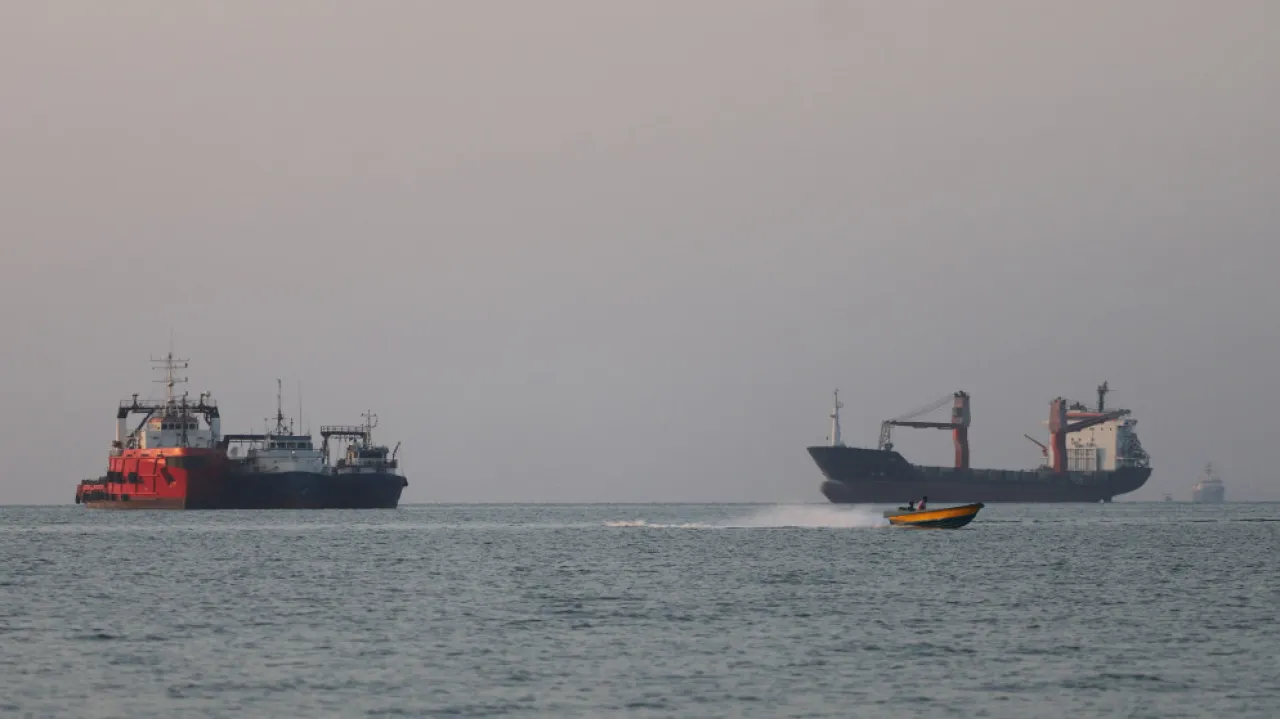
Khaberni - At least 36 cargo ships crossed the Strait of Hormuz on Monday, setting a record for maritime traffic since the start of the war in the Middle East, according to data from the "Kepler" platform, following the signing of a memorandum of understanding between the United States and Iran.
This activity represents about one-third of the transit movement in peacetime (about 120 ships per day) through the strategic waterway for global trade, which usually sees one-fifth of the world's fossil fuel exports, as well as other essential raw materials.
The total number of ships passing through the strait on Monday is expected to rise as additional ships are tracked via maritime tracking devices.
The Strait of Hormuz was reopened last week, following the signing of a memorandum of understanding between Iran and the United States aimed at ending the war in the Middle East.
Before the memorandum was signed, fewer than ten cargo ships crossed the strait daily since Iran effectively closed it on March 1st in response to the American-Israeli war against it.
Since June 15th, the average has risen to 21 ships, reaching 27 ships in the past five days.
On Tuesday, the official Iranian news agency (IRNA) quoted the chief Iranian negotiator, Mohammad Baqer Qalibaf, confirming that the situation in the Strait of Hormuz will not return to what it was before the war, explaining that the waterway will remain "under the management" of their country.
The United States reported on Monday that it would temporarily lift sanctions on the production, sale, and delivery of Iranian crude oil and its derivatives, effective until August 21st.