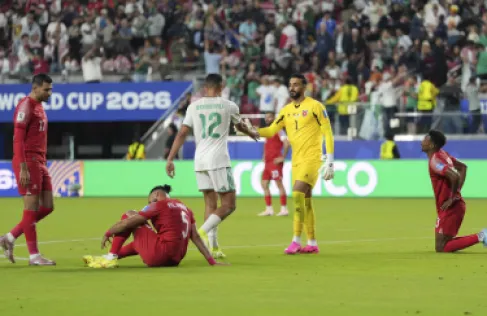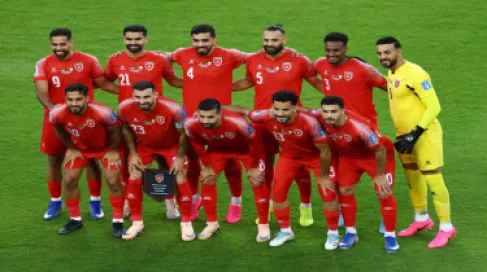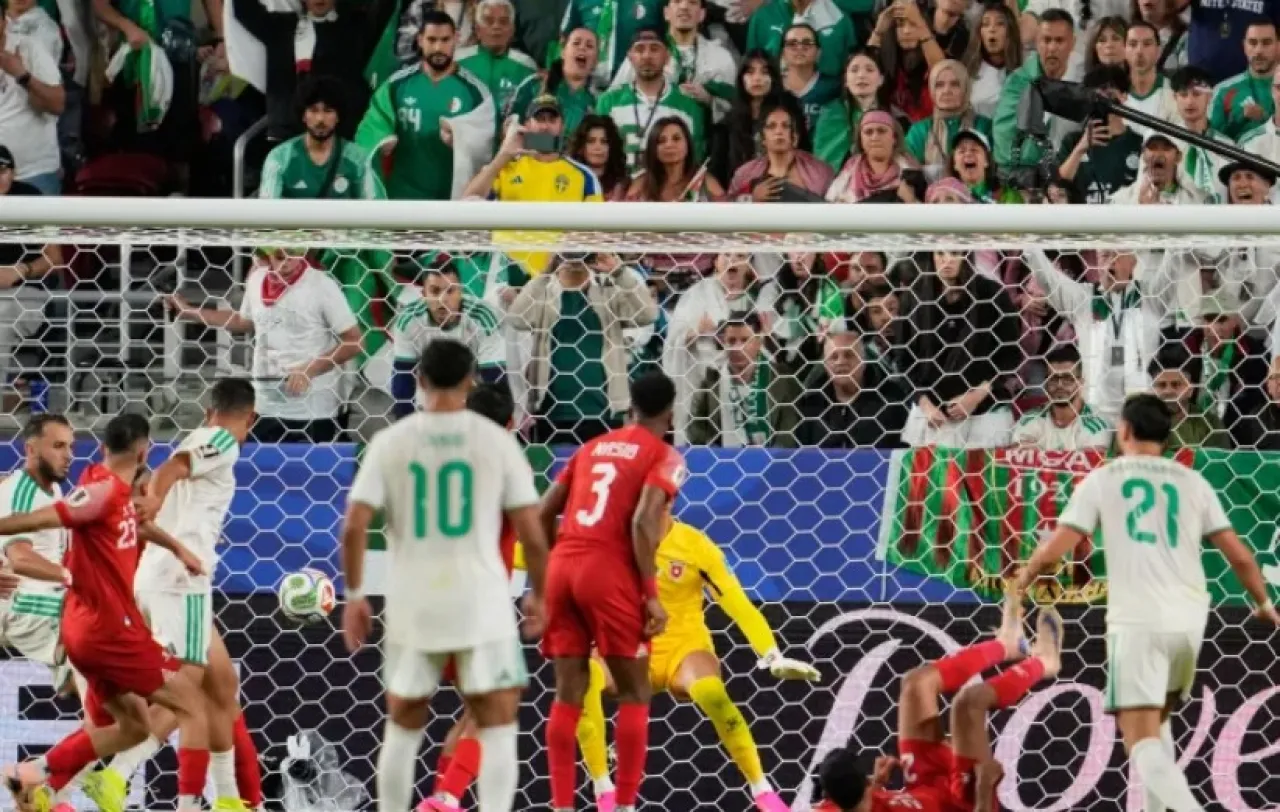
Khaberni - Al Jazeera Sports conducted a special technical analysis on the exciting and valuable win of the Algerian team over its Jordanian counterpart with a score of 2-1 in Santa Clara during the second round of the 2026 FIFA World Cup.
The victory reflected a clear tactical shift that brought "the Greens" back into the game after they encountered a disciplined and effective Jordanian organization throughout the first half.
Mahrez in a different role.. and a Jordanian adjustment
Vladimir Petkovic entered the match with a 4-3-3 formation, but it was flexible and could be transformed into a 4-2-3-1 with Ibrahim Maaz behind the trio of attackers, or even closer to a 4-4-2 with Riyad Mahrez positioned near the penalty area as a false striker.
The idea was to allow Mahrez great freedom to move into depth and receive the ball between the lines, but from the beginning, the question was about the ability of the Algerian captain to perform this role required at this stage.
Although the idea was somewhat successful in creating dangerous opportunities, and Mahrez almost reached face-to-face confrontations with the goal twice, the absence of a pivotal striker deprived Algeria of true depth, rendering most attacks ineffective.
Algeria reached the Jordanian goal several times, but relying on Mahrez as a false striker did not provide the complete solution.
Instead, the attacks relied heavily on the wings or individual movements, while the team lacked a player who could fix the defenders and play back to the goal, especially as Gouiri excelled more when the ball was at his feet, despite Mahrez's two breakaways in the first half being unsuccessful.
On the other hand, Jamal Salami made an important adjustment by bringing Mahmoud Al-Mardi back to the starting lineup instead of Al-Fakhouri, for the greater calm he brings in possession and his ability to hold onto the ball, unlike Al-Fakhouri who relies more on speed and penetration.
Jamal Salami also pushed Hossam Abu Al-Zahab, and depended on a clear 3-4-3, with a strong focus on the pairing of Musa Al-Taamari and Ali Alwan, alongside the bursts from Mohannad Abu Taha on the side, benefiting from Al-Mardi's coverage and midfield possession.
Although possession was largely controlled by Algeria, Jordan was more direct, relying on quick transitions and exploiting opponent mistakes.
Algerian problems
The first half revealed a clear Algerian problem in defensive positioning, as despite the dominance of "the Greens", the Jordanian threat was greater when moving forward.
From the first shot between the posts, the Jordanians exploited a wrong pass from Ramez Zerrouki to initiate a fast attack that ended with less than ideal Algerian defensive positioning, allowing Nizar Al-Rashdan to score in the 36th minute.
The goal was a reflection of Jordan's idea throughout the first half; organized defense, leaving the ball to the opponent, then hitting the space with great speed.
The pivotal striker
The second half witnessed the most important shift in the match, as the Algerian fans had been missing the presence of a station striker similar to Baghdad Bounjah since the beginning of the tournament, and with the entry of Nadir Ben Bouali in this role, a completely different picture of the Algerian attack appeared.
The presence of Ben Bouali gave Amin Gouiri greater freedom and created a partner for Mahrez inside the depth, making Algerian attacks more varied and less reliant on the wings.
Petkovic finally found a way to penetrate the Jordanian defense after most attempts in the first half revolved outside the area.
While the Jordanian technical team was preparing to make substitutions and bring back Al-Fakhouri, Algeria managed to equalize through Ben Bouali in the 69th minute, returning the mental and technical control to the Algerian team.
At the start of the second half, large spaces appeared behind the Algerian defense due to the desire to quickly return to the match.
Musa Al-Taamari and Ali Alwan exploited those spaces, and they managed to reach the final third several times, but the final touch lacked precision, so "the Brave" could not punish the Algerian rush.
Over time, the Algerian pressure increased, especially after Petkovic succeeded in revitalizing the offensive front.
Mahrez's departure did not weaken Algeria
At a crucial timing, the Algerian coach fielded Haj Musa instead of Riyad Mahrez, and despite the exit of the author of the first goal's assist, the team did not lose its threat; instead, it continued to press, benefiting from the vitality added by the substitute.
Most importantly, Algeria began relying more on penetrating from the depth and exploiting long balls into the Jordanian defense, which gave Gouiri and Ben Bouali a clear advantage inside the penalty area.
A recurring Jordanian crisis
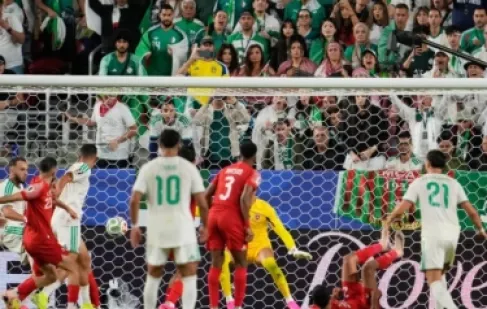
If the Algerian offensive shift was one of the reasons for the comeback, fixed balls were the decisive weapon, as once again, the suffering of the Jordanian team with this aspect appeared.
The equalizing goal came from a set piece, then Amin Gouiri snatched the winning goal in the 82nd minute also benefiting from a set situation.
The numbers confirm that the problem has become chronic, as Jordan conceded four out of five goals entered their net in this edition of the World Cup through set pieces, a clear indicator of a defect in monitoring and defensive positioning, especially in dealing with aerial balls.
Petkovic found the answer
The match proved that the idea of relying on Mahrez as a false striker, focusing on playing through the wings, was not the optimal solution for the Algerian team.
As soon as Nadir Ben Bouali entered, the team's shape changed completely, and reaching the Jordanian defensive depth became easier, as Amin Gouiri greatly benefited from the presence of a station striker beside him, which reflected on his movements and ended with him scoring the winning goal.
In the end, it can be said that Algeria won not only thanks to individual quality, but because Petkovic discovered during the match itself that the identity of "the Greens" becomes more dangerous when the team attacks from the depth, not when it merely sends balls to the wings.
While it can be confirmed that until the 70th minute, Jordan played an almost perfect game, and Salami was successful in managing the match in the way he wanted, but the problem of set pieces and a lack of experience in such events ended everything, and did not allow the Jordanian experience in the World Cup to extend beyond the first round.