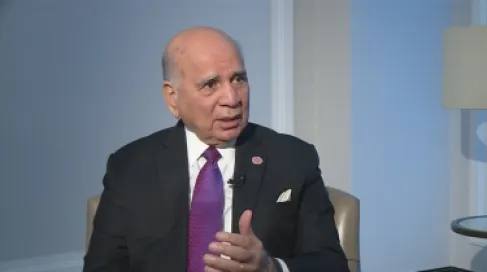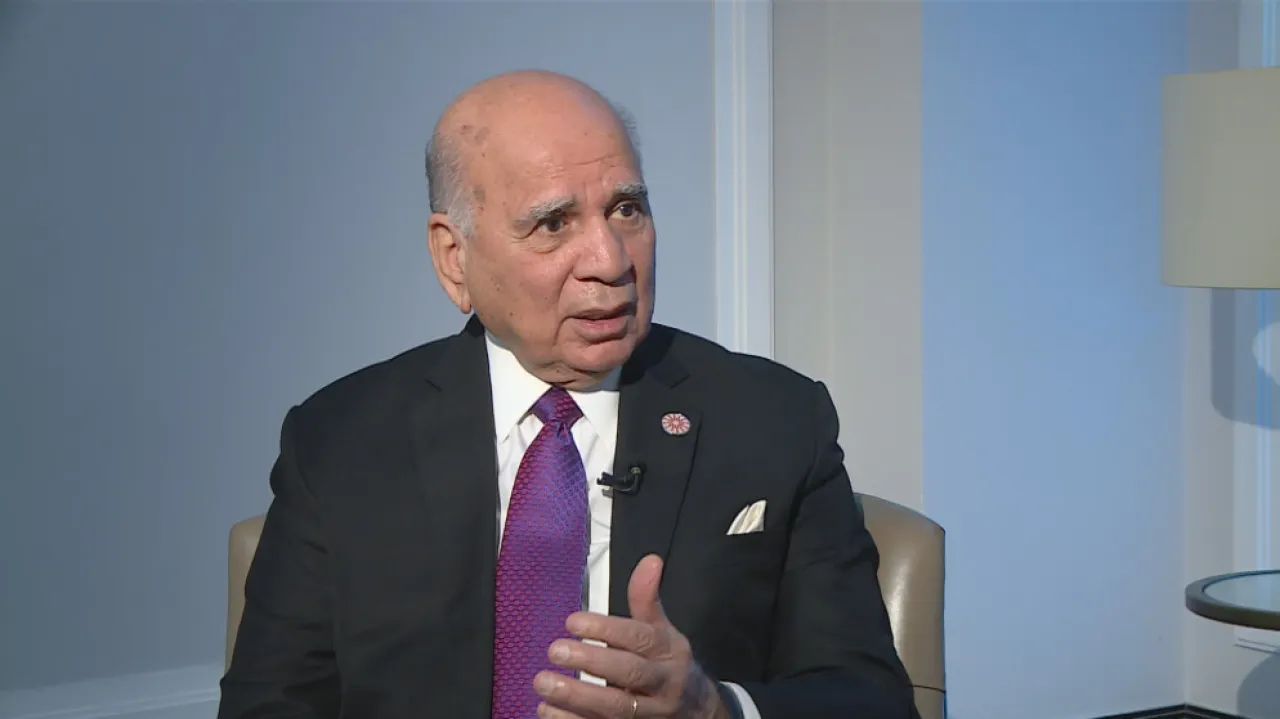
Khaberni - Iraqi Foreign Minister Fuad Hussein said on Monday that the priority in Iraq's foreign policy is to build strong relations with neighboring geographical countries, with Jordan at the forefront, emphasizing the historical relations between the two countries.
Hussein added in statements to "Al-Mamlaka" channel that the relations between Jordan and Iraq should be strengthened, as the economic relations between the two countries are intricate.
He pointed out the necessity of establishing pipeline lines with neighboring countries for exporting Iraqi oil, especially after the closure of the strait due to the Iran war.
He explained that the Basra-Aqaba pipeline project is old and there were various studies for this project, noting that Iraq began implementing this line and reached the Iraqi-Jordanian border, and that the issue of laying the oil pipeline has become a necessary need for Iraq.
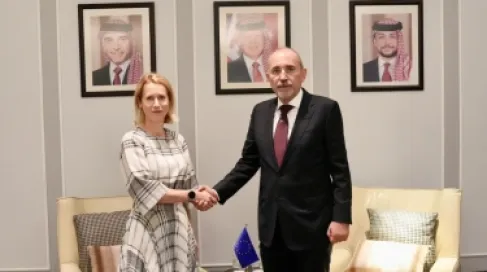
Regarding the Arab consultation meeting and the meeting of the Council of the League of Arab States at the ministerial level in its resumed ordinary session 165 in Amman, the minister affirmed the importance of Jordan's role in the meeting due to its strong relations with all Arab countries.
He pointed out that the meeting came at an important time, following the memorandum of understanding reached between the United States and Iran, and he highlighted the importance of Arab cooperation in the fields of economy, development, and others, but this cannot be achieved without ensuring the security situation.
He added, "We need shared security, first regional security among the Arab countries, but also the Arab countries need clear security cooperation with the neighboring countries, particularly Iraq needs to cooperate in security matters with the Gulf countries, Iran, and Turkey."
He mentioned that the region needs peace and safety and should focus on economic building and development, noting that the Iran war had a negative impact on the entire region, and that it was not confined to the United States and Iran.
He discussed the economic impact on Iraq due to the closing of the Strait of Hormuz, where Iraq could not export the oil it heavily relies on, causing a financial problem for Iraq.
He stated that the visit of the Iraqi Prime Minister Ali al-Zaidi to Washington on July 14th is important for solidifying and developing these US-Iraqi relations, emphasizing that the main aspect of the talks will be economic issues, in the field of energy and others.
He anticipated that understandings with the United States would be reached to continue investing in electric power, in addition to other energy fields.
A constitutional and domestic issue
The Iraqi Foreign Minister emphasized that the matter of confining weapons to the state is a constitutional issue, and that the state is the one managing these matters.
He added that confining weapons is a political domestic issue, explaining that past governments had raised the issue of confining weapons to the state.
He said, "The US government also requests in this area, considering that weapons outside the state's framework pose an internal threat primarily but can also sometimes be used improperly against other countries."
He noted that the head of the government raised this issue in his program and in his discussions, pointing out that there are ongoing dialogues between the Iraqi Prime Minister and the militants to begin handing over weapons to the Iraqi armed forces.
He confirmed that some militants have begun handing over weapons, and that the Prime Minister is leading the process of handing over the weapons to the Iraqi armed forces.
More difficult than fighting terrorism
Hussein said that the Iraqi government has decided to fight corruption and will continue to do so.
He saw that fighting corruption is more difficult than fighting terrorist organizations, noting that Iraq suffers from several issues but the biggest internal problem is corruption.
He pointed out that there is popular support for this step and significant support from political leaders, indicating that there are many tools to fight corruption.