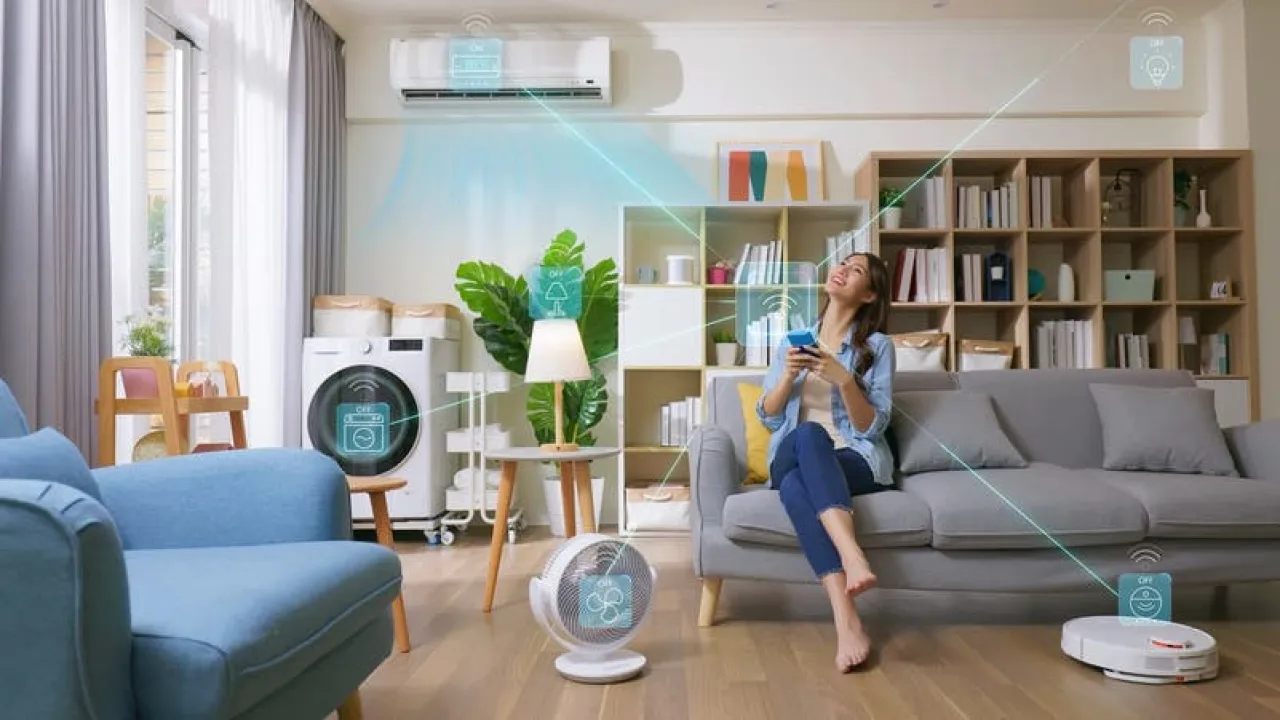
Khaberni - You might think that the camera in front of your door protects you, and that the router connecting you to the internet is just a means of communication, but the truth is that some of these devices could unknowingly transform into a soldier within a global electronic army executing attacks against unknown targets, and in an instant, your home could become part of a transnational cyber battle.
Dr. Mohamed Mohsen Ramadan, Head of the Artificial Intelligence and Cybersecurity Unit at the Arab Center for Research and Studies says, "Cyber wars today no longer rely only on hacking computer devices or targeting large servers, but have moved to a more complex and dangerous level; where millions of smart home devices connected to the internet could potentially become part of a massive offensive system operating covertly without their owners realizing it."
He added: "Home cameras, routers, smart TVs, networked storage devices, digital streaming devices, and even some small home appliances connected to the internet, are no longer just tools providing daily services to the user, but have become potential entry points that can be exploited and transformed into elements within criminal electronic networks known as 'Botnets', confirming that the real danger here is that the user may not feel anything unusual; the device works, and the internet connection continues, but in the background, its technical capabilities could be exploited to execute commands issued by malicious entities controlling thousands or millions of devices around the world."
The Botnet.. The invisible electronic army
Ramadan continued: "Technically, a Botnet network is recognized as a massive collection of internet-connected devices that are hacked and controlled remotely via command and control servers known as Command and Control Servers, and the strength of these networks depends not on the power of a single device, but on the vast number of devices that have been controlled. Hundreds of thousands of weakly secured cameras or routers can transform into a digital force capable of executing widespread attacks in minutes, and here emerges one of the most dangerous forms of modern cyber threats, where the ordinary user unwittingly shifts from a potential victim to part of the infrastructure for an electronic attack."
Why have home devices become an ideal target for attackers?
Dr. Mohamed Ramadan explained that the main reason is the nature of the design of many Internet of Things (IoT) devices, where the focus is often on production speed, cost reduction, and ease of use, while security protection sometimes comes as a secondary element, so many of these devices operate with default passwords that have not been changed, or do not receive regular security updates, or support is discontinued shortly after they are launched, making existing vulnerabilities a ready opportunity for exploitation, pointing out that the problem lies not only in the presence of a technical vulnerability, but in that the device may remain connected to the internet for years without receiving any new protection, becoming an easy target within the systems of modern cyber attacks.
From "Mirai" to more advanced electronic armies
He added: "The Mirai attack in 2016 is one of the most famous examples of the dangers of exploiting Internet of Things devices, when the malicious software managed to control hundreds of thousands of cameras and routers and use them to execute a Distributed Denial of Service (DDoS) attack that disrupted major digital services, but the danger did not stop at Mirai. The leakage of its programming code led to the emergence of new generations of more sophisticated software, capable of targeting different types of devices and employing them in more complex operations. Today, Botnet networks are no longer just tools for temporary attacks, but have become digital criminal platforms that can be used in cyber extortion, hiding the identities of attackers, executing fraud operations, and creating residential proxy networks passing through the devices of real users around the world."
Our homes have become part of a global digital battle
From his side, Major General Khaled Hamdi, former Assistant Minister of Interior for Media and Relations Affairs, Egypt, says, "The most dangerous shift in the current scene is that the home device is no longer just a personal device, but has become a point within a global system, where when thousands or millions of devices are hacked, an attacker can issue a single order to move them all in a coordinated manner towards a specific target, such as a website or digital service, drowning it in millions of requests until it ceases to function, and here the concept of 'the invisible electronic army' arises, where the members of this army do not carry traditional weapons, but move through devices located within homes and offices without the knowledge of their owners."
Artificial intelligence adds complexity to the scene
He continued: "With the entry of artificial intelligence technologies into the world of cyber crimes, attacks have become faster and more intelligent, where algorithms can be used to analyze vulnerabilities, discover unprotected devices, and develop more capable concealment methods, and conversely, artificial intelligence has also become an important defensive tool helping security institutions and researchers to detect abnormal patterns and monitor suspicious behaviors before the attack scope expands, the confrontation is no longer just between an attacker and a victim, but has become a technical race between advanced offensive tools and defense systems relying on intelligence and ongoing analysis."
How do we protect our devices from turning into attack tools?
Major General Khaled Hamdi says, "Protection begins with digital awareness, as the user represents the first line of defense. Among the most important measures are changing default passwords immediately when operating any smart device, updating firmware regularly, choosing devices from companies that provide long-term security support, not exposing Internet of Things devices directly to the internet without appropriate protection, isolating smart devices from the main network when possible, and monitoring home network traffic to detect any unusual activity, as smart devices have made our lives easier, but at the same time, they have opened a new door to cyber risks, as the device we use daily may serve as protection, but it could transform under certain conditions into a tool that attackers exploit against distant targets."
He concluded: "In the era of digital transformation, cybersecurity is no longer just the responsibility of large companies, but has become the responsibility of every user owning an internet-connected device, for in the digital world, the danger may not always be in what we see, but sometimes in what operates silently inside our devices."