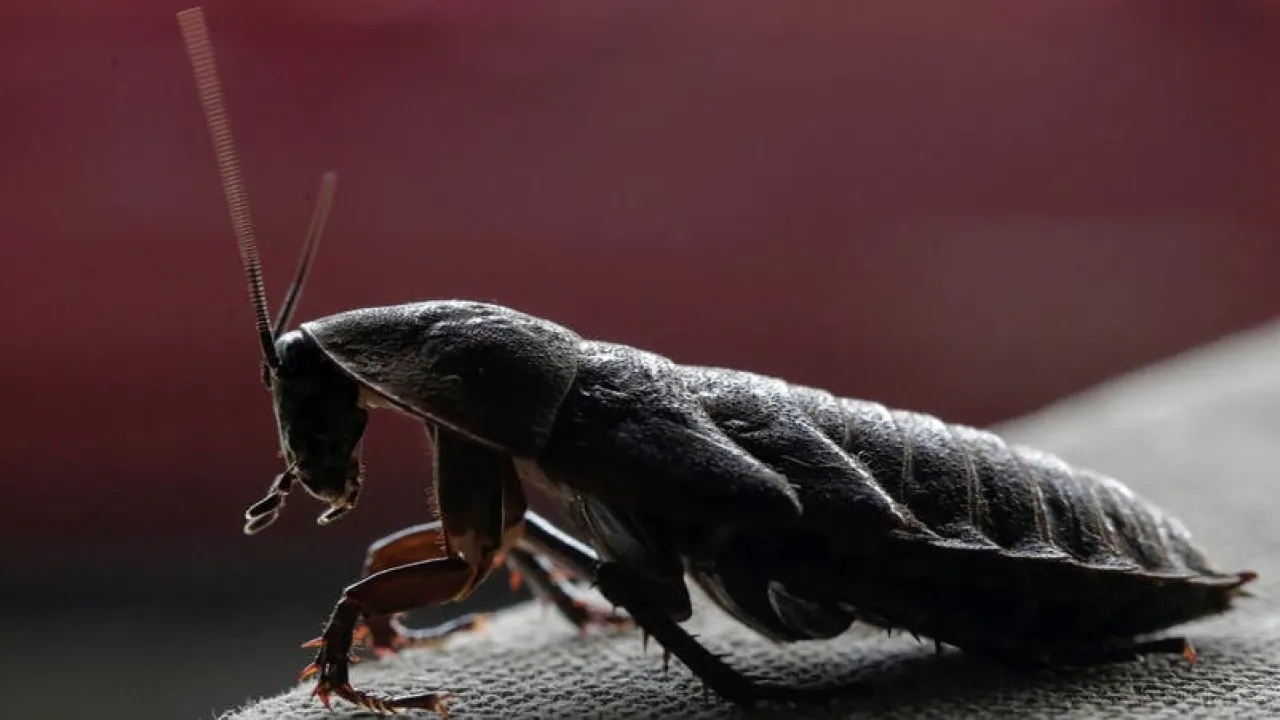
Khaberni - "Cockroaches" are among the most capable creatures to survive, which is partly due to their DNA that gives them exceptional abilities, such as resistance to toxins.
However, a new study conducted by researchers from the University of Sydney in Australia, revealed an unexpected surprise, where it was found that "cockroaches" carry huge amounts of DNA dating back to "an entirely different kind," according to a study published in the scientific journal (PNAS).
This concerns bacteria called (Blattabacterium cuenoti) which was previously known to live inside "cockroaches" and helps them recycle nitrogen.
In the study, scientists found that small parts of the DNA of bacteria (Blattabacterium cuenoti) had transferred to the genome of "cockroaches" over millions of years.
This phenomenon is known as "horizontal gene transfer," a process of transferring genes between different types of living organisms, and is common among bacteria and microorganisms, but was considered "relatively rare in more complex organisms."
However, the researchers did not know that it had transferred tens of thousands of "genetic fragments" to its host.
Genetic fragments?
Genetic fragments are small pieces of DNA (DNA), containing specific gene sequences, but they do not necessarily represent a whole gene.
In the case of "cockroaches," the researchers discovered more than 40,000 genetic fragments of bacterial origin, a number vastly exceeding the previous record, which did not exceed 300 cases of gene transfer in complex organisms.
Special abilities?
The study revealed that some of these "genetic fragments" have been in existence since the early evolution of cockroaches, with some dating back to over 28.7 million years, suggesting the possibility of acquiring important biological functions, according to "Science Alert."
But the researchers still do not know "whether these genetic fragments provide cockroaches with advantages or special capabilities."
The team pointed out that the persistence of these fragments for millions of years suggests that they "may perform functional roles, or at least they do not cause significant harm."
The researchers hope to expand the scope of studies to include other types of organisms, in addition to delving deeper into the cockroach genome to determine whether any of the 40,485 genetic fragments give these insects real advantages or special capabilities.