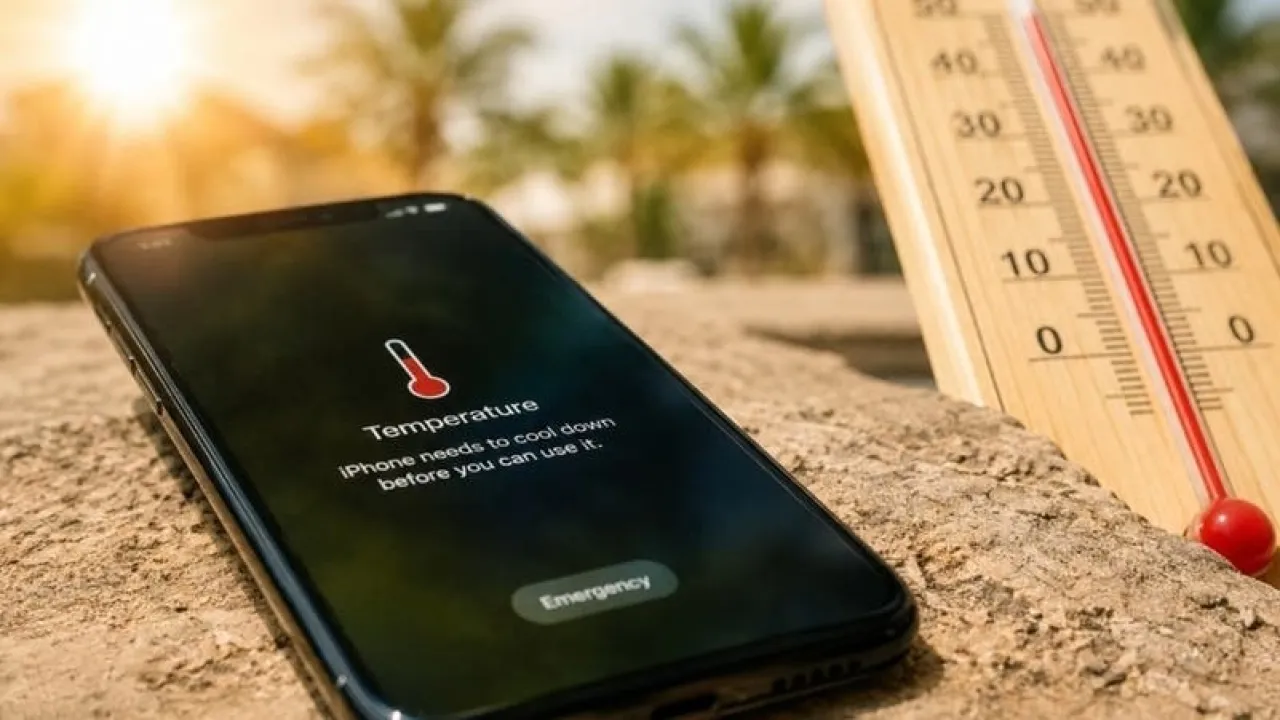
Khaberni - Millions of smartphones suffer silently each summer, as temperatures rise sharply in most parts of the world, causing smartphones, which are vital to our lives, to malfunction, overheat, or even shut down suddenly without prior warning.
You might notice your phone's battery draining at a much faster rate, the screen becoming unresponsive, or worse, a warning popping up on your display: "Device is too hot. Cooling down". But by that time, the damage has already been done.
Smartphones today are more than just communication tools; they are wallets, workstations, fitness trackers, content creation platforms, and emergency devices. And with all their power, they remain surprisingly fragile when exposed to heat, according to a report by "Level UP" magazine, which was reviewed by "Al Arabiya Business".
Most smartphones are designed to safely operate between 0 and 35 degrees Celsius. When these limits are exceeded, especially under direct sunlight, the internal temperature rises quickly.
An overheating phone is not just a minor inconvenience; it silently leads to battery degradation, slower performance, and can cause permanent damage to the hardware.
Here are 7 proven ways to protect your smartphones from summer heat.
1- Never leave it in a parked car
The temperature inside a parked car can rise to over 54 degrees Celsius (130 Fahrenheit) within minutes.
Especially if left on the dashboard, your phone absorbs this heat like a sponge. This can lead to damage to the battery and screen. So, always take your phone with you, even if it's "just five minutes".
2- Use airplane mode in hot areas
Weak signal areas force your phone to work harder, searching for signal towers and boosting the signal.
This consumes battery and generates heat. If you are out of coverage or do not need the network, enable airplane mode to give your phone a rest.
3- Avoid charging when your phone is already hot
Charging naturally generates heat. Charging a hot smartphone is a recipe for stressing its internal components.
So, if your device is warm, let it cool down before plugging it in. And avoid wireless charging in the summer, as it generates more heat than wired charging.
4- Stop mounting the phone on the dashboard
Are you using the maps app on your phone while it's mounted on the dashboard during the day? This causes an increase in the phone's temperature. Direct sunlight, continuous GPS, and mobile data exacerbate the problem.
Try using voice navigation only, lower the screen brightness, and mount your phone near the car's air conditioning vents if possible.
5- Activate battery saver mode outdoors
Battery saver mode, which is not often used, reduces internal processing, stops unnecessary background tasks, and lowers screen brightness.
All these help in reducing the internal temperature. Therefore, make it the default setting when going out in extreme heat.
6- Keep it away from direct sunlight
Glass and aluminum frames heat up faster than you might expect. Always keep your phone in the shade, inside bags, under towels, or even next to a water bottle.
And don't leave it on tables, chairs, or rocks under the sun. Avoid black cases that trap heat.
7- Stop all background apps before going out
Apps running in the background, such as email, social media, and synchronization, consume energy and generate continuous low-level heat.
Make it a habit to close all unused apps before leaving an air-conditioned place. Each bit of saved power reduces the accumulation of internal heat.