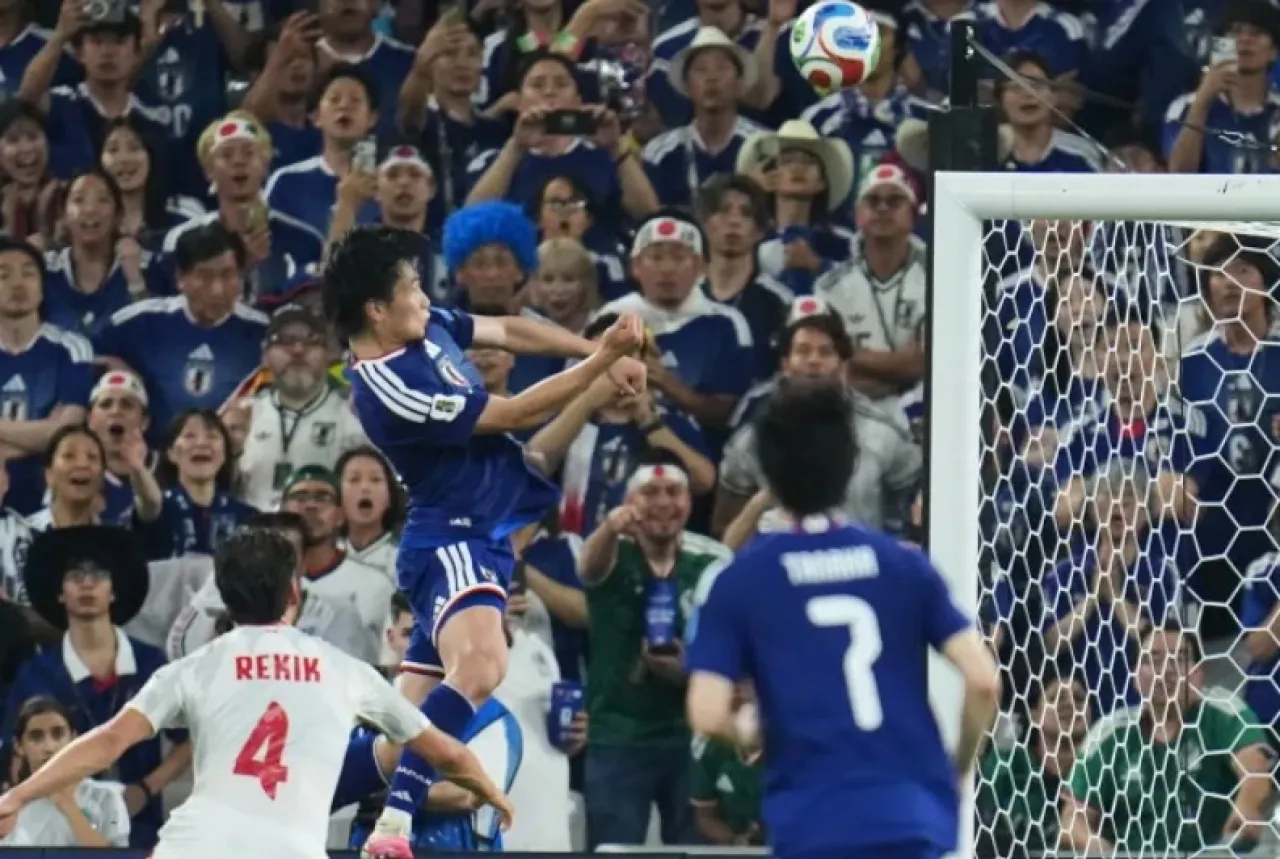
Khaberni - The Japanese team presented a striking offensive display against Tunisia in the group stage of the World Cup, achieving a wide victory with four clean goals, confirming their continuous development on the international scene, while deepening the suffering of the Tunisian team, which entered the championship records from a negative angle.
A historic series and Kamada enters history
The Japanese team continued its remarkable results in the World Cup, raising its balance to four consecutive matches without defeat (two wins and two draws), the longest series in its history in the tournament. It also succeeded in scoring in the fourth consecutive match, equaling its best scoring streak in the World Cup, previously achieved between 1998 and 2002.
The achievement was not limited to the results alone, as the four goals scored by the Japanese team represented the highest scoring tally by an Asian team in a single World Cup finals match, in a new affirmation of the team's offensive strength.
On the players' front, Daichi Kamada established himself as one of the stars of the match after he opened the scoring just 3 minutes and 27 seconds into the game, marking the fastest goal in Japan's World Cup history.
The midfielder continued his brilliance after becoming the second Japanese player to score in consecutive World Cup matches after Junichi Inamoto in 2002, achieving an exceptional record as he had scored in the 89th minute against the Netherlands in the first round, becoming the first player since Cristiano Ronaldo in 2018 to score in the last five minutes of one World Cup match and then in the first five minutes of the next.
Oiwa leads the offensive festival
Striker Ayase Oiwa was one of the highlights of the match after he scored a brace and provided a crucial assist, becoming the first Japanese player in World Cup history to combine scoring two or more goals and creating another in a single match.
He also became the second player to achieve this milestone in 2026 after Dutch player Cody Gakpo against Sweden on the same day.
Oiwa's achievements didn't stop there, as his goals increased the tally of Feyenoord players to 14 goals in the World Cup history, placing the Dutch club third among Dutch clubs in terms of most goals scored in the tournament, behind Ajax (29 goals) and PSV Eindhoven (27 goals).
Absolute dominance and ironclad defense
The match numbers reflected the scale of Japanese dominance, as the "Samurai" allowed Tunisia only one shot during the entire first half, the lowest number of shots the Japanese team has faced in a first half during its World Cup history.
Interestingly, the previous record was also against Tunisia during their 2002 encounter, when the "Carthage Eagles" managed only two shots in the first half.
Negative numbers for Tunisia in the 20th match
In contrast, the Tunisian team continued its struggle in the tournament after it became the fourth team in World Cup history to lose consecutive matches by a margin of four goals or more, joining Greece in 1994, South Korea in 1954, and Bolivia in 1930.
Despite the negative nature of the result, the match marked a historic milestone for Tunisia, as it was their 20th match in the World Cup, making them the fourth African country to reach this number, after Cameroon, Morocco, and Nigeria.
The tournament also saw an early change in the technical staff, as Hervé Renard took over the leadership of the team, replacing Sabri Lamouchi who had managed the first match. Tunisia thus became the fifth team in World Cup history to rely on more than one coach during the same edition, noting that all the previous teams failed to win their first match after changing the coach, recording three draws and two losses.