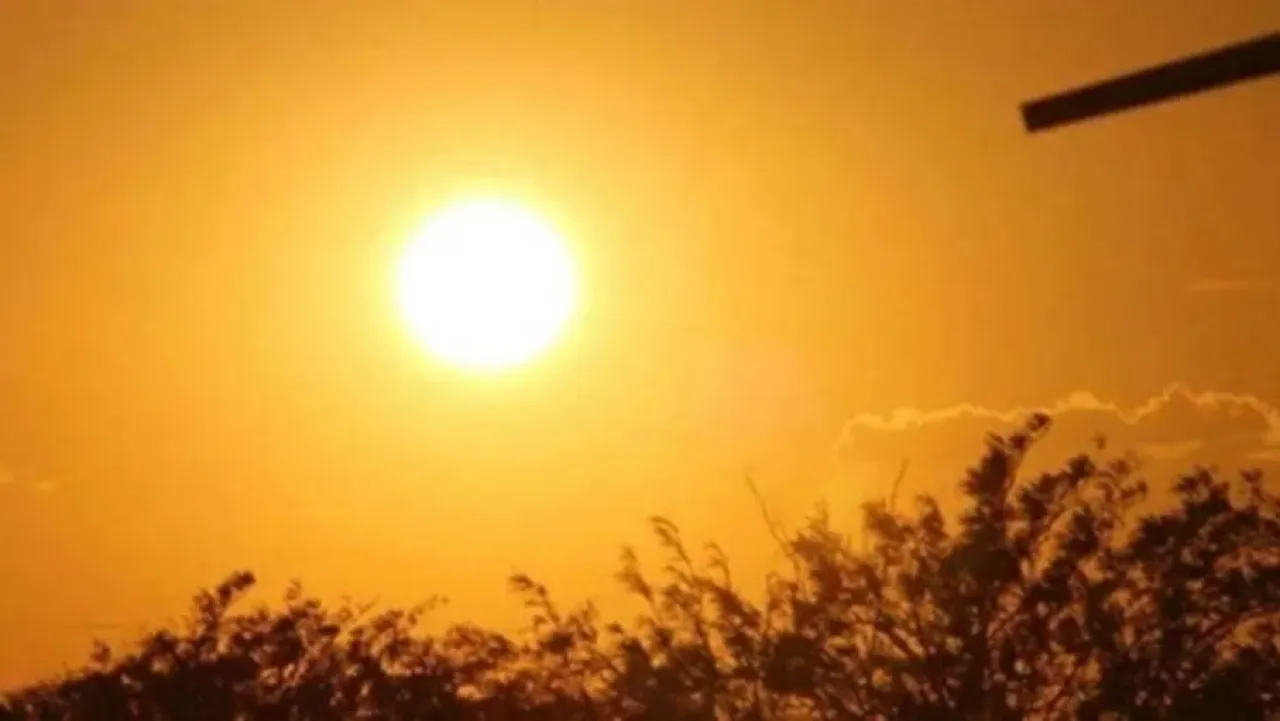
Khaberni - This morning, Sunday, the Kingdom is witnessing the "Summer Solstice", which represents the official astronomical start of the summer season in the northern hemisphere, as confirmed by the president of the Jordanian Astronomical Association, Ammar Al-Sakaji.
Al-Sakaji said that the moment of the Summer Solstice will occur at 11:23 AM Jordan time, when the sun apparently reaches its northernmost point in the sky, and its rays become perpendicular to the Tropic of Cancer at a latitude of 23.5 degrees north.
He explained that the day of the Summer Solstice records the longest day in Jordan during the year, as daylight hours extend to about 14 hours and 14 minutes, compared to the shortest night of the year, noting that the length of the day begins to decline gradually after this date until the autumnal equinox.
He added that the astronomical summer will last this year for about 93 days, 15 hours, and 40 minutes, and will end with the occurrence of the autumnal equinox at dawn on Wednesday, September 23.
Al-Sakaji explained that the phenomenon of the Summer Solstice is linked to the tilt of the Earth's rotation axis of about 23.5 degrees during its rotation around the Sun, and not as a result of the change in the distance between the Earth and the Sun, noting that during this period the Earth is relatively further from the Sun compared to some winter months.
He noted that this day also witnesses the shortest shadow of objects at midday, due to the sun reaching its highest apparent altitude in the sky, around 12:38 PM local time.
He pointed out that the term "solstice" comes from the Latin origin of the word "Solstice", which means "sun standing still", referring to the apparent slowdown of the sun's movement northward before it begins its gradual journey southward in the following months.
He clarified that observers during this period notice that the daily path of the sun becomes more curved, as it rises from the far northeast and sets in the far northwest, providing the longest period of natural lighting during the year.
Al-Sakaji confirmed that the Summer Solstice holds special importance in human heritage, as it has been linked for thousands of years to agricultural seasons and traditional celebrations of many peoples, and was used in the design of a number of archaeological and astronomical landmarks associated with the sites of sunrise and sunset.
He added that the skies of Jordan during the summer nights are adorned with a number of bright celestial bodies and prominent constellations, including the "Summer Triangle", along with a number of distinctive summer stars and constellations that form an impressive astronomical scene for observers.
He pointed out that the Jordanian Astronomical Association continues annually to carry out observations and astronomical measurements related to the day of the Summer Solstice from various locations in the Kingdom, including documenting sunrise and sunset times and measuring the length of the day and astronomical angles, for scientific and documentary purposes.