Khaberni - Today, the leaders of the European Union countries demanded, at the conclusion of their joint summit with the G7, Israel's withdrawal from southern Lebanon and the disarmament of Hezbollah, coinciding with a French announcement about arrangements for an international conference to support the Lebanese army and to limit armaments to the state.
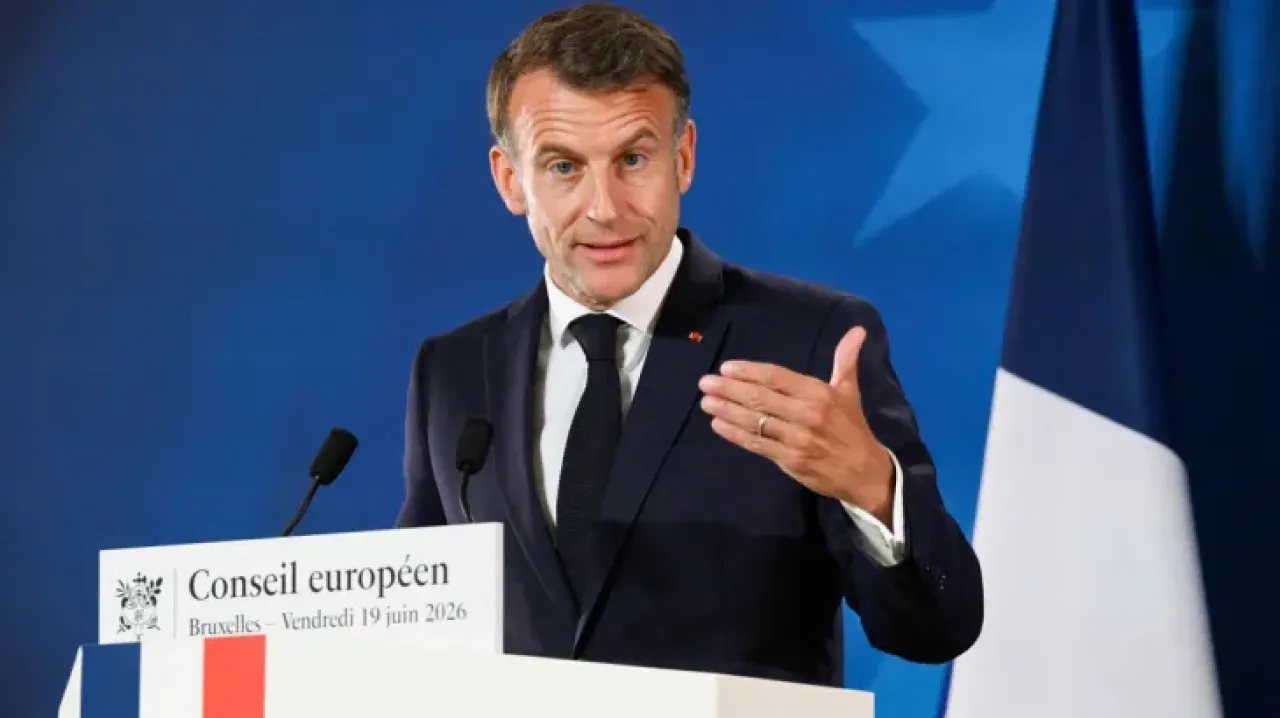
French President Emmanuel Macron, in a joint press conference in Brussels with the President of the European Commission Ursula von der Leyen, emphasized that the European Union countries stress the need to include Lebanon in any ceasefire agreement to ensure regional stability.
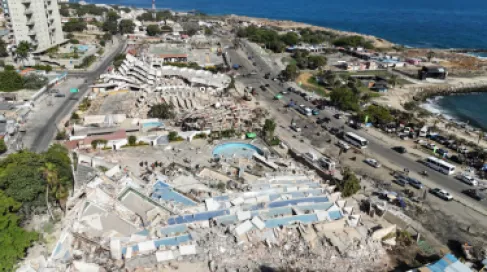
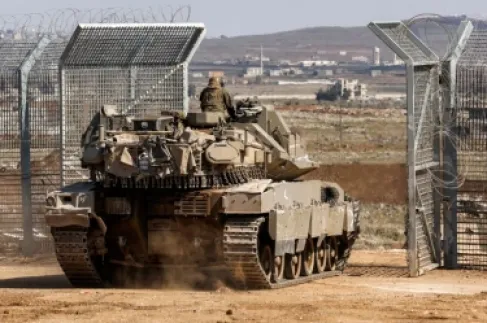
He added that the leaders meeting in Brussels called for Israel's withdrawal from southern Lebanon and the disarmament of Hezbollah, emphasizing the necessity of limiting armaments to the Lebanese state.
He continued that the European Union will support the Lebanese military and security forces, and discussed the ongoing European coordination with the Lebanese authorities to organize an international conference in the coming weeks aimed at mobilizing financial and military support for them.
For her part, von der Leyen expressed the Union's serious concerns about the situation in Lebanon, and stressed the need for the Israeli military withdrawal and the disarmament of Hezbollah.
She renewed support from the European leaders for the Lebanese leadership in their efforts to limit armaments and disarm Hezbollah, along with their demands for Israel to respect Lebanon's sovereignty and territorial integrity, and to work on formulating solutions for the post-mandate period of the United Nations Interim Force in Lebanon (UNIFIL).
In the context of the Middle East, Macron described the situation in the West Bank as "unacceptable," announcing that the leaders agreed on imposing sanctions against extremist Israeli ministers and violent settlers, and strongly opposing the illegal settlements.
About the situation in Gaza, the French President said that the humanitarian disaster is still ongoing, indicating that the European leaders called for humanitarian aid to be delivered to the sector.
Support for the American-Iranian agreement
On another note, the European leaders announced their support for the temporary agreement between Washington and Tehran aimed at ending the war and restoring freedom of navigation in the Strait of Hormuz.
The French President stated that the European countries support the agreement aimed at restoring freedom of navigation in the Strait of Hormuz, noting that the leaders discussed the multinational mission to be deployed in this vital maritime pathway as soon as conditions permit.
In this context, the President of the European Commission said that freedom of navigation must be guaranteed without tolls in the Strait of Hormuz, and it must be ensured that Iran never possesses nuclear weapons.
New sanctions package
In the context of the Russian-Ukrainian war, French President Emmanuel Macron emphasized that current indications show Russia's lack of seriousness in negotiating, stressing that Europeans will not play the role of mediator but will be key parties at the table in any future negotiations to protect their interests and provide robust security guarantees for Ukraine.
Macron stated that the leaders agreed on the importance of military support for Ukraine, funding its defensive capabilities, and increasing sanctions on Russia.
In this context, European Commission President Ursula von der Leyen announced the final touches on the 21st sanctions package, which is the harshest against Russia.
Von der Leyen stated that an agreement was reached to extend the sanctions for a full year instead of six months, focusing on targeting the oil and gas sectors, combating the "Russian shadow fleet," and the cryptocurrencies used to circumvent the sanctions, amidst praise for the historic progress in the path of Ukraine and Moldova joining the European Union.
Economically, the President of the European Commission warned of the unsustainable rise in Chinese imports that caused a record trade deficit for the Union of 360 billion euros (about 389 billion dollars), prompting the leaders to agree on activating trade defense tools and diversifying supply chains for raw materials and precious metals, coordinated with the American side to protect European industry and jobs.
The European Council also agreed on the structure of the upcoming budget (2028-2034) to ensure support for agriculture and fisheries sectors, while at the same time enhancing defense spending, innovation, and clean technology.
In conclusion of the conference, Macron addressed the complicated issue of immigration, affirming France's support for European mechanisms to combat illegal immigration and accelerate deportation procedures, while the European stance on recent proposals by some countries was clarified, stating: "We will not support the establishment of migrant settlements centers in third countries, but we respect the decision of countries that have decided to do so on their own."