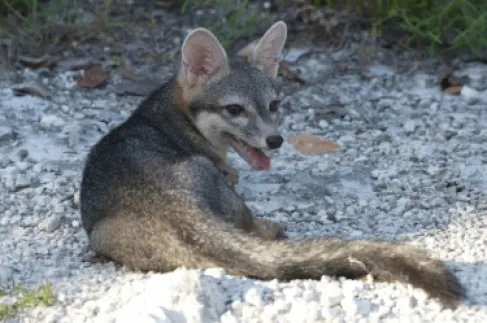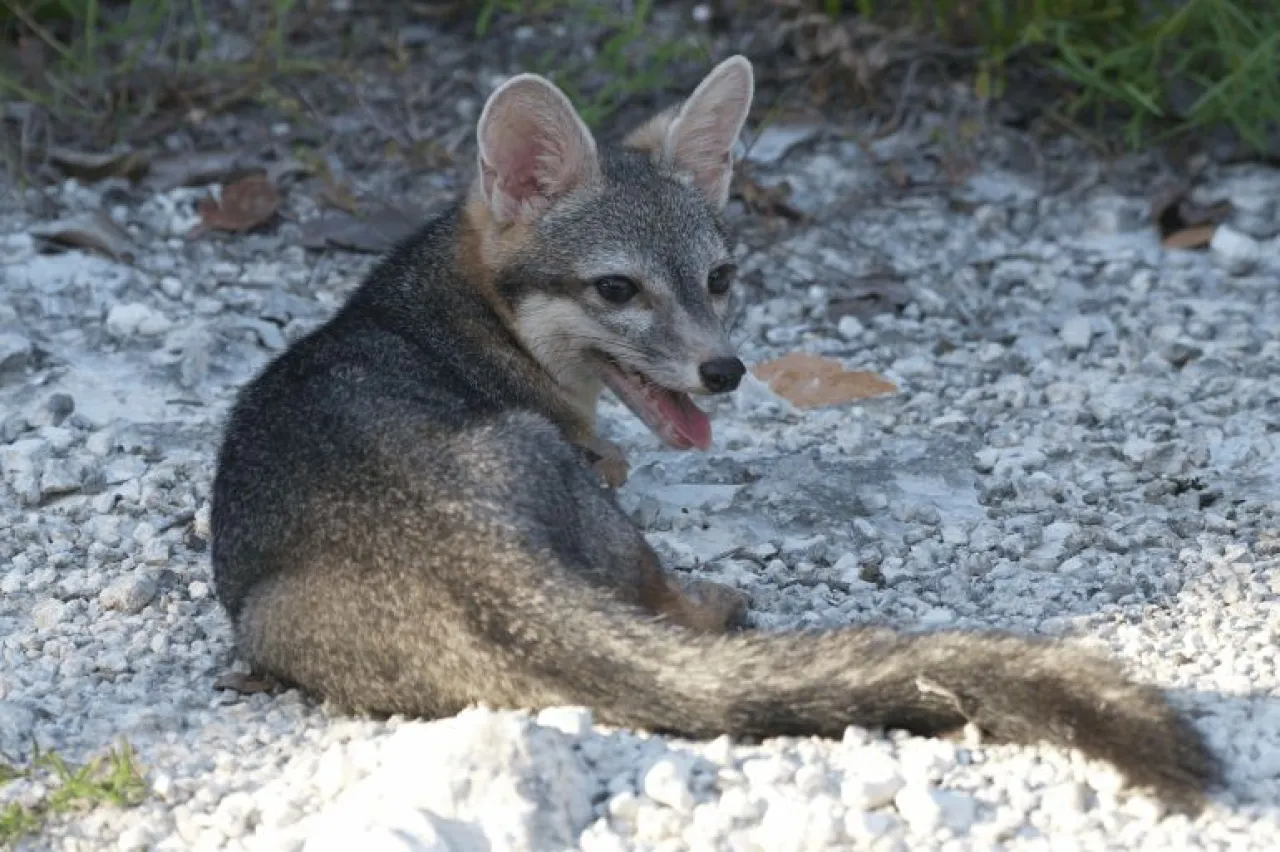
Khaberni - For the first time, researchers have managed to document and photograph the dwarf fox of Cozumel Island, which is one of the most mysterious and rarest types of canids.
It was long believed that it may have been extinct or disappeared from nature, but the recent discovery published in the journal "Neotropical Biology and Conservation", represents the first direct photographic documentation of this creature in decades, and the first modern visual evidence of its survival.
This rare animal, scientifically known as "Urocyon sp.", lives exclusively on Cozumel Island in the Caribbean Sea off the Yucatan Peninsula in Mexico, and is genetically closer to the widespread gray fox in North and Central America, but is significantly smaller due to prolonged geographical isolation.
Discovery by Chance
The details of the discovery date back to the morning of September 14, 2023, when scattered reports began spreading via social media about a stray fox near a coastal road on the island.
Based on these reports, researcher Rafael Chacon, director of the Cozumel Parks and Museums Foundation, led an urgent field search that ended with the discovery of an adult male fox around six in the morning on the island's eastern coastal road.
The team managed to photograph the animal for the first time scientifically, before transferring it for a short monitoring period and then releasing it back into a protected natural environment away from roads to ensure its safety.
Absent from Sight
Prior to this discovery, the only evidence of this fox's existence was based on semi-fossilized remains found at archaeological sites dating back to the Maya civilization, alongside very rare sightings that were not documented scientifically since 2001.
So far, no genetic studies or complete taxonomic descriptions of this animal have been conducted, making its scientific status unclear, although researchers believe it represents a clear case of isolated evolution on the island.
The Cozumel fox is a classic example of "island dwarfism", where geographical isolation and scarcity of resources lead species to shrink in size compared to their mainland relatives.
According to studies, the size of this fox does not exceed 60 to 80% of the size of the continental gray fox, indicating a process that lasted for thousands of years within the island's isolation, possibly at least between 5,000 and 13,000 years.
Island Produces Unique Animals
Cozumel fox is not the only case on the island; it also hosts a rare collection of dwarf mammals, among them the dwarf raccoon, and the dwarf coati.
The existence of this unique gathering of dwarf animals puzzles scientists, making the island an exceptional natural laboratory for studying evolution in isolated environments.
Despite its rediscovery, the condition of the fox remains critical, as scientists consider it highly endangered due to the deterioration of natural habitats, urban expansion in the southern part of the island, and the scarcity of scientific data about its numbers.
Researchers indicate that the lack of systematic surveys makes assessing its true status very difficult, but it is scientifically classified among the species with the highest priority for protection.
Researchers view this discovery not merely as the re-documentation of a rare animal, but as a scientific opportunity to save this rare fox.