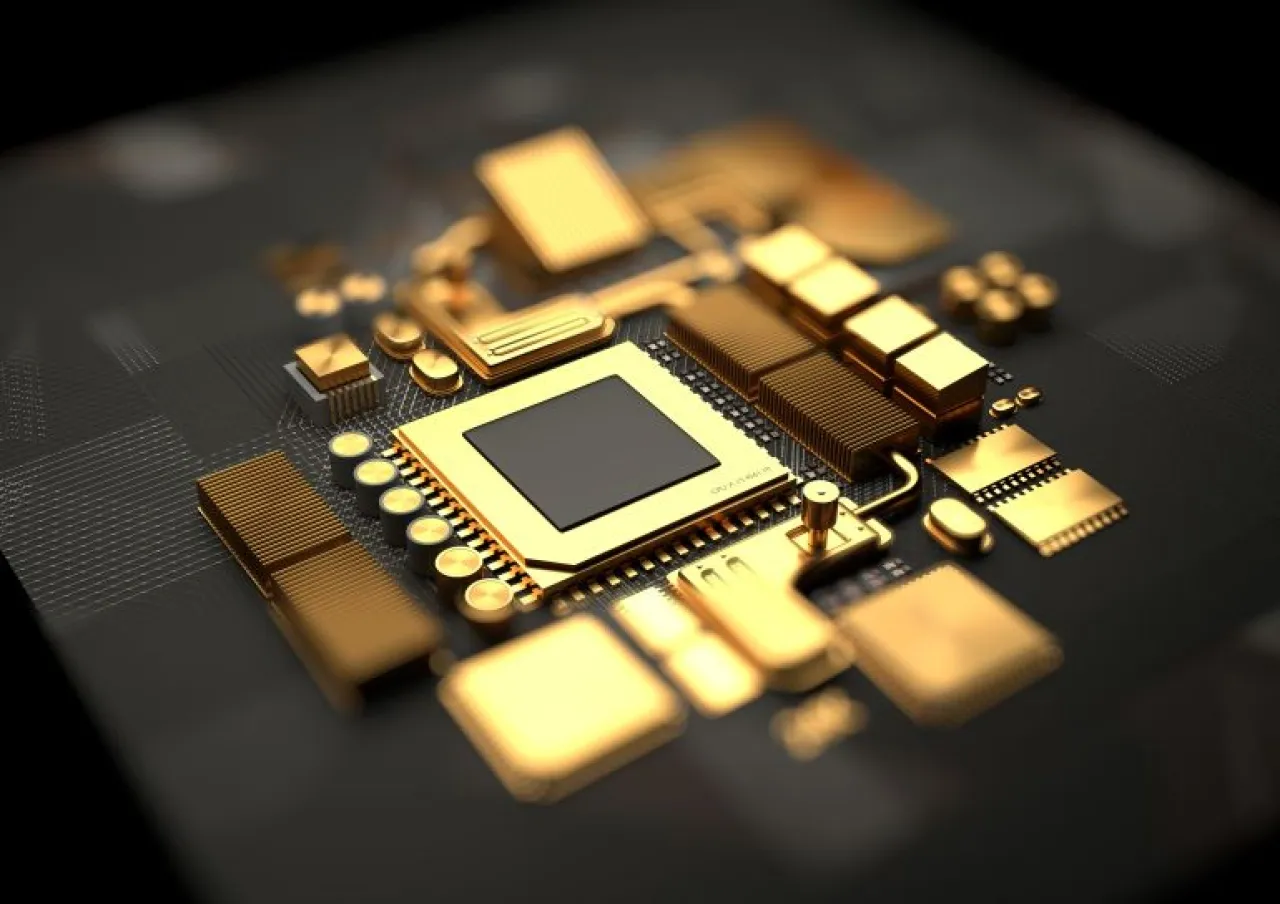
Khaberni - The technology sector has historically seen a stable pattern driven by "Moore's Law", where the cost of fine electronic components and memory decreased over time with increased efficiency. However, the explosive boom in generative artificial intelligence has turned these equations on their head, setting the stage for a new economic era that financial experts and tech analysts call "Chipflation" (Chipflation).
Dissecting the Crisis.. The voracious appetite of data centers for advanced memory chips
Large language models (LLMs) require extraordinary processing capabilities and exceptional data transfer speeds to address the bottleneck in data transfer between the processor and memory. This has made "High Bandwidth Memory" (HBM) the crucial nerve for artificial intelligence accelerators such as Nvidia and AMD chips.
According to a comprehensive 66-page research memo issued by Morgan Stanley in June this year, the consumption of AI memory is escalating exponentially and unprecedentedly at all technical levels.
At the level of individual chips, which use AI processors from recent generations, about 7.2 times more HBM memory compared to previous generations is used.
At the level of the full system and arrays, consumption doubles to 65 times. As for data centers, the required capacities for HBM in data center infrastructures jumped from about 10 terabytes in 2020 to nearly 18 petabytes. (A petabyte equals 1024 terabytes).
This enormous demand has collided with "rigid supply chains" that can't respond immediately. Constructing new production lines for advanced semiconductor memories and testing their efficiency requires years of work and massive investments, creating a divided market that gives absolute priority to those who pay more.
Warnings from "Morgan Stanley" and imbalance of supply
"Sean Kim", Head of Technology Research in Europe and Asia at Morgan Stanley, pointed out that the prices of dynamic random-access memory (DRAM) have witnessed a sharp jump, with prices more than doubling over the past short period. This rise represents a significant deviation from the economic pattern that prevailed for decades, which was characterized by the continual decline in the cost of memory.
Estimations from the financial institution foresee a sharp deficit in the supply directed to traditional markets by 2027 due to the redirection of factories to production lines towards luxury and high-margin products tailored for artificial intelligence:
- PC market: Faces a potential deficit of 15% in meeting memory demand, equivalent to a shortage in memory supplies for about 58 million computers.
- Smartphone market: Faces a 12% shortage in supply, which translates to a deficit affecting the manufacturing of 134 million units.
The financial figures released by the bank reveal terrifying inflation in the total volume of the memory market, as forecasts indicate the market growing from $220 billion to $890 billion, meaning about $600 billion in additional revenue flowed entirely to memory manufacturing companies, driven by tech giants' spending on infrastructure. This number exceeds the annual market value of the PC or smartphone markets individually.
Transitioning the impact of inflation to phones and personal computers
This rise is no longer confined to the walls of cloud servers, but is directly reflected in the cost of manufacturing consumer devices. Alongside the global shortage of traditional chips, the revolution of "local artificial intelligence" imposes harsh and costly technical standards:
- Raising the minimum specifications: To operate generative AI features locally on devices without relying on the cloud, the minimum RAM requirement is now 16 gigabytes as a mandatory standard instead of 8 gigabytes, along with the need to integrate specialized neural processing units (NPUs).
- Explosion in consumer component prices: According to research institute reports, prices for DDR5 (consumer-directed) and solid-state drives (SSDs) have seen consecutive jumps. In the sector of economical phones under $200, memory costs alone now devour about 43% of the total cost of manufacturing the phone.
How will manufacturers deal with the increases?
According to analyses by experts at Morgan Stanley and market monitoring agencies, device manufacturers like Lenovo, Dell, Xiaomi, and HP find themselves facing complex choices and a very limited margin to absorb costs. Their strategies include the following:
- Passing the cost to the consumer: Indicators suggest that companies will have to transfer these increases to the end buyer. Current data show price increases for computers and smartphones ranging between 5% and 20%, translating to price increases ranging from $30 for mid-range devices to $150 or $200 for flagship devices.
- Reducing specifications: As an alternative to steep price increases, companies may resort to reducing the quality of other components in the device, such as using lower-quality screens, smaller-capacity batteries, or plastic manufacturing materials instead of metal, to keep the overall price stable.
- Reducing profit margins and delaying launches: The crisis will force some companies to accept very low profit margins or delay the launch of new device generations as they are unable to secure sufficient memory shares from major factories that prioritize orders for large servers.
Despite this "digital inflation" putting severe pressure on the profit margins of manufacturers and individual budgets, its direct impact on the overall consumer price index in the macroeconomy will remain limited to about 0.1%, given that electronic devices represent a relatively small weight in the general inflation basket compared to food, energy, and housing. However, the real pressure is concentrated in production prices, company margins, and delays in technical upgrade plans for institutions.