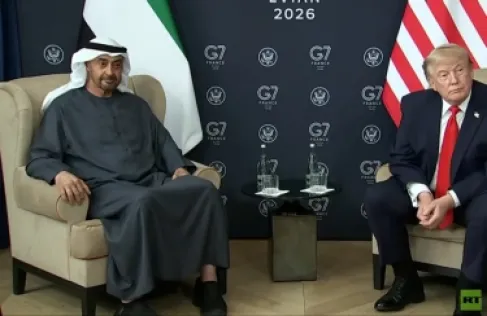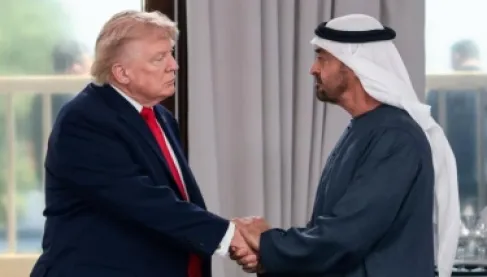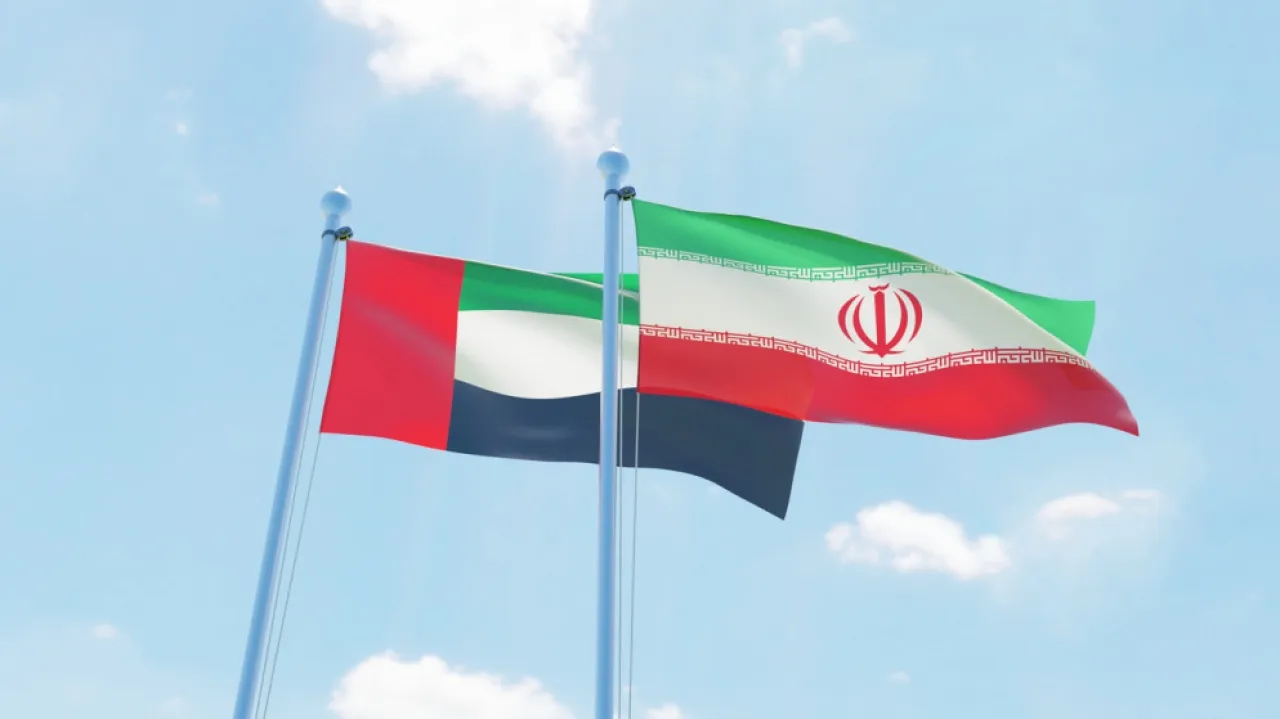
Khaberni - Reuters news agency reported, citing four sources, that the UAE agreed to release billions of dollars to Iran, as a tactical shift after weeks of Iranian attacks on the wealthy Gulf state during the American-Israeli war on the Islamic Republic.
This move, which has not been previously reported, coincides with the final stages of broader negotiations between Tehran and Washington to end the war, in talks that diplomats say may include the release of tens of billions of dollars of Iranian oil proceeds frozen in foreign banks under U.S. sanctions.
Two regional sources told Reuters that the UAE agreed to release $10 billion, of which more than three billion dollars have already been delivered.
Another two sources familiar with the agreement said that the total funds involved amount to $20 billion, adding that this step was in exchange for stopping Iranian attacks on the UAE. One source familiar with the agreement also mentioned that the first installment of three billion dollars has already been provided.
Reuters was unable to verify whether the funds allocated for transfers originated from the UAE, or from long-frozen Iranian accounts in the UAE banking system, or from other sources.
However, a UAE official responded to a question about the transfer, stating that his country seeks to ease tensions and promote peace.
The official added, "UAE's foreign policy is guided by promoting de-escalation and easing tensions across the region, with efforts aimed at achieving lasting peace and stability. The UAE supports the efforts made, including those by the United States, to protect the people of the region from the consequences of the conflict."
* The latest Iranian attack on the UAE was on May 4
The White House has not yet commented on this action.
The U.S. Vice President J.D. Vance said today "No funds will be disbursed to Iran in exchange for signing a treaty or attending a meeting," adding that the potential agreement links Tehran's receipt of economic benefits to its compliance with commitments.
Iranian authorities have not yet responded to a Reuters request for comment on this step.
All sources requested anonymity due to the sensitivity of the topic.
This arrangement indicates a radical shift from the public hostility that dominated UAE-Iranian relations during most of the war period. Iranian attacks led to the evacuation of Dubai hotels, prompted expatriates to leave the UAE, and shook the country's image as a leading commercial hub in the region.
One of the sources familiar with this arrangement said that it provides a way to help resolve the conflict between the United States and Iran without either side crossing their red line. It was explained that Iran could say it received compensation for war damages, Washington could insist that it paid nothing, and Abu Dhabi secures its own safety and enhances Dubai's status as a regional hub, portraying this step as an investment in rebuilding trust in the region.
Another source familiar with the agreement said that in exchange for disbursing the funds, Iran would stop its attacks on the UAE with missiles and drones, and bilateral relations would be rebuilt including the exchange of intelligence information and economic cooperation.
The source explained that Iran has reached out to at least two other Gulf states to make a similar deal.
The last direct known attack Iran launched on the UAE was over a month ago, on May 4, targeting the Fujairah port overlooking the Gulf of Oman.
The first source familiar with the agreement said that talks began several weeks ago but accelerated when officials from the Iranian Revolutionary Guard visited Abu Dhabi last week to meet with Sheikh Tahnoon bin Zayed Al Nahyan, deputy ruler of the Emirate of Abu Dhabi and national security advisor, and stayed at his guest house.
Following that visit, UAE officials traveled to Tehran to negotiate the details of the agreement mechanism.
* Significant Iranian assets in Dubai
The UAE-Iran agreement is expected to materialize in a complex financial environment that may include Dubai, the UAE's main commercial hub and one of Tehran's most important economic arteries.
For a long time, Dubai banks have held large deposits linked to Iran, most of which are now frozen under U.S. sanctions that oversee the global dollar clearing system and expose any foreign bank that deals with listed Iranian entities to the risk of being cut off from the American financial network.
On April 11, a senior Iranian source said that the United States had agreed to release Iranian assets frozen in Qatar and other foreign banks, but a U.S. official quickly denied this.
The source, who refused to reveal his name due to the sensitivity of the topic, told Reuters that the lifting of freezes on assets "is directly linked to ensuring safe passage through the Strait of Hormuz," a key issue in the talks aimed at ending the conflict.