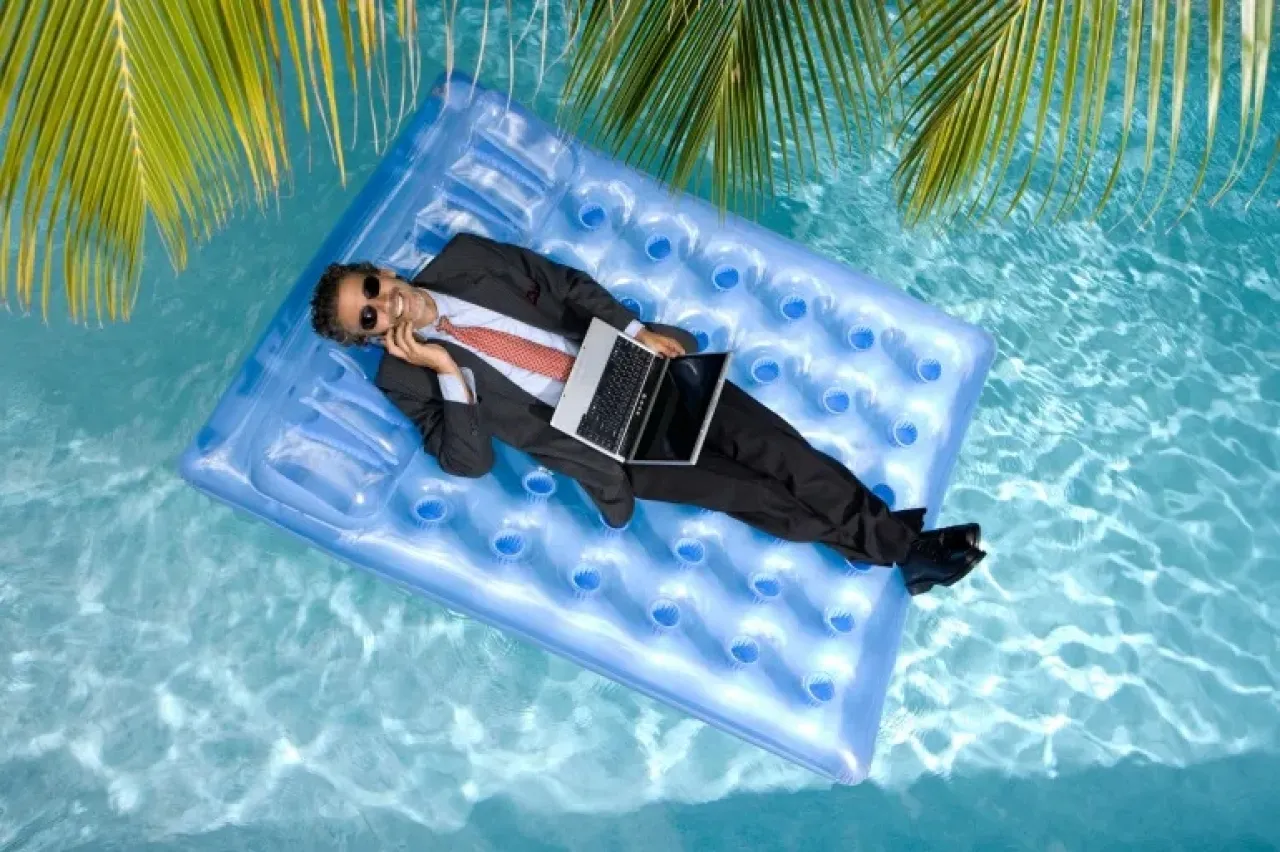
Khaberni - One spends their time during the summer vacation sleeping, relaxing, and exploring scenic areas, then the vacation days finally end, and it's time to return to work.
In fact, the hard truth becomes apparent when the alarm clock rings early again, and all one can do is drag themselves out of bed and go to work. It appears as though one has contracted what is known as "post-vacation condition".
Post-Vacation Depression
This condition is also known as "post-vacation depression," a natural feeling one experiences after returning to work from a long vacation, according to the project manager at the Occupational Health Consulting Institute in Germany, Robin Kaufman. Kaufman explained that "the switch from vacation mode to work mode is difficult for the human body because it is still in relaxation mode."
According to Dirk Windmuth, director at the Institute for Work and Health of the "German Social Accident Insurance," the main symptom is fatigue. He explained that one must get used to the previous sleep-wake cycle again, which usually takes several days.
Back-to-Work Plan
However, there are ways to prevent feelings of lethargy and work stress. Windmuth says, "When one is already trapped in a tunnel of anxiety, thinking of alternatives is impossible," hence he recommends making a plan for returning to work before heading out on vacation.
Kaufman recommends planning the vacation so that one can return to work mid-week, allowing for a smooth transition back to work. Ideally, one would have already completed important projects and presentations before the vacation.
Another tip is to add two additional days after the vacation to stay away from actual work duties, to give oneself time to catch up on the emails that have accumulated during the absence.
While one can plan for a smooth re-entry into work during the vacation, Kaufman strongly opposes checking emails, warning that increasingly blurred boundaries between leisure time and work time are stressful.
He says it is better for one to engage in relaxation activities and recharge, to be fully prepared for the tasks awaiting them at work.
Workplace Culture
Windmuth says that companies themselves are responsible for establishing a workplace culture in which those returning from vacation do not feel exhausted. This means, for example, not scheduling too many meetings, as employees who must attend one meeting after another often cannot complete their tasks.
Kaufman hinted at another preventative measure that company management can take, which is sharing the email pool during employees' vacations, so they can avoid dealing with hundreds of emails upon their return.
But what if one's job nature or the company does not allow for a gradual return to work after a vacation, possibly due to strong or unexpected work pressures, or due to a staff shortage leaving no room for easing back in?
Windmuth encourages expressing mutual appreciation, saying that it significantly eases dealing with pressure. For instance, colleagues returning from vacation can tell them how great it is to have them back and how much it helps the team. Windmuth said, "There is always time for such words."