Khaberni - As Islamabad continues its efforts to bridge the gaps between Washington and Tehran and reach a solution that ends the war, sources reported that Pakistani Army Chief Asim Munir conveyed American messages to Tehran.
The sources clarified that the American messages carry a threat to resume the war, while the resolution of contentious issues will be addressed later if Tehran agrees to a deal.
In contrast, the messages warn of negative consequences if Iran rejects the agreement.
On its part, official Iranian media reported today that the chief Iranian negotiator and the speaker of the parliament, Mohammad Baqer Qalibaf, met with Asim Munir in Tehran.
The Pakistani Army Chief also held meetings with the Iranian President Masoud Bazeshkian, attended by the Foreign Minister Abbas Iraqchi.
"Statement of Principles"
Meanwhile, a high-ranking Iranian source clarified that "what Tehran has proposed so far is not acceptable to America".
The source also added earlier today that "what Iran wants is to agree on a statement of principles that defines how the war will end".
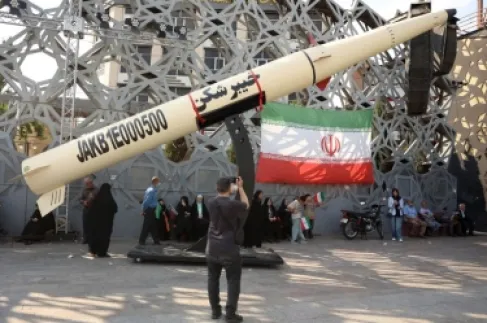
Furthermore, it was emphasized that their country "will negotiate on contentious issues, excluding the ballistic missile file".
He concluded, emphasizing that "Tehran wants a clear mechanism regarding how to negotiate on contentious issues".
"Uranium and Hormuz"
These statements came after White House spokesperson Anna Kelly reiterated that President Donald Trump "has made his red lines very clear". She said: "Tehran can never possess a nuclear weapon, and it cannot retain highly enriched uranium".
This comes as Pakistan continues its efforts to remove obstacles that stand in the way of reaching an agreement that ends the war that erupted on February 28th.
Among the most notable obstacles still existing between the two parties is the issue of transferring highly enriched uranium, estimated to weigh about 440 kg, outside of Iran, and the issue of freedom of navigation in the Strait of Hormuz. Tehran insists on imposing a "new management" on the passage and refuses to remove the uranium from its territory, which opposes American demands.