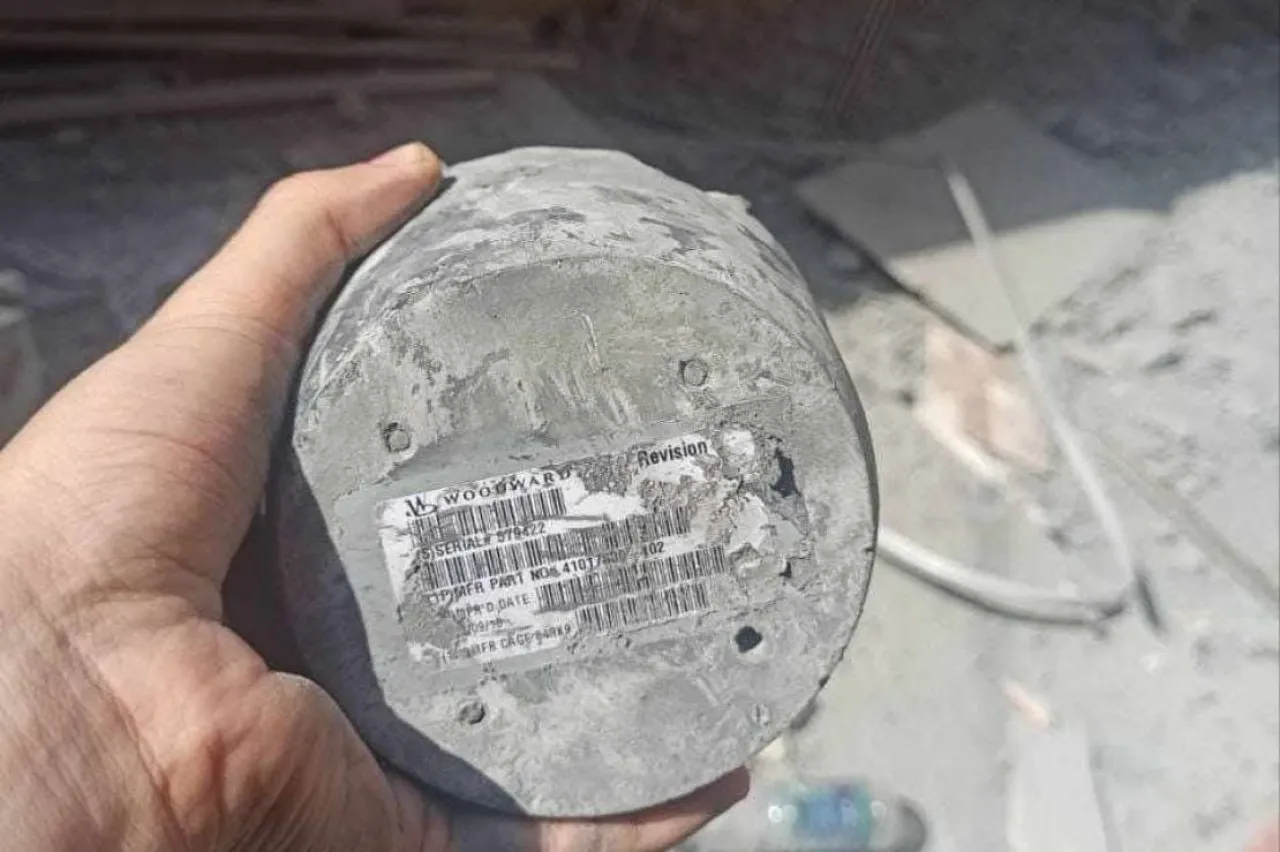
Khaberni - A new investigative report prepared by "Arabi Post" reveals a vast international network including 130 companies from 23 countries and 6 continents, which continued to supply the Israeli occupation army with weapons, ammunition, technologies, and logistic services from October 7, 2023, to May 2026, despite UN calls and resolutions demanding a halt to arms transfers to the occupation.
The investigation shows that the support was not limited to traditional military industries, but also included technology, energy, transport, communications, and artificial intelligence companies, providing a comprehensive infrastructure to continue the occupation’s military operations in Gaza, the West Bank, Lebanon, Syria, and Iran.
The investigation relied on multiple open sources, including official documents, institutional reports, journalistic investigations, and company disclosures, with an audit of company data and classification according to countries, sectors, and the nature of direct or indirect supplies to the occupation army.
The investigation focuses on tracking the network of companies that continued to supply the occupation army with its military needs since the beginning of the war, moving beyond the traditional focus on governmental support or major arms deals only. The report presents a comprehensive map of government and private companies from 6 continents, providing the occupation not only with weapons and ammunition but also technologies, services, and systems that ensure the operation and development of military systems over more than 30 continuous months on various fronts, from Gaza and Lebanon to Syria and Iran.
Who funds the Israeli military arsenal?
The list of companies supplying the occupation army includes giants from the military, technology, transport, and energy sectors worldwide, notably American companies such as Boeing, Lockheed Martin, RTX (Raytheon), Northrop Grumman, General Dynamics, L3Harris Technologies, Palantir, Google, Amazon, Microsoft, Caterpillar, Cisco, IBM, Ford, General Motors, Chevron, and BP, alongside shipping and transport companies like Atlas Air, CAL Cargo Airlines, National Airlines, and Western Global Airlines.
The list also features prominent European companies, including Germany's Rheinmetall, Britain's BAE Systems, France's Thales, Italy's Leonardo, Norway's Kongsberg, and Nammo, Renk Group, Rolls-Royce Power Systems, and ThyssenKrupp Marine Systems, in addition to companies specialized in aerospace and military industries such as Martin-Baker, GKN Aerospace, Fokker Services Schiphol, Dynamit Nobel Defence, and TITAL GmbH.
The list also includes Israeli companies directly involved in developing and producing military systems and security technologies, among them Elbit Systems, Israel Aerospace Industries (IAI), Rafael Advanced Defense Systems, RADA Electronic Industries, NSO Group, Plasan, SMARTSHOOTER, NextVision, XTEND, SpearUAV, Emtan Karmiel, InfiniDome, Paz Energy, Sonol Energy.
The supply network also extends to Asian and other international companies, such as India's Tata Advanced Systems and Hindustan Aeronautics, Adani-Elbit, Japan's Toyota, and FANUC, South Korea's Hyundai and Doosan, as well as DJI and Autel Robotics from China, alongside companies from Canada, Australia, Brazil, South Africa, and Serbia, reflecting the extensive military and technical support network for the occupation army across multiple continents.
The data indicate that the mentioned companies form a continuous industrial and logistical support network for the occupation army since October 2023 to May 2026, covering 6 continents and 23 countries. The data show that this support is not limited to direct armament but extends to multiple sectors including military industries, technology, energy, transport, and cloud services, making the supply system part of a continuous operational infrastructure that accommodates the expansion of military operations in Gaza, Lebanon, Syria, and Iran.
The United States leads with the largest number of companies (43 companies), followed by Europe with companies from 13 countries led by Germany, Britain, and Serbia, while "Israel" itself leads in terms of local supporting companies with 22 companies. The network also extends to Asia through India, Japan, South Korea, and China, in addition to Brazil in Latin America, and South Africa and Australia, reflecting a broad global nature of the supply chains linked to the occupation’s military machine.
Arabi Post’s investigation reveals that the companies monitored span several key sectors that together form the support infrastructure for the Israeli occupation army during its military operations. The defense and military industries sector tops the list, as the most significant and impactful, followed by the logistics of shipping and transport, which ensures the continuity of supply and movement of equipment and ammunition through global networks.
The list also includes the technology, cybersecurity, and artificial intelligence sector, which provides targeting tools and data processing and operations management, alongside the energy and oil and gas sector, which secures the continuity of field operations. This system also includes materials and metals and chemicals used in military manufacturing, and the electronics and manufacturing components sector, in addition to the construction, infrastructure, and engineering sector, which contributes to the development of military bases and equipment.
The weapons and military industries sector ranks as the most represented among the companies supplying the occupation army, accounting for more than 50% of the total companies monitored, highlighting the centrality of this sector in the military supply infrastructure and the continuity of field operations. This distribution shows that the largest part of the support is directly linked to the production of weapons, ammunition, and combat systems, compared to other supportive sectors.
At a nationality level, American companies lead the list with more than 33%, even surpassing Israeli companies themselves which make up about 16.92%, followed by German companies at 6.92%. The data also reveal a growing presence of Asian companies, with India, Japan, South Korea, and China surpassing some European countries in terms of supply volume, providing military equipment and advanced technologies, including armored vehicles, military robots, drones, and excavators, reflecting the broad geographical and technical support base for the occupation army.
The monitored data indicate that the highest-value deals and contracts linked to the occupation army primarily involve American companies, with Boeing topping the list through the F-15 Israel Program, designed to produce and deliver 25 F-15IA aircraft to the Israeli Air Force, with an option to add 25 more aircraft. The company also appears in broader arms packages that include munitions valued at $6.75 billion, in addition to a helicopter deal AH-64E valued at $3.8 billion for the period between 2025 and 2026, as part of deals spanning years and classified under announced or potential U.S. military sales.
The data clarify that these figures are linked to a series of funding programs and military aid, including Foreign Military Sales notifications (FMS/DSCA), which serve as the official reference for armament deals, along with confirmations that "Israel" is the largest recipient of Foreign Military Financing (FMF) program funding spanning 2019 to 2028. Estimates by the Council on Foreign Relations indicate that since October 7, 2023, at least $16.3 billion in direct military aid has been approved, while Associated Press estimates total U.S. military support for "Israel" until September 2025 at approximately $21.7 billion.
The data show that the practical impact of these deals primarily manifests in enhancing the destructive capacity of the Israeli army and sustaining its military operations, particularly in Gaza, by supplying it with advanced munition systems and heavy bombs and precision targeting systems. Reports from human rights and UN organizations have documented the use of American and Western munitions, including JDAM guided bombs, in extensive strikes on residential areas, with estimates indicating the dropping of over 100,000 tons of explosives during the war on Gaza, leading to widespread destruction and repeated massacres of civilians.
Furthermore, the impact of these deals extends beyond the direct military dimension to include operational infrastructure for the war, by integrating artificial intelligence, cloud services, and data analysis systems into combat operations, which enables the development of more sophisticated targeting tools. In turn, energy, construction, and technology companies contribute to ensuring the continuity of the siege, logistical capability, and reproduction of military power, making this industrial and financial network an integrated system that supports the continuation and expansion of operations across multiple fronts.
The data show that the sustainability of the Israeli military systems relies fundamentally on a continuous flow of aircraft, engines, spare parts, and ammunition from a broad network of international companies. Besides supplying the army with aircraft and armored vehicles, missiles, bombs, and advanced armament systems, the continuity of ammunition and technical components supply chains is also secured, ensuring around-the-clock operational readiness. Since October 7, 2023, the pace of supplying the army with critical materials such as GBU-39 and JDAM kits and air defense munitions and artillery shells has accelerated, helping maintain the air and ground fleet’s capability to carry out frequent operations without interruption.
Concurrently, the role of technical, cybersecurity, and artificial intelligence assistance has emerged as a fundamental part of the operational infrastructure for the war, representing about 10% of the sectors linked to these companies. This support is not limited to improving traditional military performance but extends to developing data analysis tools and cloud systems and artificial intelligence programs that are used in managing operations and targeting, through major companies like Microsoft, Google, and Amazon. This integration between technology and military operations creates a digital infrastructure that accelerates decision-making and expands the capability to manage the war on multiple fronts simultaneously.
The major American technology companies, led by Microsoft, Google (Alphabet), and Amazon, form something akin to the backbone of the cloud and artificial intelligence infrastructure used in the Israeli military system. These companies provide cloud computing services, data processing, artificial intelligence tools, and engineering support, enabling the Israeli army to manage a massive amount of information and transform it into operational tools within the battlefield, as part of an accelerating integration between advanced technology and military operations.
Microsoft's Azure platform, along with Google Cloud services and Vertex AI and Gemini within the Nimbus project that involves Google and Amazon in a contract estimated at about $1.2 billion, serve as fundamental pillars in this digital system. International reports and investigations indicate that this infrastructure is used for storing and processing large-scale data and developing precise targeting capabilities, making it a central part of the modern warfare system, where data becomes a direct element in managing operations and military decision-making.
The observed data reflect the continuous flow of support from international companies through an integrated system of arms, logistical services, maintenance, software, energy, and equipment, enabling the Israeli army to maintain its readiness and expand the scope of its operations despite the high attrition resulting from multiple fronts. This support appears as a key enabler for the continuity of military operations from Gaza to Lebanon, Syria, and Iran, within a supply network that enables rapid updating and compensation without interruption.
In this context, the expansion in the theater of operations coincides with a gradual military escalation in Lebanon, Syria, and Iran, alongside the continued operations in Gaza, including extensive strikes that caused significant human losses and widespread destruction of civilian infrastructure. The military activity also extended to airstrikes on sovereign sites in Damascus and land incursions in southern Syria, concurrently with a military repositioning and occupation of new areas following political collapses in the region, reflecting a continuous expansion in engagement patterns and multiple fronts during the period until mid-2026.