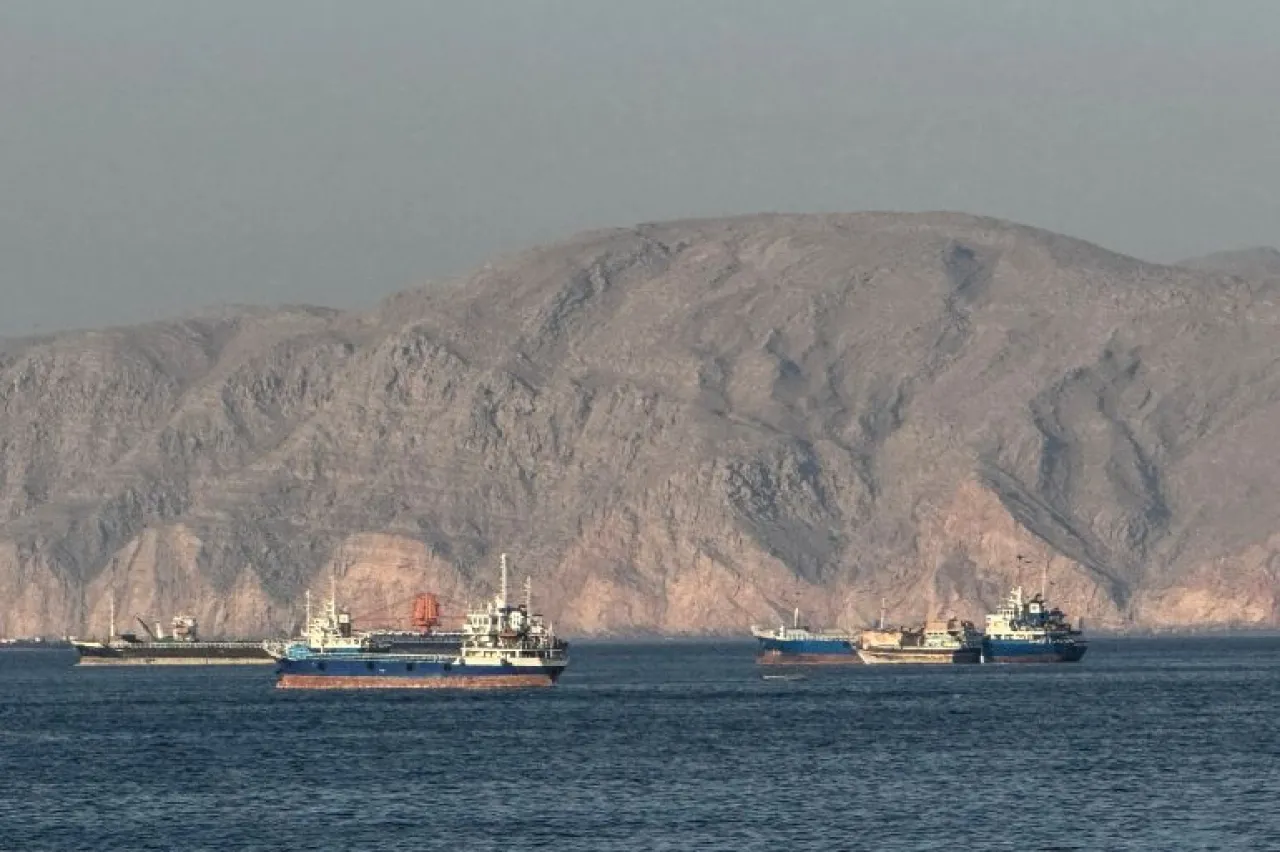
Khaberni - The New York Times reported that the closure of the Strait of Hormuz following the US-Israeli war on Iran prompted countries whose oil exports pass through it to look for alternative routes.
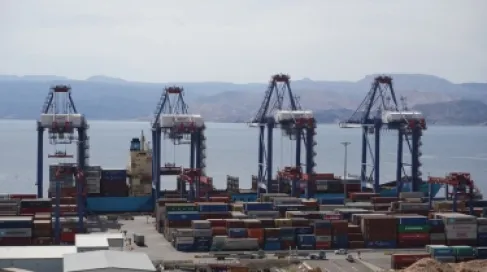
The newspaper added that Syria has emerged as an alternative passage for exports from the Gulf region, due to its possession of ports on the Mediterranean, and its land borders with Turkey, Iraq, Lebanon, and Jordan.
The newspaper explained that Iraq and some Gulf countries have begun exporting oil and other goods via land routes to Syria, from where they can be exported through Syrian ports on the Mediterranean to global markets.
The newspaper quoted the Director of Local and International Relations at the Syrian Customs and Border Authority, Mazen Alloush, as saying, "After the closure of the Strait of Hormuz, nearly all the neighboring countries in the region rushed to request access to Syrian ports."
A Long History with International Trade
The New York Times noted that Syria has a long history with international trade movement, due to its geographical location.
The Director of Public Relations at the General Authority for Free Zones in Syria, Hazem Al-Sabty, told the newspaper that Syria was an important trade route on the Silk Road, which was central to trade for long periods.
The newspaper pointed out that the former Soviet Union recognized the importance of Syria's location, as it allied with the Assad regime since the late 1960s in order to gain access to Syrian ports on the Mediterranean.
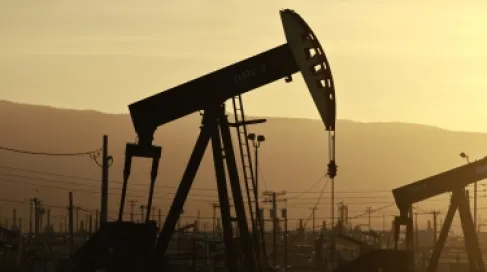
The newspaper quoted the Director of Public Relations at the Syrian Oil Company, Safwan Ahmad, as saying that the state-owned Iraqi oil company requested Damascus’ approval to transport crude oil by land from Iraq to Syria, and then export it from the Baniyas port on the Mediterranean coast.
This cooperation represents an important economic opportunity for Syria, as explained by the newspaper, as it collects fees for the passage of Iraqi oil through its territory and its export, an economic benefit that Syrian leaders hope to expand in the future to achieve as much benefit as possible from Syrian ports.
The Need to Develop Infrastructure
However, taking advantage of Syria's important geographical location and its ports on the Mediterranean requires the development and improvement of the necessary infrastructure for transporting oil and other goods by land, and then exporting them through the ports.
Alloush told the newspaper that rebuilding the Al-Tanf border crossing between Iraq and Syria, through which Iraqi oil passes, will take several months at least, and will cost about 25 million dollars.
Iraq began transporting the first shipment of oil to Syria in late March. On some days, more than 400 trucks cross the border, each carrying up to 10,500 gallons of crude oil.
Sometimes the amount of oil transported from Iraq to the Syrian port of Baniyas is less, according to the newspaper, because the storage capacity at this port is limited.
According to World Bank estimates, the costs of reconstruction in Syria amount to 200 billion dollars, of which 80 billion dollars alone are for infrastructure, such as roads, electricity networks, and water stations.
The newspaper mentioned that at a meeting held in Cyprus last month, Syrian President Ahmad al-Shar' told leaders of the European Union that his country is in a position that qualifies it to become a "safe and strategic corridor linking Central Asia and the Arabian Gulf with Europe."