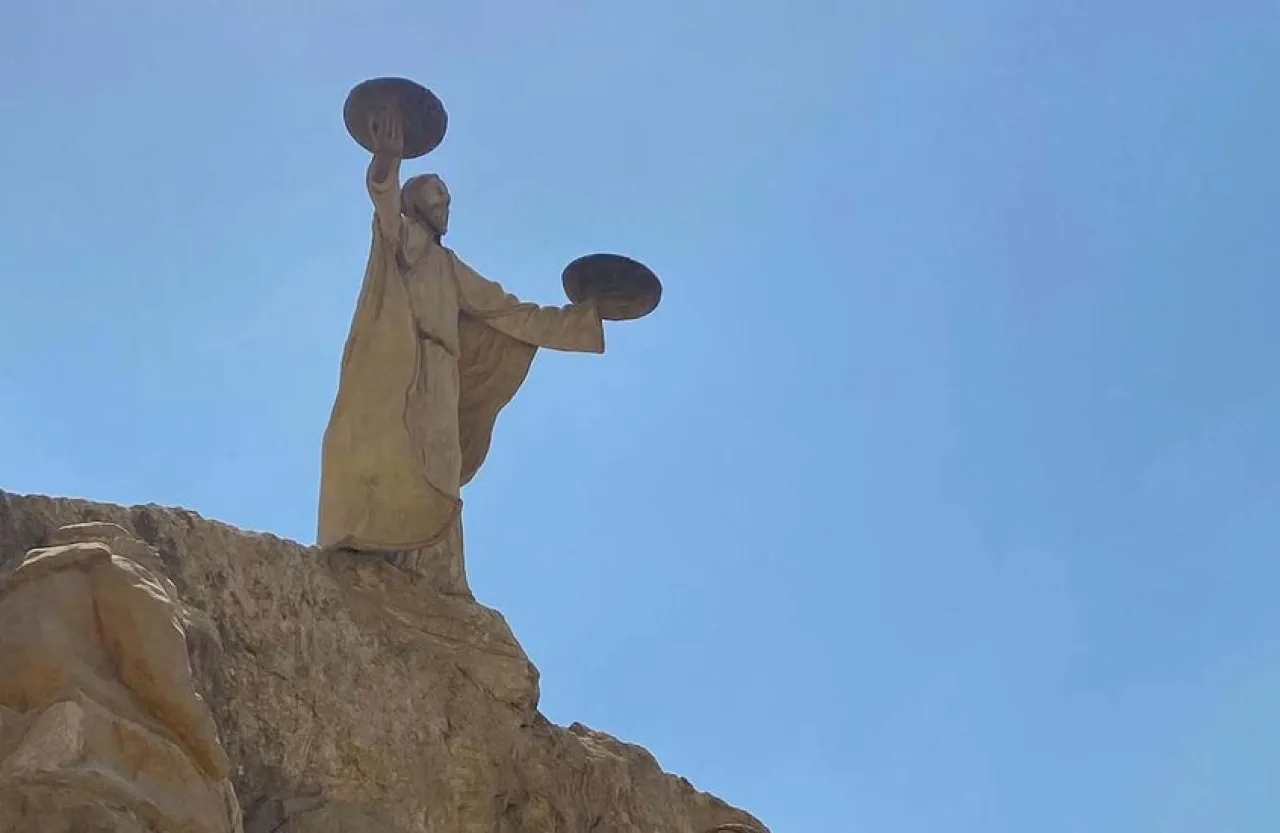
A video of a loud party held inside the historic Monastery of Saint Simon in the Mokattam area of Cairo has sparked widespread outrage in Egypt due to what was considered a violation of the sanctity of the archaeological and religious site.
The video, which quickly spread on social media, featured colorful lights, loud music, a DJ standing above the chancel in front of the sanctuary, with a large gathering of attendees in the monastery courtyard, and a female worker dancing in front of the audience.
Bishop Moussa, the Bishop of Youth, issued an official statement confirming that what happened "has no relation to the Christian doctrine," clarifying that these transgressions "are not according to the doctrines and rituals of the Orthodox Church," and called for officials to adhere to the established traditions and rituals handed down by the fathers.
The Austrian Cultural Forum in Cairo, the organizer of the event held on May 15, expressed deep regret over what happened.
The management of the Forum said in an official statement that it values the long and close relationship with the Coptic Church, and that the event was meant to be a cultural workshop with youth from the Manshiyat Nasser area, but the artistic performance exceeded limits which was deemed inappropriate for the sanctity of the site.
The management of the Forum added that it did not intend to offend in any way, expressing hope for continued cooperation and fruitful dialogue with the Church in the future.
Saint Simon the Tanner Monastery, also known as the Cave Church, is one of the largest and most famous cave monasteries in the world, located in Mokattam mountain east of Cairo, with a history dating back to the 10th century.
The monastery includes several churches carved into the rock, and is an important spiritual pilgrimage site for the Orthodox Copts, attributed to Saint Simon who, according to Coptic narrative, moved the mountain through his prayers.
Several spiritual and cultural events are held at the monastery, but hosting a loud musical party in this manner inside or near the sanctuary has sparked considerable controversy, as it conflicts with the traditional Coptic ritual traditions that maintain the sanctity of church places.