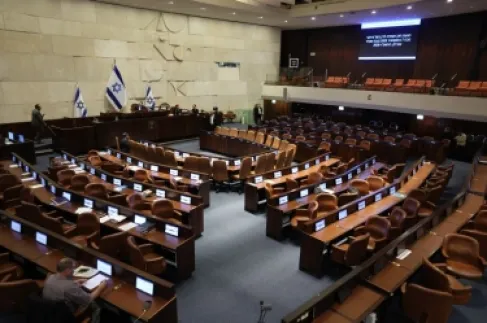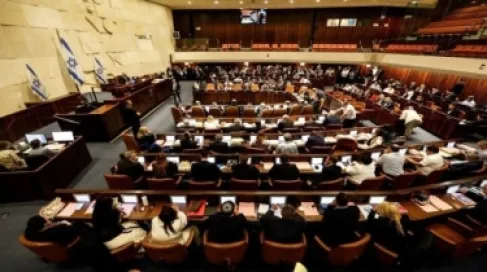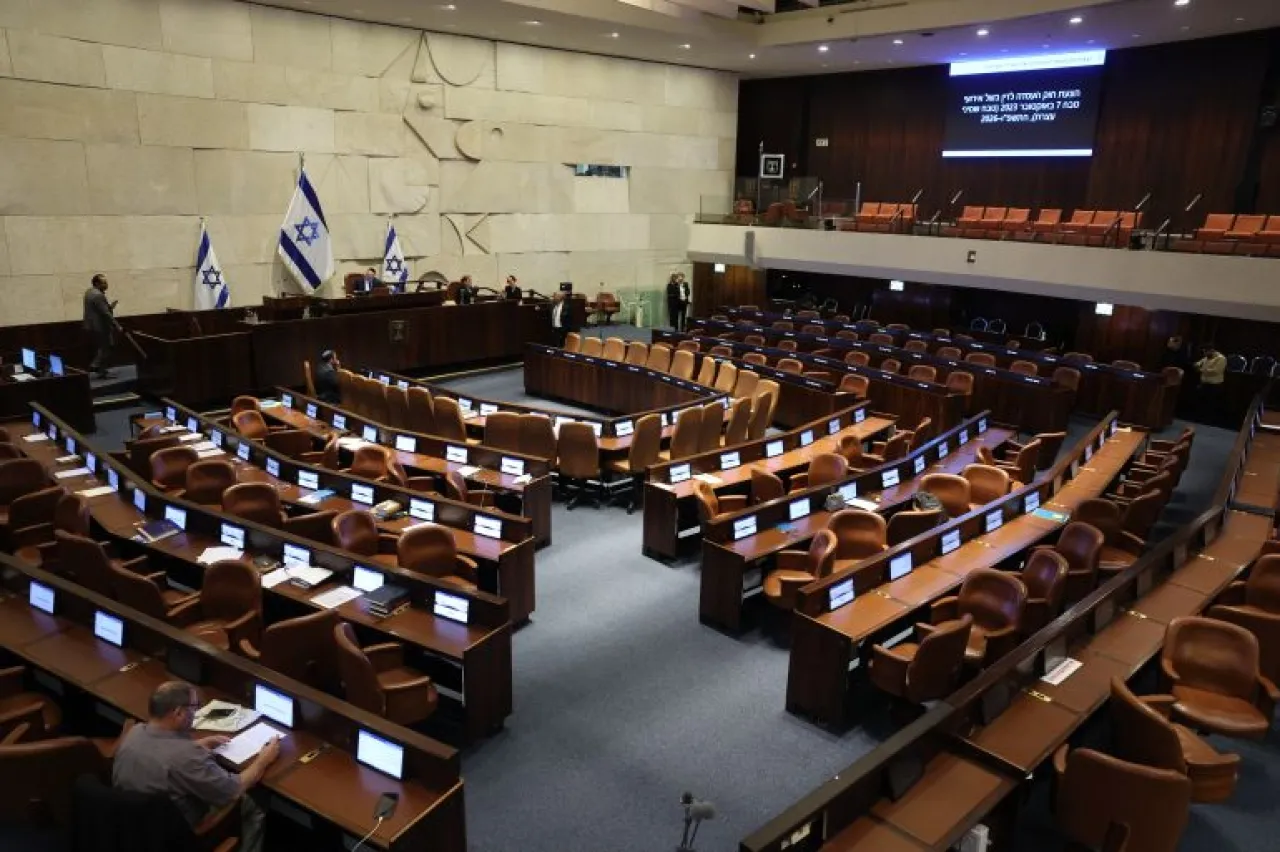
Khaberni - The ruling Israeli coalition led by the Likud party introduced a bill yesterday evening to dissolve the Knesset (Parliament) and head for early elections, following the escalating disagreements about the law exempting Haredi school students from military enlistment. Meanwhile, opposition leader Yair Lapid announced that he and his political ally Naftali Bennett are ready to contest the early elections.
The text of the bill published by Likud states that "the 25th Knesset will be dissolved before the end of its term, and elections will be held on a date to be determined by the Knesset committee, not less than 90 days after the approval of this law."
According to Israeli media, the Knesset dissolution bill may be brought to a vote on May 20. The current legislative term ends on October 27.
The official broadcasting authority stated that "Knesset member Ofer Katz of the Likud party presented a bill to dissolve the 25th Knesset, with the participation of all leaders of the ruling coalition parties."
The bill comes against the backdrop of a growing crisis within the coalition regarding the law exempting Haredim from military service.
Channel 12 explained that the Haredi party "Yahadut HaTorah" is pushing for elections on September 1, while the Haredi Shas party also wishes to hold them on the 15th of the same month.
Netanyahu: By My Hand, Not the Opposition’s
Maariv reported that Prime Minister Benjamin Netanyahu proceeded to present a bill to dissolve the Knesset after realizing that the Haredi parties had decided to dismantle the coalition following his decision not to pass the draft exemption law.
Netanyahu informed the Knesset members from the Haredi parties—last Tuesday—that he was having difficulty passing the law, due to not having a sufficient majority within the Knesset, according to "Walla" Israeli site.
In response, Haredi leaders became furious and made it clear that if the law was not passed, they would proceed to dissolve the Knesset and expedite the elections.
According to "Israel Hayom", the coalition is taking this step to seize the political initiative and lead the dissolution of the Knesset themselves instead of leaving it in the hands of the opposition.
The newspaper added that coalition parties realize that if they go to early elections, they do not want to give the opposition a "victory image" by appearing as a force that succeeded in toppling the government and pushing for the dissolution of parliament.
Maariv pointed out that Netanyahu is no longer interested in holding elections in October, which coincides with the commemoration events of the October 7 attack 2023 (Al-Aqsa Flood), and the heated public discussions expected about the political leadership's responsibility for the failure, thus justifying the momentum for holding elections in September.
Haredim constitute about 13% of Israel's population of 10 million people. They refuse military service under the claim of "devoting their lives to studying the Torah," asserting that integration into the secular community poses a threat to their religious identity and the continuity of their community.
The Haredim continue their protests against military service following a Supreme Court decision issued on June 25, 2024, mandating their enlistment and prohibiting financial aid to religious institutions whose students refuse military service.
Who Will Topple Whom?
Conversely, the opposition has also pushed towards the dissolution of parliament, as the parties "There is a Future" led by Lapid and "The Democrats" led by Yair Golan, introduced two bills to dissolve the Knesset in preparation for their vote next week.
Lapid wrote on the X platform, "We are ready, together," using the name of his new alliance "Biya'hd" (Together) that he formed with former Prime Minister Bennett, aiming to defeat Netanyahu in the upcoming elections that could occur soon.
According to analysts and Israeli media, both sides are ostensibly pushing toward the same goal, which is to dissolve the Knesset and head to early elections, but the real conflict centers on who will lead this process politically and claim the gain of "toppling the government."
If the opposition succeeds in passing its project, it would appear as though Netanyahu's government collapsed under the pressure of the opposition and the disintegration of the coalition.
However, if the coalition passes its project, it will attempt to present the step as an "organized decision" made by the government to reorganize the political scene, not as a result of a defeat imposed by the opposition.
Analysts affirm that the position of the Haredi parties will be the decisive factor, as their votes may tip the balance in favor of one of the projects, presenting Netanyahu with a real political challenge to maintain his government and avoid its collapse at the hands of the opposition.
Netanyahu'sgovernment was formed in December 2022 and included parties from the far-right of the Israeli spectrum, described as the most extremist government in the history of Israel.