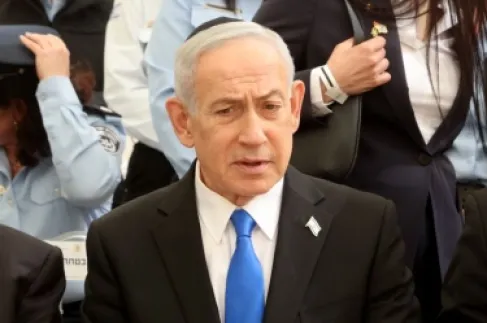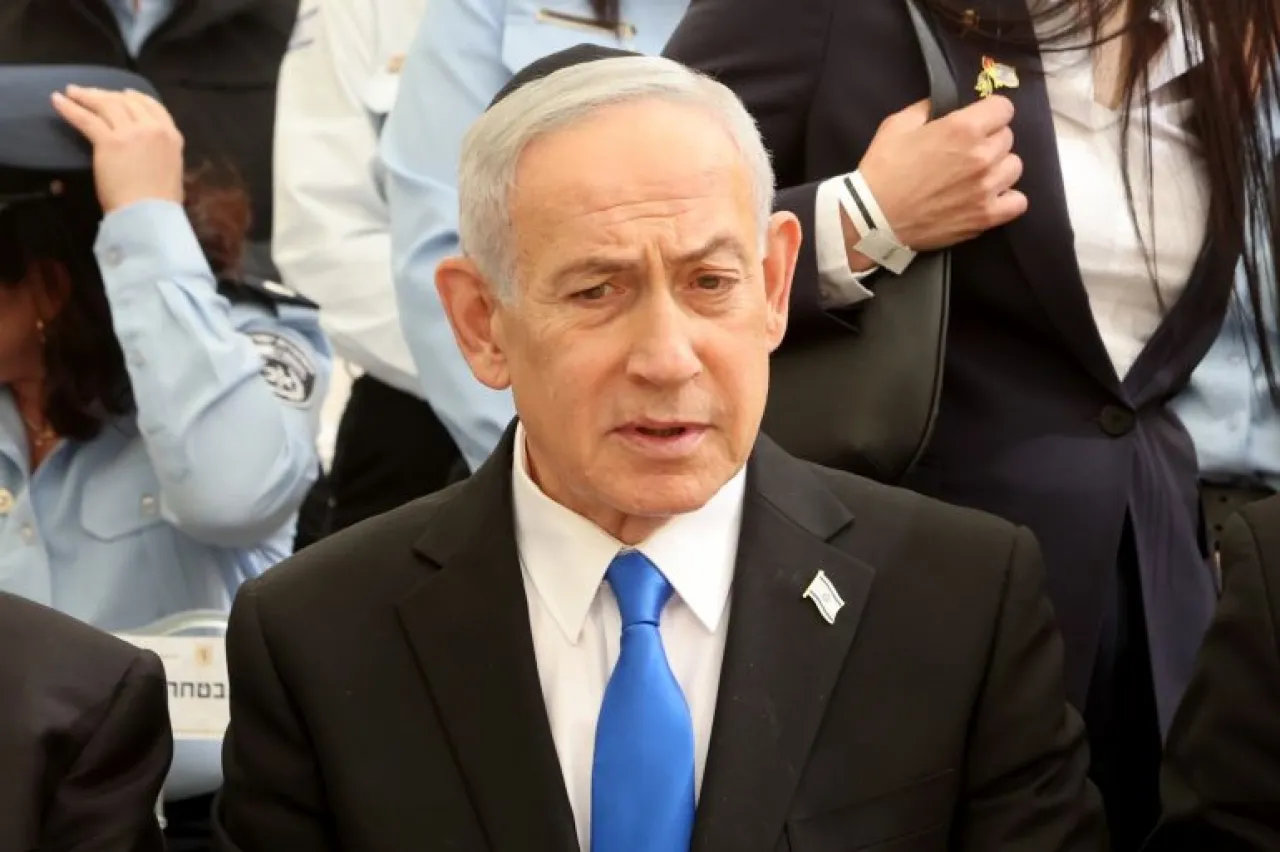
Khaberni - Israeli Prime Minister Benjamin Netanyahu appears today, Wednesday, in front of the Central Court in Tel Aviv for the 87th time, to respond to the corruption charges against him, coinciding with warnings issued by former Prime Minister Ehud Barak about the possibility of Netanyahu tampering with the results of the upcoming elections.
The Israeli Broadcasting Authority stated that Wednesday's session was dedicated to continuing the interrogation of Netanyahu in the "Case 2000", after discussions in the previous sessions on "Case 1000" and "Case 4000".
Netanyahu faces charges of bribery, fraud, and breach of trust in three main corruption cases known as "Cases 1000, 2000, and 4000", and indictments in these cases were filed at the end of November 2019.
Since the beginning of his trial in 2020, Netanyahu has refused to plead guilty, while Israeli law does not allow the president to grant a pardon unless a guilty plea is made.
"Case 1000" deals with Netanyahu and his family members receiving valuable gifts from wealthy businessmen, in exchange for providing facilitations and assistance to these figures in various fields.
He is also accused in "Case 2000" of negotiating with Arnon Mozes, publisher of the Yedioth Ahronoth newspaper, to obtain positive media coverage.
The accusations in "Case 4000" involve providing facilitations to the previous owner of the "Walla" Israeli news site, Shaul Elovitch, in exchange for positive media coverage.
The trial of Netanyahu in these corruption cases began in 2020 and is still ongoing, which he denies, claiming it is a political campaign aiming to topple him.
In addition to his corruption trial, Netanyahu has been required since 2024 to appear before the International Criminal Court for committing war crimes and crimes against humanity in the Gaza Strip.
Election Disruption
In the meantime, former Israeli Prime Minister Ehud Barak warned that Netanyahu might seek to disrupt the upcoming general election if he feels his chances of winning are slim.
Barak, in a radio interview, said, "We are facing crucial elections, and there is a serious threat to their integrity; it is not a game. Netanyahu is desperate, he's like an animal trapped in a snare, he will do anything to win these elections."
Barak suggested that Netanyahu may resort to a security or military escalation before the elections scheduled for next October, whether through a new confrontation with Iran or expanding the war in Gaza or igniting tensions in the West Bank, with the aim of declaring a state of emergency and postponing the elections.
He added that another scenario might include using fake videos on social media to influence voters, also warning of possible disturbances similar to the events of the Capitol storming in the United States in 2021.
Barak said that groups of Netanyahu's supporters might try to storm voting centers and cast doubt on the election results, potentially giving the government a pretext to challenge the electoral process or suspend it.
He added, "No one can prevent 150 people from storming the complex, overturning tables, seizing some ballot boxes, and casting doubt on the possibility of conducting a genuine counting process."
He continued, "The next morning, I do not rule out the possibility that Netanyahu will declare that the arrangements that were in effect during the elections and the incident that occurred at the counting center, do not allow the elections to be completed, and he will declare a state of emergency."
Alternative to Netanyahu
Conversely, Barak pointed out that the Israeli opposition has figures capable of forming a political alternative to Netanyahu, referring to names like former Prime Ministers Naftali Bennett and Yair Lapid, former Foreign Minister Avigdor Lieberman, former Chief of Staff Gadi Eisenkot, and former Deputy Chief of Staff Yair Golan.
These developments come at a time when recent Israeli opinion polls indicate a decline in the popularity of the Likud party under Netanyahu's leadership, compared to the rise of new opposition alliances that may threaten the continuation of his government in any upcoming elections.
A public opinion poll, conducted in early May, showed that Bennett and Eisenkot outrank Netanyahu for the position of Prime Minister in any upcoming elections.
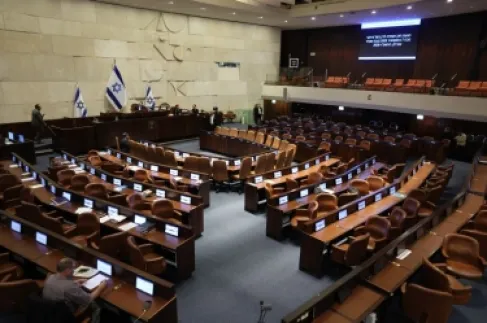
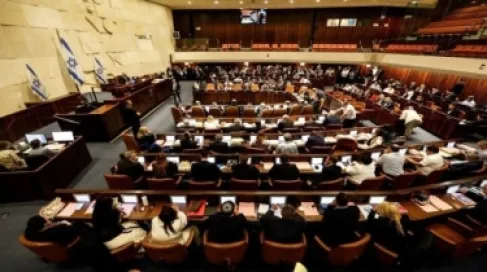
The Prime Minister is not elected directly by the Israelis, but by whoever is able to form a government that wins the confidence of at least 61 members of the Knesset.