Khaberni - Smartwatches started their journey as an additional luxury tool bought by those who want to show off their technology interest and keep up with the latest trends, but with time and the rollout of more features, they have turned into a tool that can save its user's life.
Many companies promote the success stories of how smartwatches like the "Apple Watch" have helped their users, as Apple showcases stories at every conference about users whose lives were significantly impacted by their smartwatches, from helping them discover heart conditions before they happen to monitoring their lifestyle in a healthy way.
The importance of smartwatches increases during times that require continuous monitoring of the user's health. That's why athletes always wear them in training camps and care about the data provided by them, even though they are not always accurate.
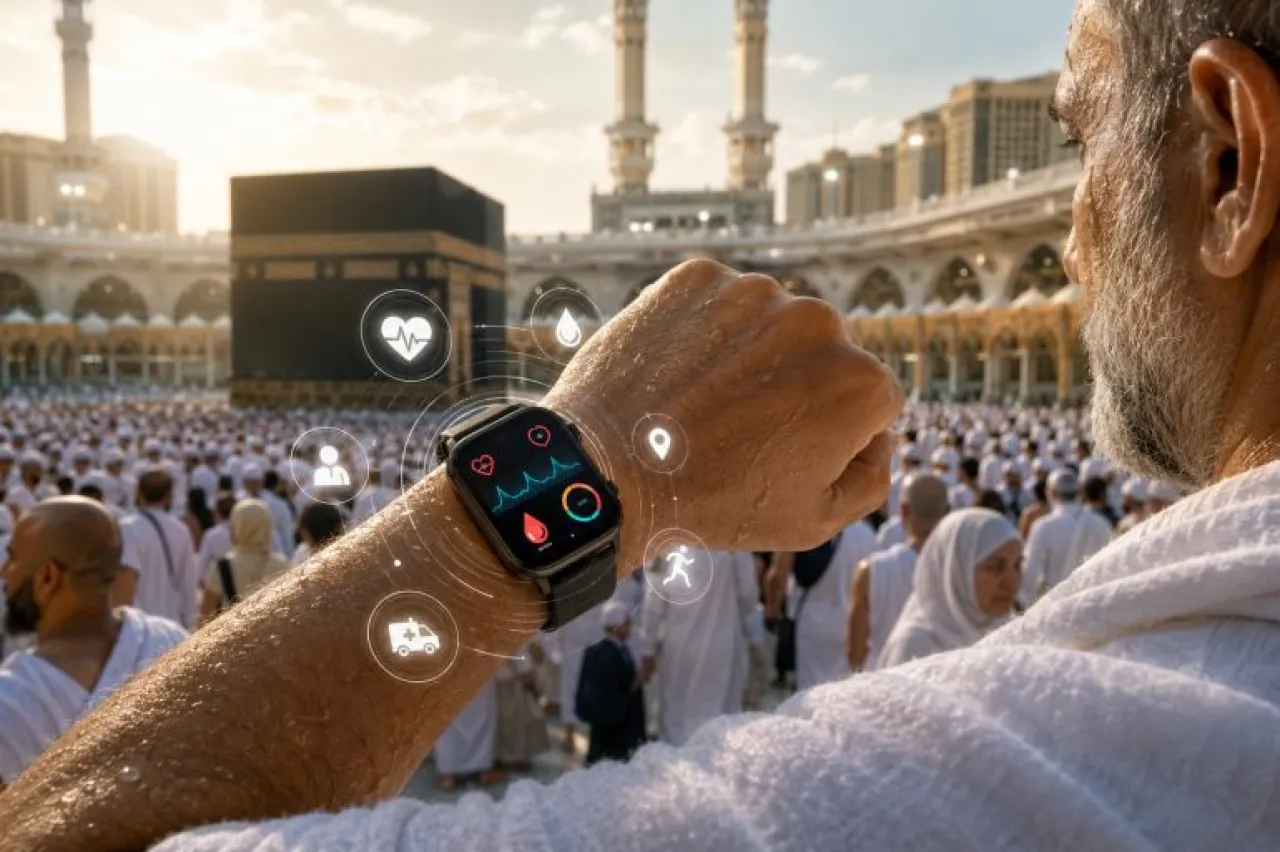
Hajj rituals are an occasion where smartwatches can assist the user and potentially save their life in some cases, thanks to their diverse smart features.
The reason for this is the physical pressure that the pilgrim consistently faces during the hajj rituals, starting from walking long distances amidst crowds and possibly exposure to the sun and fluid loss for extended periods.
From Step Counters to Early Warning and Surveillance Tools
A study published in 2006 by the International Library of Medical Studies indicates that performing the hajj puts continuous pressure on the pilgrim's body due to intense crowding, despite annual government efforts to maintain the health of pilgrims.
However, part of the stress on the pilgrim's body relates to the rituals of the hajj itself, which may vary slightly from the daily lifestyle of many individuals around the world, starting from walking long distances, exposure to heat for sustained periods, and the potential lack of fluids.
For this specific reason, monitoring different vital signs, especially for elderly pilgrims or those suffering from chronic diseases, becomes more critical.
While the accuracy of sensing mechanisms and health monitoring in smartwatches is not as precise as their professional medical counterparts, they are still early indicators and effective warning tools in case of an emergency according to a report from the Health Department at the University of Utah.
This means they help the pilgrim, their companions, and their family in detecting any malfunction that may require professional and precise medical care, like if the watch tells you that your pulse rate is high or you are experiencing high blood pressure, prompting you to head to a healthcare center for appropriate care.
Most new smartwatches come with features capable of monitoring the overall health state of the wearer and alerting their family or companions via smart features and direct connection with phones to receive notifications related to health condition.
These features include monitoring oxygen saturation, heart rate, and blood pressure, in addition to some watches' ability to read indicators of physical and nervous stress and alert the user to try to reduce these indicators as much as possible.
However, smartwatches still cannot yet read blood sugar levels, which are vital measures for users suffering from diabetes, but fortunately, they can now connect to continuous glucose monitoring devices and display necessary alerts on the watch before a significant drop or rise in blood sugar levels occurs.
Beyond the Limits of Health Benefits
The benefits and advantages of smartwatches for the pilgrim are not limited to traditional health benefits only but extend further as they can save the pilgrim in case of getting lost or separated from their group.
Most smartwatches today feature location tracking and direct connection to "GPS" networks, whether through a phone or sensors within the watch, allowing the pilgrim to easily know their position and return to their group's lodging, as well as enabling location tracking by relatives or group supervisors if necessary.
Some smartwatches can also directly connect to mobile phone networks, allowing the pilgrim to communicate with their family even if they do not carry their smartphone, in addition to the ability to directly contact them or connect directly to satellite networks for sending emergency messages.
Apple Watches and some other smartwatches have advanced alert sensors capable of notifying the user's family members if they fall or are about to fall, which becomes crucial in crowded places such as locations of performing they Hajj rituals.
Where Do the Limits of Smartwatches Stand?
Despite all the benefits that smartwatches can offer to the pilgrim and travelers in general, they are still limited by their technical capabilities, as location-sensing sensors may fail sometimes, and pilgrims will need to regularly charge them to ensure they do not suddenly stop working.
Some health conditions require the pilgrim to wear professional health tracking and sensing devices, like continuous blood glucose monitoring devices, something that smartwatches cannot yet do today.
The most significant benefit of smartwatches during the performance of Hajj rituals lies in helping the pilgrim and their relatives to catch early indicators reflecting their health status, giving them better time to act and minimizing the likelihood of various events evolving into crises that threaten the safety and life of the pilgrim.