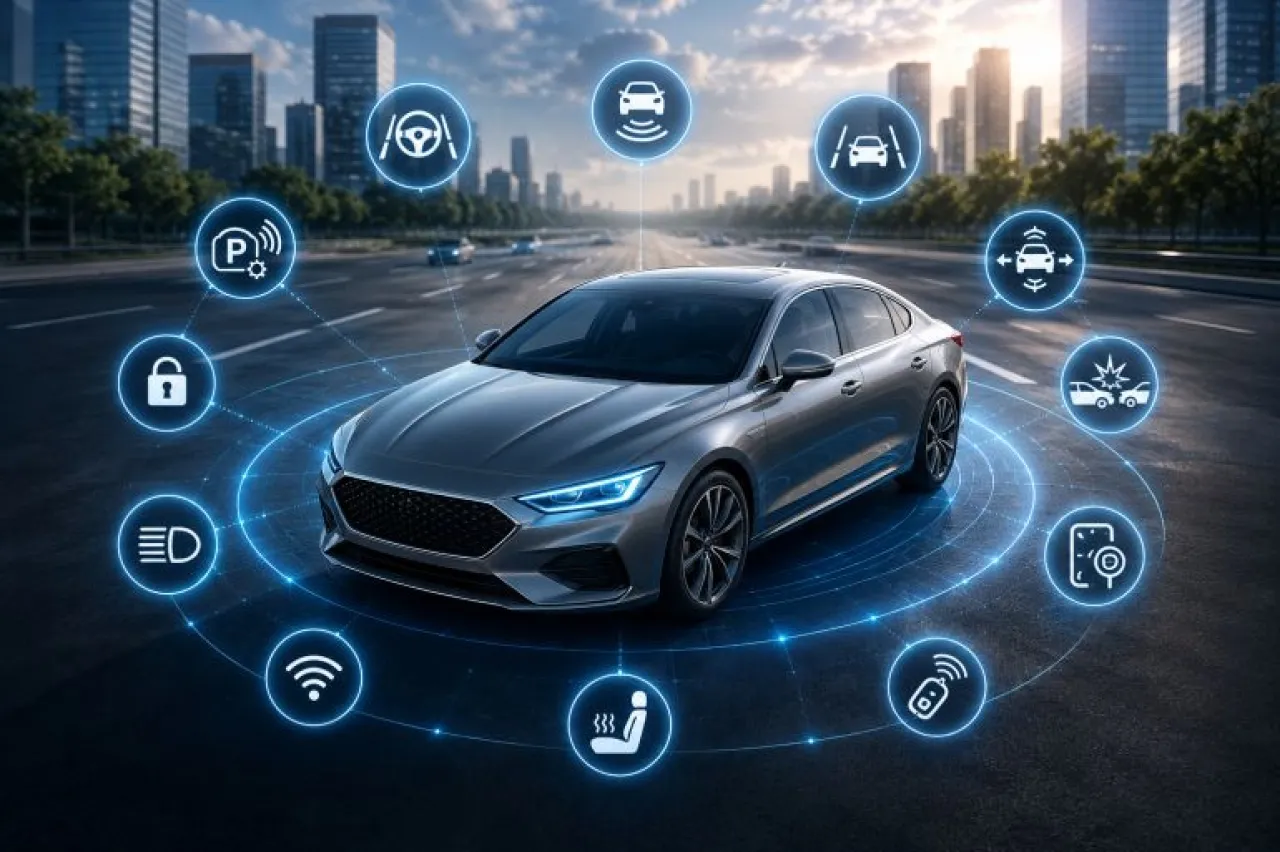
Khaberni - Modern cars are no longer just a mode of transport, but have transformed into smart platforms filled with technologies that automatically work to make driving more comfortable and safe. Surprisingly, many drivers are not even aware of some of these features in their cars.
With the rapid development of driver assistance systems, cars can now park themselves, change lanes automatically, and even prevent accidents before they happen, among several other features they perform.
1- Automatic Parking
This technology has been available for about 20 years and is now available in a variety of modern vehicles, where cameras and sensors fully take over the parking process, whether it's parallel or perpendicular parking.
Some systems can even search for a suitable parking spot while slowly driving down the street. These systems often handle front-in parking as well.
2- Remote Parking
Some cars can park themselves automatically after you exit, controlled either via a remote control device or a smartphone app.
This is useful when the parking space is tight, so the driver or passenger doesn't have to get out of the car to avoid scratching their door.
Tesla has pioneered this feature, calling it "Summon," and it is also available in models from BMW, Hyundai, and Genesis. Some can even drive the car to pick you up from a nearby location after exiting the parking spot.
3- Hands-Free Driving on Highways
Systems like "BlueCruise" from Ford and "Super Cruise" from General Motors allow for semi-autonomous driving on highways, where the car controls the steering, braking, and acceleration while the driver remains ready to intervene when necessary. Tesla's full self-driving feature works on most roads.
4- Automatic Lane Change
Some cars can change lanes automatically when the turn signal is activated, after ensuring the lane is clear. There are advanced systems that start the lane change process as soon as the driver looks into the side mirror.
BMW's highway assist system with active lane change feature changes lanes when the driver looks into one of the side mirrors.
5- Automatic Braking to Avoid Collisions
Front collision warning and automatic braking systems have become some of the most important modern safety technologies. They use cameras and radar to detect the risk of collision, alert the driver, and then intervene automatically if there is no timely response, where the system activates the brakes automatically.
6- Intersection Turn Assist
This technology monitors oncoming vehicles from the sides while turning at intersections, warns the driver, or intervenes with the brakes to prevent potential accidents.
This system is known in some vehicles from Audi, General Motors, Honda, Mazda, Mercedes-Benz, Toyota, and Volkswagen by different names, but all monitor the approach of vehicles from the side at intersections, alert the driver to their presence, then automatically apply the brakes to prevent a collision.
7- Collision Avoidance Maneuvering System
In some cars, the system can automatically steer to maneuver around a sudden object on the road, aiming to reduce the chances of collision.
The front collision warning system with automatic emergency braking has become mandatory in all new light passenger vehicles in the United States.
This system uses cameras and other sensors to monitor the likelihood of a collision and issues a warning to the driver. If this warning is not heeded, the system will automatically apply the brakes.
8- Protection When Opening Doors
The “Safe Exit Assist” feature relies on sensors that monitor the approach of cars or bicycles from behind, warning passengers before opening the door, and some systems automatically prevent it from opening if there is a risk.
9- Automatic Braking When Reversing
This is usually part of the rear traffic alert system that warns the driver of crossing vehicles while reversing from a parking spot or driveway, and this feature goes a step further by applying the brakes automatically when the reversing car approaches an object.
10- Smart Lights That Interact With the Road
Modern lights are no longer static only but now rotate with the direction of the steering wheel and automatically adjust the intensity of the light according to oncoming vehicles or pedestrians, to improve visibility without disturbing others.
Such features are now available in various designs, and the most common are headlights that automatically rotate to indicate the steering wheel direction.
It has evolved into versions like Mercedes-Benz's digital lighting feature, which uses high-definition lighting (SSL/HD) and matrix LED systems to distribute a "light carpet" on the road in the adjacent lane when activating the turn signal and dynamically "blocks" light from oncoming traffic and pedestrians, ensuring the full brightness of high-beam lights without dazzlin