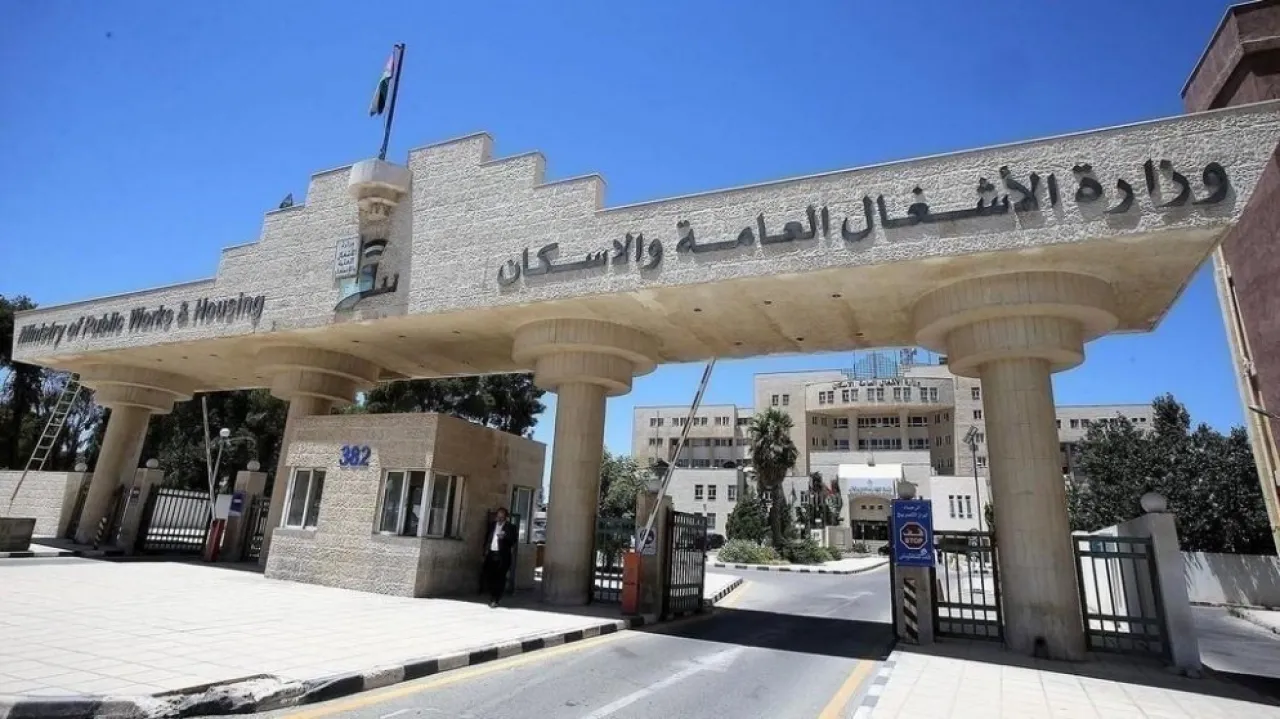
Khaberni - The spokesperson for the Ministry of Public Works and Housing, Omar Al-Maharmeh, confirmed that the control and inspection system on reconstruction projects No. 52 for the year 2020 was established to enhance and support the supervisory role of licensing authorities and is not intended to replace them in any way. He called on all partner entities in the construction sector, including the Greater Amman Municipality, municipalities, administrative governors, engineering offices, and the Contractors Syndicate, to fully uphold their legal and technical responsibilities, and to stop blaming the National Building Council for field errors that are fundamentally due to weak direct supervision or negligence in monitoring projects licensed by them.
Al-Maharmeh emphasized that the Council represents the legislative umbrella that charts the roadmap for the engineering and construction sector in the Kingdom, and its role goes beyond issuing regulatory texts to creating a comprehensive technical constitution embodied in the national building codes.
Al-Maharmeh explained that the primary role assigned to the National Building Council is primarily legislative, as it is the sole entity responsible for preparing and issuing engineering technical codes in the Kingdom and setting all laws, regulations, and instructions that ensure compliance with these standards during the design, execution, supervision, maintenance, and operation phases. Its authority expands to include roads, bridges, dams, and all engineering projects, ensuring their updates and developments to keep pace with global practices. Strategically, the Council aims to enhance the quality and type of construction services, provide sustainability standards, efficiency in energy and water usage, protect the environment, and ensure public safety of facilities through precise mechanisms for applying codes at all engineering work stages.
Al-Maharmeh pointed out that the Council does not possess judicial enforcement or immediate execution tools to stop work upon detecting errors but rather, in cases of violation, its role is limited to addressing legally responsible entities for licensing to halt the work and correct the situation, highlighting the pivotal preventive role that the Council plays in protecting lives and properties. In several instances, it has identified critical sites suffering from risks of landslides or collapses. Following this, it addressed the Ministry of Local Administration to circulate to the concerned municipalities to permanently stop the issuance of building permits at these sites for safety, or allow construction under specific engineering conditions that consider the geological nature of the area, as is the case in the Ja'eedia area belonging to the Ain Al-Basha municipality, for example.
He said that the Council's practice of its supervisory role in partnership with other institutions aims to control the quality of work. However, the inspection committees of the National Building Council do not absolve the municipalities or the Amman Secretariat from their responsibilities in thorough and field follow-up from issuing the license up to granting the occupancy permit. Nor do they relieve the Contractors Syndicate and engineering offices from the responsibility of adhering to execution according to the plans and the presence of registered technical staff, confirming at the same time that the Council bears no legal responsibility resulting from the self-supervision absence of these entities in monitoring their construction projects and ensuring their compliance with the technical requirements granted by the licenses.