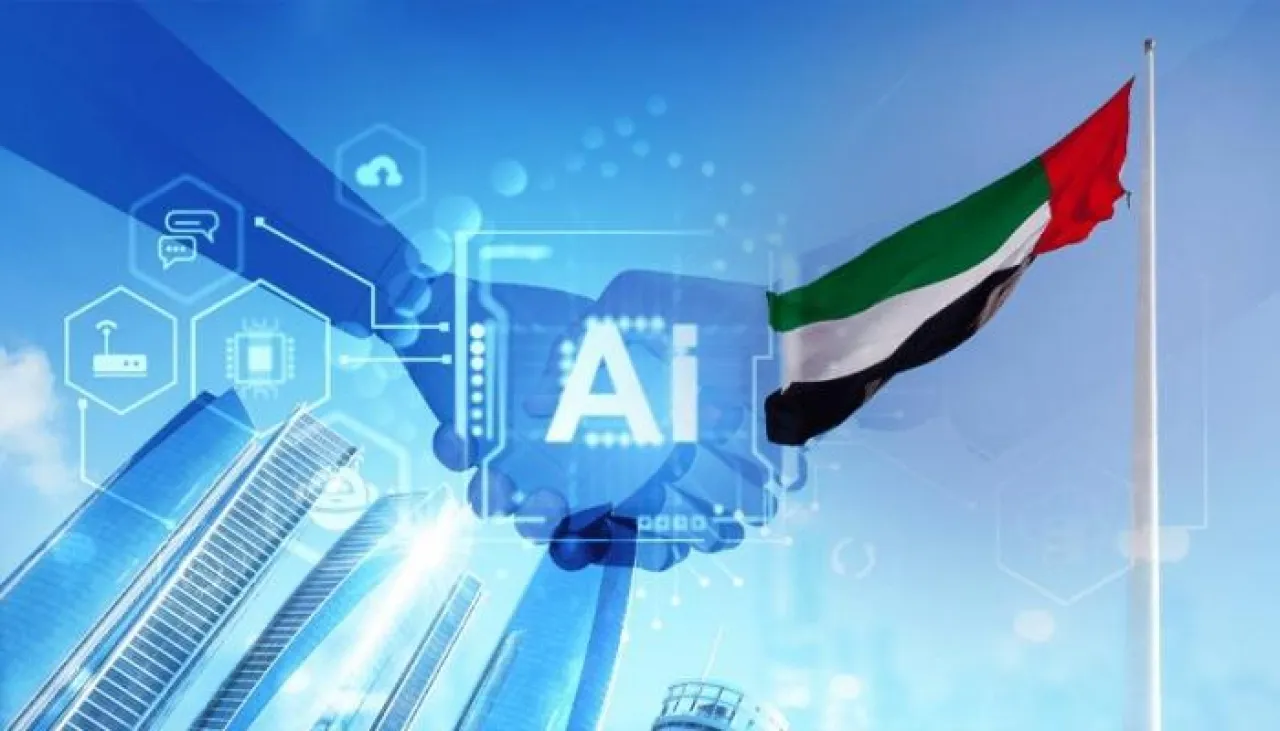
Khaberni - The UAE has solidified its leadership in adopting artificial intelligence technologies, having ranked first globally with a rate of 70.1% among the working-age population during the first quarter of 2026, as confirmed by the Artificial Intelligence Diffusion Report for the first quarter of 2026 issued by "Microsoft".
The report noted that the rate of artificial intelligence adoption in the UAE has gradually increased from 59.4% to 64% and then to 70.1% in the latest results, making it the first economy in the world to exceed the 70% threshold, while large parts of the world remain below the 10% mark.
The report shows that the use of artificial intelligence has become more integrated into work and learning methods across various parts of the UAE, supported by foundations designed to enhance resilience, operational continuity, and responsible growth.
This accomplishment reflects the nation’s status among the world's most advanced economies and confirms its ongoing adoption rate is outperforming the global average of 17.8%, highlighting the impact of continued national focus on developing digital capabilities and growing an innovation ecosystem.
Amr Kamel, the General Manager of Microsoft UAE, stated that it is encouraging to see the UAE ranked globally as a leader in artificial intelligence adoption, reflecting years of sustained focus by the government, business sector, and individuals on building the right foundations.
Dr. Ahmed Baha Khairy, a technology expert, pointed out that this UAE distinction is the result of a comprehensive and smart national strategy that started in 2017 and extends to 2031, successfully integrating these advanced technologies at the core of government management and daily services provided to citizens and residents, making it a globally inspiring model in comprehensive digital transformation.
Khairi emphasized in his statements that the UAE's vision included major strategic and vital sectors, starting from space and environment to energy, health, education, and transport, with the aim of strategically securing the nation and enhancing service efficiency in an unprecedented manner.
He confirmed that the UAE’s ambition aims for the nation to be globally first in the size of investments in artificial intelligence applications and their returns.
He pointed out that the UAE's greatest success lies in building "bridges of absolute trust" with all stakeholders, whether in the banking sectors or trade or marketing.
Microsoft's report on the spread of artificial intelligence for the first quarter of 2026 highlights the growing gap between the global north and south, with the adoption of artificial intelligence in higher-income regions growing more than twice as fast as in other regions.
The report sheds light on ongoing challenges in digital connectivity, digital infrastructure, and local language AI capabilities as primary barriers to equitable dissemination, considering that thoughtful and long-term investment is the most effective response.
In this regard, General Mahmoud Al Rashidi, former Assistant Minister of Interior for Information Security in Egypt, praised the exceptional and unprecedented success achieved by the UAE in the field of artificial intelligence, despite the aforementioned challenges.
He confirmed in his statements that this UAE superiority is clearly evident in all the jobs and services the state offers to its citizens, having managed to employ technology to significantly ease people's lives.
Al Rashidi explained that the notable progress of the UAE is due to its vision of injecting massive investments into technological infrastructure, both in terms of hardware, devices, and advanced software.
He mentioned that this strategic investment has enabled the state to occupy an advanced position in the international competition race.
The Essence of the UAE Experience
Al Rashidi pointed out that the essence of the UAE's success lies in achieving the ultimate goal of artificial intelligence, which is to facilitate government services and ensure quality of life for citizens.
He considered that the use of smart applications in all aspects of the state has made the UAE experience a model to be emulated in the efficiency of digital government performance.
A Comprehensive Leap
In a related context, technology expert Mohammed Azzam emphasized the importance of artificial intelligence, which has become evident to everyone today, not just specialists.
In an interview with "Al Ain News", he explained that this technology is making a radical and comprehensive change in various vital sectors, starting from defense, energy, to health, retail trade, and financial services.
Azzam pointed out that artificial intelligence has moved beyond routine tasks to executing non-routine tasks, leading to fully autonomous systems.
He praised the UAE's leading role, noting its announcement of massive investments amounting to about 1.4 trillion dollars in the field of artificial intelligence over the next ten years.
He considered that this approach places the Arab region at the heart of the global technological movement, especially as artificial intelligence is expected to add about 15 trillion dollars to the global economy during the same period.
For his part, banking expert Walid Adel praised the exceptional leadership of the UAE in the field of artificial intelligence, confirming that the UAE has succeeded in building a comprehensive digital ecosystem aimed at enhancing efficiency and achieving an unprecedented leap in institutional and banking performance, making it a model to be emulated in the region and the world.
He mentioned that the UAE was a pioneer in recognizing the importance of artificial intelligence as a driving force for the future economy, having invested strongly in technological infrastructure and qualified human resources.
He also pointed out in his statements that the UAE was a pioneer in establishing regulatory frameworks and legislation that ensure safe and ethical use of artificial intelligence, which has enhanced the country's attractiveness for foreign investments in the technology sector.