Khaberni - Haaretz believes that US President Donald Trump is seeking to end the war, effectively ensuring that he will not allow Israel to intervene and thwart this course.
The newspaper bases its view on the notable acceleration between the attempt to forcibly open the Strait of Hormuz, then freezing the operation and returning to the negotiating track with Iran, as an indication of a clear desire in Washington to contain escalation, driven by economic pressures on Tehran and American calculations that extend beyond the conflict zone itself.
The newspaper sees that American calculations are inseparable from broader international considerations, including competition with China, and the upcoming political and symbolic obligations, making the continuation of the war without a decisive victory a burden on the White House.
In this context, Trump aims to formulate an initial agreement focusing on resuming navigation in the Gulf and easing oil market pressures, paving the way for deeper negotiations addressing the nuclear file.
The newspaper also notes that the absence of the Houthis in Yemen from the confrontation scene and their non-engagement in the escalation is not coincidental, but reflects regional understandings aimed at neutralizing additional parties and preventing the expansion of the war.
"Ambiguous Agreement"
However, the nature of the possible agreement to end the war as a whole remains unclear, as Haaretz is reserved about exaggerating optimism, in light of "the record of inaccurate American statements, and what is known about the Iranian approach of prolonging negotiations to achieve economic gains."
The newspaper emphasizes that the essence of any understanding revolves around a formula of easing sanctions in exchange for strict restrictions on enrichment and nuclear monitoring, while Washington avoids pressure on missile and regional influence files.
The newspaper points out that Trump has previously praised, as usual, the operation "Epic Wrath" (the war on Iran) and "Project Freedom" (the operation to liberate ships in the Strait of Hormuz), describing their results as a resounding success, although the latter had not actually started until just 36 hours earlier.
The goal now is to draft a one-page joint principles document, with upcoming negotiations expected to last a full month, during which both parties seek to reach more detailed agreements, according to Haaretz.
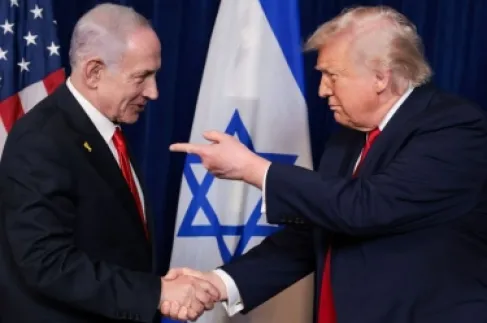
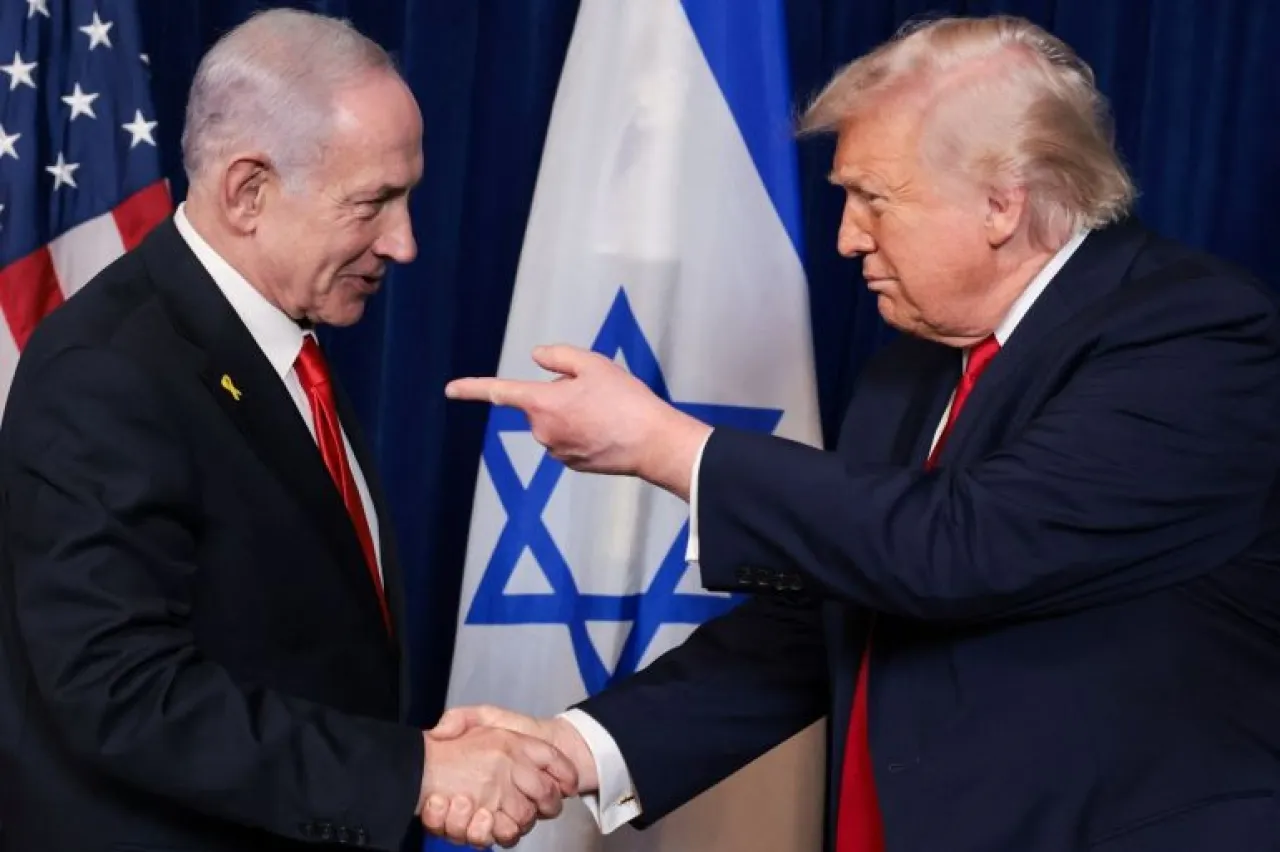
Trump and Netanyahu
Haaretz's military analyst Amos Harel points to the "remarkable" absence of Israel from the recent developments, considering it not to be coincidental.
He mentioned that Prime Minister Benjamin Netanyahu posted a video last Wednesday stating that he was "in full coordination" with Trump, while the US President "did not mention Israel or Netanyahu" in his latest statements.
Harel's report indicates that Trump "seeks to minimize his losses and end the war with Iran, while Israel seems unable to stop him."
Haaretz also refers to some reports indicating rising tensions between Trump and Netanyahu, as the US president's team rejected a proposal submitted by Netanyahu during his visit to the White House on February 11, aimed at accelerating the regime change in Iran through "Kurdish militias" actions.
According to the newspaper, the idea of "regime change," which was promoted at the beginning of the war, seems to have been forgotten, just like Netanyahu's previous promises of a total victory in Gaza and Lebanon.
The report views the relationship between President Trump and Netanyahu as entering a sensitive phase, as Washington allows Israel limited military leeway in Lebanon but at the same time imposes a clear ceiling that prevents sliding into broad regional escalation that could undermine the calming process in the Gulf.
According to this assessment, Netanyahu holds tactical cards to destabilize, but lacks complete decision-making freedom, amidst the White House's insistence on controlling the pace and preventing the expansion of the Lebanese front that could threaten the regional understandings under formation.
On the other hand, the newspaper mentions that the spokesperson for the Israeli army issued a statement yesterday which reads: "Since the start of the ceasefire agreements, the Israeli army has eliminated over 220 Hezbollah terrorists."
This "ambiguous" statement hints at Trump's ceasefire directives and implicitly suggests they are not being implemented, according to the source.
On the Israeli track, Haaretz points to increasing tensions between Trump and Prime Minister Benjamin Netanyahu, especially after the American administration rejected Israeli ideas to expand the war or push for regime change in Iran.
Despite some Israeli military movements, especially in Lebanon, the newspaper believes Washington will not allow undermining the pacification process if the fate of the regional war is at stake.
Potential War Round in Gaza
Parallelly, the newspaper sees that the Gaza Strip remains outside the priority of American action, and claims that Hamas benefits from being preoccupied with Iran to strengthen its control and procrastinate on disarmament issues, while reconstruction plans and international efforts struggle due to lack of funding and security complexities.
The newspaper places this scenario in the context of repeated Israeli warnings about the risk of maintaining the status quo in Gaza, as it points out that Hamas, despite the destruction of most of its military capabilities, still retains strict organizational control and field control, making the rebuilding of its strength viable in the medium term.
Haaretz also confirms that the ambiguity surrounding the future of the proposed international force in Gaza, amid recruitment difficulties and international hesitation, reinforces the estimates of a possible slide into a new escalation round in Gaza before the Israeli elections scheduled for October.