Khaberni - The Labour Party may not lose its political status following the progress made by the "Reform UK Party" led by the rightist Nigel Farage in the recent local elections, but analysts see this as the beginning of the end of traditional parties' control over governance in Britain, similar to what happens in many European countries.
Preliminary results showed that the Labour Party, under the leadership of Prime Minister Keir Starmer, suffered significant losses including historical strongholds, while Farage's party, which advocates for greater alliance with the United States and Israel, made advances.
British media predicted that the elections held on Thursday would lead to a significant shift in British policies.
British voters cast their votes to elect more than 5,000 members of local councils in England, in addition to members of the semi-autonomous parliaments in Scotland and Wales.
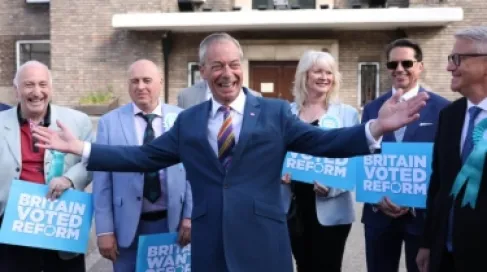
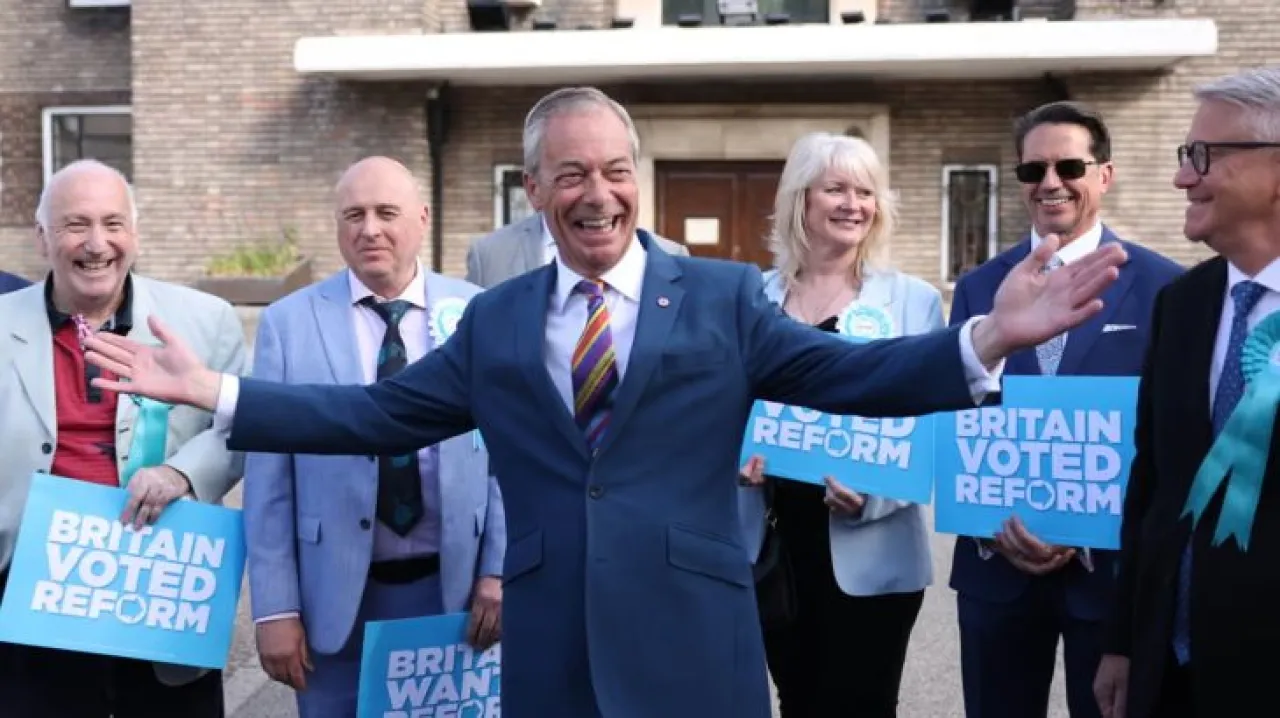
According to the British network "BBC", the initial results show that the Labour party suffered losses of hundreds of seats, against a sweep by the Reform Party, which won more than 640 seats.
Following these indicators, Farage declared that the traditional clash between Labour and Conservatives is dead and buried, while Starmer refused to step down as head of government.
It seems that Farage has benefited from the public's frustration with the political elite, as he proposes to cancel agreements signed by the Labour Party with the European Union, and emphasizes the need for Britain to stand more with the United States on issues like the war against Iran, and calls for the cancellation of the arrest warrant for the Israeli Prime Minister Benjamin Netanyahu - wanted by the International Criminal Court for charges including war crimes against Palestinians - and to remove all reservations on the shipment of British weapons to Israel.
End of Power Monopoly
Nonetheless, Professor of International Relations at the University of Geneva, Hasni Abidi, believes that it is still too early to say that Farage's party will achieve power, but he states that these results represent the beginning of the end of the traditional parties' hold on governance.
During his participation in the program "Beyond the News," Abidi mentioned that this rise of unconventional parties resembles what has happened and is happening in many European countries, including France, where the centrist Emmanuel Macron came to power at the expense of the right and the left, adding that the Reform UK Party may reach power in the future.
Conversely, former British Minister of State for European Affairs, Denis MacShane, states that the UK "has become more European since its departure from the European Union," and that the right-wing parties, specifically those opposing immigrants and Muslims, are advancing politically at the expense of traditional parties as is the case in France, Germany, and Italy.
These parties, as MacShane says, play on emotions, but their victory in local elections does not mean they will determine the general policies of the UK, besides, voters "have a habit of punishing the government by voting against it in local elections."
Expert in party affairs Gael Kenningham sees what is happening as part of a shift in the British political landscape and its moving away from the control of Labour and Conservatives.
Decline of the System
The political system in Britain "is beginning to decline," according to Kenningham, who believes that the main parties "have failed to achieve what the voters want," and that Starmer should prepare to leave the premiership within days.
The reason for this is that the Labour Party, as the party affairs expert says, "lacks a plan and wants to spend more money on the social safety net instead of encouraging people to work," whereas Nigel Farage's party "played the role of the outsider, did not present itself as part of the traditional establishment, and offered new ideas that resonated with voters who are tired of the traditional system and the failure of the two main parties in dealing with the issue of immigrants."
Even if Farage's party does not succeed in the next general elections, it may become stronger in political life, in the opinion of Abidi, who noted that Marine Le Pen's right-wing party (the National Rally) has gained more presence after its success in the municipal elections in France.
However, MacShane believes that Farage relies on the elderly and retirees who favor getting rid of immigrants and Muslims, while the three years remaining before the general elections scheduled in 2029 are sufficient for the Labour Party to regain its voters' trust, a view Kenningham agrees with, believing that the next parliament will not be dominated by a single party.