The gateway of history does not open by chance but is managed with the awareness of the moment.
With a precise reading of global transformations when influence maps change and the paths of knowledge, education, and culture overlap in a newly reshaped shared space and during this accelerated international turn, ISESCO emerges as one of the most active platforms in the Islamic world, where its decisions no longer serve as mere organizational procedures but have transformed into tools for shaping direction and building the future.
In this dynamic context, Jordan emerges not as a traditional presence within an international equation, but as an active element redefining its position with the confidence of a state that realized early on that education is not merely a service sector but a sovereign pillar, and that the human being is the center of development projects and their real pivot. From this deep understanding, the Jordanian presence in ISESCO naturally extends the Hashemite vision that has established knowledge as a construction force, and competence, when given the opportunity, transforms into an impact that transcends borders.
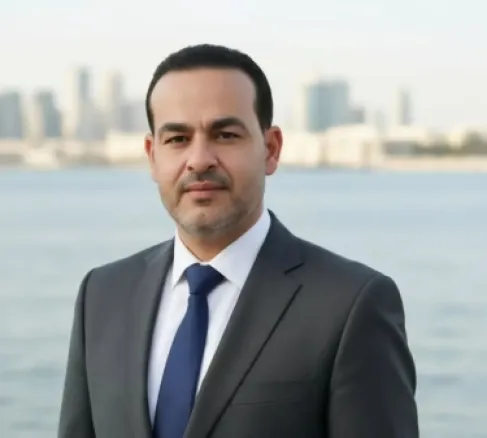
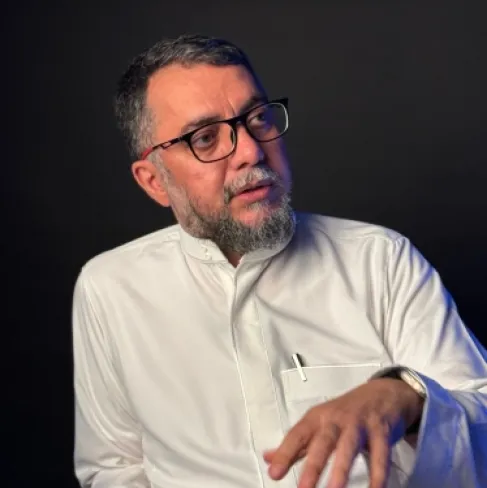
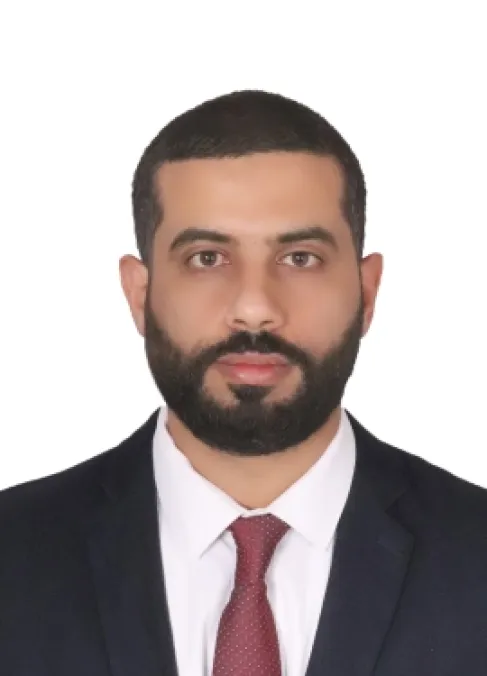
The election of Dr. Nawaf Al-Aqeel Al-Ajarmeh as the Secretary-General for Educational Affairs at the Ministry of Education to a leadership position within ISESCO's Executive Council embodies this qualitative shift in Jordan's role from participation to influence, and from representation to decision-making. It is not merely an administrative event, but an expression of international confidence that has accumulated over years in the Jordanian educational approach, which combines strictness of the curriculum with flexibility in vision, and managing the present while anticipating the future.
Here, the Executive Council is not perceived as a traditional regulatory framework but as a center of gravity where the outlines of educational, scientific, and cultural policies are formed within a broad and complex Islamic space. Through this position, Jordan’s role in re-adjusting the educational discourse rhythm and directing its compass towards more advanced concepts in human development and knowledge-making is enhanced.
At this level of influence, Jordan becomes an institutional and intellectual case surpassing the limits of representation, moving from a recipient to a guide, from the margin of observation to the heart of trend-making. This transformation did not arise from a vacuum but is the result of long-term institutional accumulation that has made the Jordanian experience a model in modern educational management capable of balancing national constants with global transformations.
#From_Rabat_to_Amman, the scope of interaction between Jordan and ISESCO deepens to form a partnership more profound than conventional cooperation, extending into education, scientific research, innovation, and capacity building.
This extension is not based on role exchange but on a knowledge partnership that enhances Jordan’s position as a key player in shaping the future of education in the Islamic world, not as a beneficiary of its paths, but as a partner in formulating its directions.
Against this backdrop unfolds the Hashemite vision that has redefined the modern state concept—a state built on the basis of the human being, where success is measured by the education's ability to create awareness before transferring knowledge. From here, Jordan's presence in ISESCO becomes a natural extension of this philosophy where education integrates with sovereignty, knowledge with identity, and institutions with the national project.
Dr. Nawaf Al-Ajarmeh's election cannot be read outside of this context; it represents an extension of a Jordanian path that has accumulated its expertise in international forums and has proven that competence, when rooted in the institution, transforms into an ability to influence policies, not just execute them. And his presence enhances Jordan's position in the realm of soft power, where education becomes a tool of civilizational influence, reshaping awareness before drawing policies.
With this transformation, the achievement does not appear as a final destination, but as a starting point for a deeper phase of Jordan’s contribution within the Islamic educational system, where the role expands from participating in decision-making to contributing to the crafting of educational awareness itself and redefining its priorities in a rapidly changing world.
In conclusion, what is happening today is not just an administrative or electoral positioning, but an expression of the stature of a state that knows how to create its impact, and of an institutional path that proves when the Jordanian presence steps forward, it does not merely partake in the scene but reshapes its features.
It is an ascent that aligns with the nature of a state that has chosen to be active in designing the future, and with a man who solidifies his presence in the crucial junctures of transformation with the steadiness of thought and depth of message, ensuring that Jordan, as always, remains a distinctive landmark when influence maps in the world are redesigned.!!