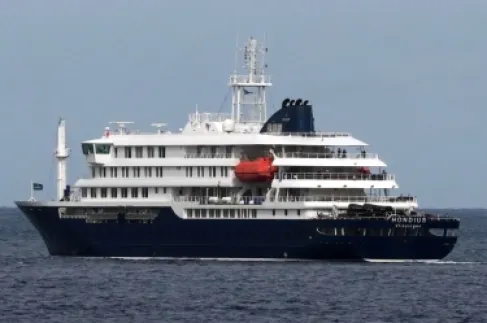
Khaberni - Officials and experts in Argentina are trying to determine whether their country was the source of an outbreak of the deadly Hanta virus that swept through a transatlantic cruise ship amid an increase in cases linked to climate change.
The health emergency onboard the ship anchored at sea comes as Argentina experiences a surge in cases of Hanta virus, which many local public health researchers attribute to the recent accelerated effects of climate change. Argentina, which launched the cruise to the Antarctic continent, is consistently classified by the World Health Organization as having the highest rate of this rare rodent-borne disease in Latin America.
Experts say that rising temperatures extend the range of the virus, as climate change and the increase in heat lead to changes in ecosystems that allow the rodent carriers of the virus to thrive in more areas. Humans typically contract the virus through exposure to rodent droppings, urine, or saliva.
Hugo Betzi, a leading infectious disease specialist in Argentina, said: "Argentina is becoming more like tropical areas because of climate change, and this has brought disturbances like dengue fever and yellow fever, but also new tropical plants that produce seeds that allow the proliferation of rats. Undoubtedly, as time goes on, the Hanta virus will spread further and further."
The Argentinian Ministry of Health reported on Tuesday that it has registered 101 cases of Hanta virus since June 2025, which is almost double the number of cases recorded during the same period of the previous year.
The Argentinian Ministry of Health mentioned that the disease has led to death in almost a third of the cases over the past year, compared to an average mortality rate of 15% over the preceding five years.