Khaberni - Heavy eyelids, brain fog, and consuming several cups of coffee in a short period are all signs that you might know well indicating your suffering from sleep deprivation, but there are other symptoms that may appear on different parts of the body.
According to a report published on "Time" magazine's website, sleep deprivation affects a person's appetite and mood, and even organs such as the jaw and even the bladder, as Dr. Saima Taher, a specialist in sleep disorders in the United States, states sleep deprivation affects nearly every organ in the body.
Below are the symptoms and signs, according to experts, that indicate the presence of sleep-related problems and how to detect them early.
Do you suffer from symptoms of Attention Deficit Hyperactivity Disorder?
Sleep disorder specialists say that undiagnosed sleep problems – particularly obstructive sleep apnea – can resemble or be worse than symptoms of Attention Deficit Hyperactivity Disorder (ADHD), especially in children. Dr. Alice Hogland, director of the sleep disorder clinic at "Rochester Regional Health," explains that not getting enough sleep can cause or worsen attention and behavior disorders and impulsivity control, adding that in many cases, the issue in children can be treated by removing the tonsils, after which ADHD symptoms disappear.
The same applies to adults, as about 80% of those with ADHD have a delayed circadian rhythm, meaning they sleep later than others due to difficulty falling asleep early. Thus, when they have to wake up early for work, they are deprived of sleep and suffer from symptoms that cannot be distinguished from the disorder itself.
Genetics also plays a role: There is a link between a shift in the "CRY1" gene and delayed sleep phase syndrome, meaning that their treatment is not through medication but through adjusting their schedules to fit their biological nature.
The intense craving for unhealthy food
The intense craving for unhealthy food late after struggling with sleep is not a lack of willpower, but a result of hormones. Sleep deprivation disrupts the balance of two essential hormones responsible for appetite: ghrelin, which is responsible for hunger, and leptin, which is responsible for the feeling of satiety. Dr. David Benavides, a sleep medicine specialist at Harvard Medical School, says one study indicated a relationship between short sleep periods and reduced leptin levels and increased ghrelin levels, and a heightened sense of hunger. He adds sleep deprivation turns the brain's reward system towards high-calorie foods.
Experts note that sleep deprivation can cause a person to consume about 300 extra calories daily, the results of which will appear after some time.
More irritable than usual
Have you ever exploded at someone you love deeply and wondered why? It could be related to the nervous system. One study found that sleep deprivation affects the "amygdala," causing it to react 60% more to negative stimuli, and at the same time, the part responsible in the brain for regulating those reactions is weakened. David Benavides explains, "The parts of the brain responsible for processing emotions react more strongly, while the systems that help control those reactions simply do not work."
Admitting to something you did not do
In a 2016 study, participants who were deprived of sleep were four times more likely to sign a false statement claiming they had done something they had not, compared to participants who had rest. Benavides comments that "fatigue made people not only slower but also more likely to agree to something that was not true." These repercussions extend beyond the laboratory, at work, for example, or anywhere where people are pressured to agree to something they know is not true, making the sleep-deprived brain more prone to surrender.
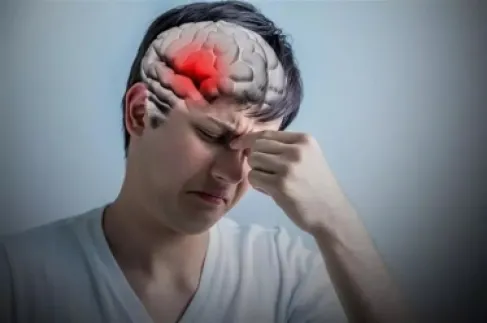
Severe headache upon waking
Many people who suffer from sleep apnea complain of experiencing a headache - especially in the morning after a night of breathing disturbances. As a result of the disturbance in breathing during sleep, carbon dioxide accumulates, and the oxygen level in the brain drops, causing pain in the head upon waking, as Dr. Saima Taher explains. She adds that many patients have spent years conducting tests on their nervous system and taking increasing doses of migraine medication to no avail, because no one examined what happens during sleep. She says: "In fact, sleep apnea is the cause."
Teeth grinding
Teeth grinding, known as "bruxism," is commonly seen as a reaction to stress, but sleep studies show that many episodes of bruxism occur immediately after a sleep apnea episode. When this happens, the brain pulls the individual out of deep sleep into a light sleep phase, preventing them from reaching the full recovery stages the body needs.
Furthermore, jaw pain resulting from a temporomandibular joint disorder or another cause may prevent the body from entering deep sleep phases, keeping the issue in an endless cycle. If you wake up suffering from jaw pain and do not know the reason, it might be worthwhile to ask your doctor for a sleep assessment.
Frequent nighttime urination
Nighttime urination, or waking up several times to go to the bathroom, is widely associated with the amount of fluids a person consumes, age progress, or pregnancy. However, Dr. Saima Taher says this is one of the most overlooked signs of sleep apnea. She confirms that she asks all her patients about the frequency of nighttime urination, noting that they think the cause may be their diet or drinking too much fluid. But, she confirms that this might be a very serious symptom of sleep apnea.
This is an explanation of what happens: when the disorder causes repeated breathing stops during sleep, the heart is stressed, causing the secretion of a hormone that requests the body to get rid of excess fluids, making you go to the bathroom. If sleep apnea is left untreated, it can cause strokes and serious diseases in the heart and circulatory system.
Wakefulness and fatigue during the night
Dr. Saima Taher says that feeling exhausted and unable to relax is common, but it is not normal, adding that it is a sure sign that you have not had healthy sleep for a while. This does not require months or years, as it can occur within just a few weeks. She explains that poor sleep disrupts the natural rhythm of a person's stress hormones. Typically, cortisol is at its highest levels in the morning, then decreases by nighttime at bedtime. However, when sleep is disturbed, its levels may remain high throughout the night, causing the body to stay in a low state of alertness. Dr. Saima Taher says that if you do not experience all the required sleep phases, you will never feel normal.
Chronic illness
There is a close connection between sleep and the immune system, but what may surprise you is how quickly poor sleep affects the functioning of the immune system. A study indicated that just one night of poor sleep led to a 28% decline in the activity of killer cells, which are a vital part of the immune system's first line of defense, by the following morning. Over time, chronic sleep deprivation leads to a broader disruption in the immune system, increasing susceptibility to infections and hormone imbalances that worsen the situation.
Repeating short sleep periods while driving without realizing
Most people who drive while drowsy believe they will know when they need to stop. However, research suggests otherwise. Studies using driving simulators have shown that participants deprived of sleep experienced several brief sleep episodes for seconds, without realizing it. By the time they thought about having a coffee or taking a break, their brains had already experienced several episodes of short sleep without the person realizing it.
Dr. Alice Hogland says, "Some say they sleep only five hours but never feel sleepy while driving. By the time they say they feel a bit drowsy, many of them have already gone through several episodes of short sleep," adding that when traveling on highways, one can cover a distance equivalent to the length of a football field during a short sleep episode lasting only a few seconds.