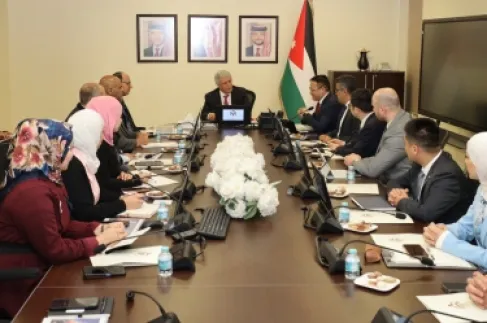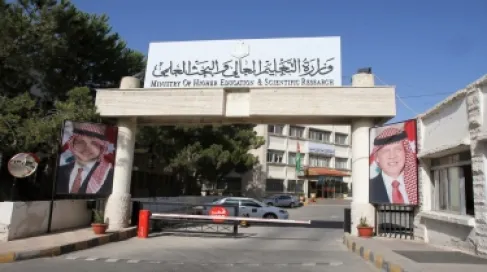
The spokesperson for the Ministry of Higher Education and Scientific Research, Muhand Al-Khatib, said on Wednesday that the Comprehensive Exam has been canceled, but the bridging process is still in place as it was, except that the bridging criterion has changed and now depends on the student's cumulative average in the intermediate diploma stage.
Al-Khatib explained via "Al-Mamlaka" that the Comprehensive Exam was previously used to verify the student's ability, who was not directly eligible for bachelor studies due to their high school average, to continue university studies after completing the intermediate diploma stage, pointing out that previous bridging instructions were not as open as they are today. Previously, bridging was not available in private universities or parallel programs, and the number of students allowed to bridge was very limited.
He indicated that the current practices no longer align with modern standards in the higher education sector, especially in the presence of an independent accreditation and quality assurance authority equipped with the necessary powers and tools to ensure the quality of college outputs and vocational and applied specializations.
He mentioned that the expansion in establishing technical colleges and vocational and applied specializations, and the introduction of intermediate diploma programs in several official and private universities, has made it legally unacceptable for an official university to supervise exams for students from other universities.
Al-Khatib confirmed that the Higher Education Council decided to approve an entrance exam for bridging students wishing to join the regular program in public universities, instead of the Comprehensive Exam, clarifying that candidacy for the exam will be limited to students classified within the top 5% in their specializations at the college level.
He added that the purpose of the entrance exam is to prevent any unjustified inflation in the cumulative averages at some colleges, ensuring all students undergo a unified exam that achieves fairness in competition for bridging seats.
He clarified that the new entrance exam will differ significantly from the Comprehensive Exam, focusing on shared skills and knowledge rather than memorization, and will include areas such as English language, mathematics, life and work skills, and occupational health and safety, which make up more than 60% of the score.
He pointed out that pharmacy students accepted from the first semester of the academic year 2022-2023 and thereafter, will not be eligible for bridging to the pharmacy specialization, but may bridge to other specializations such as chemistry or pharmaceutical industries.
He noted that there is a future direction to halt bridging in some specializations that witness an inflation in the number of graduates, such as nursing and some information technology specializations, with the aim of supporting vocational and applied specializations needed in the labor market.
Al-Khatib confirmed that the expected fees for the new entrance exam will be 50 dinars, compared to about 250 dinars previously charged for the Comprehensive Exam.
Regarding old students who have used up their chances in the Comprehensive Exam, Al-Khatib explained that students with a cumulative average of at least 68% in various specializations, and 70% in engineering and veterinary medicine, can now directly bridge to public universities in the parallel program or to private universities without needing the entrance exam.
He added that current students, who are still studying, will be given a last chance to sit for the Comprehensive Exam, and if they rank within the top 5%, they will be eligible to compete for bridging seats without taking the entrance exam.
He mentioned that the new amendments have opened up opportunities for large numbers of students who were previously unable to bridge, both in public and private universities.
Al-Khatib confirmed that the decision to cancel the Comprehensive Exam comes as part of a broader direction to develop the vocational and technical education system, noting that the Unified Admissions Coordination Unit will, for the first time from the academic year 2026-2027, accept high school students from both the academic and vocational tracks under the new high school system.
He explained that the Higher Education Council is inclined to allocate a percentage of competitive seats in the regular program for vocational track students, aiming to maintain equal opportunities and encourage students to pursue vocational education.
He stated that students accepted under various royal grants, such as the military and teachers' grant and those with disabilities, will not be included in this allocation, as it will be limited to seats designated for open competition.
He noted that the proposed percentage for vocational track students might range between 20% and 25% of the competitive seats, as decided by the Higher Education Council, aiming to ensure that vocational track students are not disadvantaged when competing with academic track students for university seats.
He added that this approach aligns with the state's plans to enhance vocational and technical education and link education outputs to labor market needs, encouraging students to pursue vocational tracks.
He pointed out that the Accreditation and Quality Assurance Authority is currently studying applications to introduce new specializations in universities, in line with market needs, expecting an announcement soon about a new package of vocational and applied specializations.
Al-Khatib clarified that the philosophy of vocational education is based on practical skills and accumulated work experiences, not just on academic degrees, noting that many educational institutions now consider practical experience a main criterion in assuming academic and administrative positions.
He confirmed that the new version of the Ministry of Higher Education will not reduce the powers of the Higher Education Council or the Accreditation and Quality Assurance Authority, clarifying that all powers related to higher education institutions will remain in place according to the regulating laws until the completion of the enactment of legislations and regulations related to the organizational restructuring of the higher education sector.