Khaberni - CBS News reported that the outbreak of the "Hanta" virus onboard a cruise ship in the Atlantic Ocean raised questions about how this rare, and often deadly, disease spread among passengers and crew.
There is confusion about whether the disease will continue to spread and the likelihood that it will infect about 150 people currently stranded on board, three of whom have already died.
While the infection typically spreads to humans through contact with contaminated rodent droppings, health officials have said that transmission between people is possible, albeit on a very limited scale, which may partially explain what happened in this case.
Maria Van Kerkhove, an official at the World Health Organization, said at a press conference: "We believe that there may be transmission from person to person occurring among very close contacts, husband and wife, and people who shared cabins."
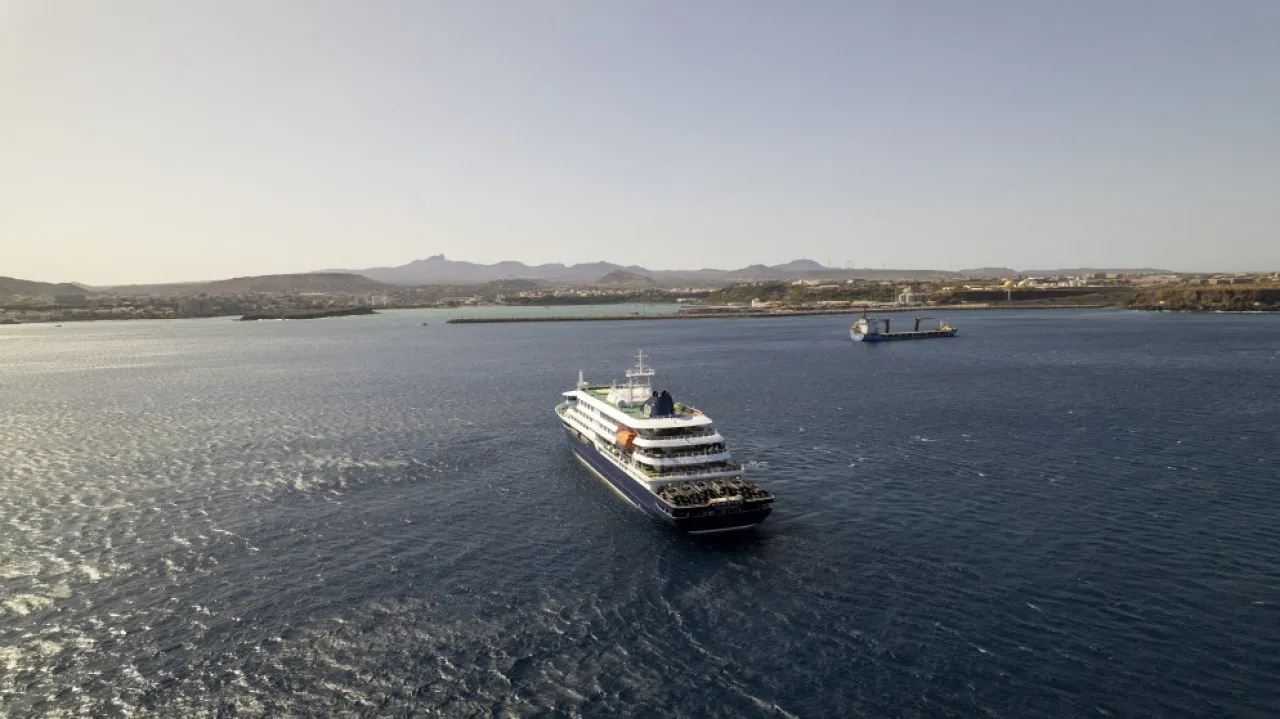
She mentioned a couple who died due to suspected cases of the "Hanta" virus after spending some time on board the "MV Hondius," which became a hotspot of the outbreak during a weeks-long polar expedition.
The organization announced the start of an investigation along with the application of quarantine protocols and contact tracing, aiming to identify the source of the outbreak and prevent its spread, noting that how it appeared is still unclear.
Van Kerkhove suggested that the couple may have contracted the virus while exploring wildlife in Argentina before joining the trip, confirming that the organization initially assumes that the virus came from outside the ship.
She added: "The trip stopped at several islands along the African coast, where there are various types of wildlife, including birds and rodents; this may point to possible sources of infection for some other cases."
A single strain
Hantavirus comprises a family of diseases that can cause severe respiratory symptoms and may lead to death, according to the US Centers for Disease Control and Prevention. Typically, the infection spreads through inhaling particles from rodent feces, urine, or saliva.
However, the World Health Organization has recorded cases of human-to-human transmission for a specific strain known as the Andes virus, responsible for most cases in South America.
In turn, renowned US epidemiologist Dr. Celine Gounder stated that starting the journey from Argentina raises questions about whether the infection is of the traditional type or from a strain transmissible between humans.
She added that the largest outbreak of this strain occurred in Argentina in 2018, resulting in 34 infections and 11 deaths, confirming that transmission between humans requires "prolonged and close contact" and that "this virus is not of the type that causes a pandemic."
The American scientist emphasized that the Hanta virus is still rare, with fewer than 900 cases recorded over 30 years in the United States.
Oceanwide Expeditions announced the death of a 70-year-old Dutch man onboard the ship on April 11, while his 69-year-old wife later died in South Africa after leaving the ship, confirmed to have been infected with the virus.
Furthermore, a British passenger who was evacuated to South Africa on April 27 is in critical condition after being confirmed infected.
Van Kerkhove from the World Health Organization mentioned at least four suspected cases, including a German passenger whose body is still on board, and three others who are infected.
Meanwhile, the Republic of Cape Verde sent medical teams to assist the ship but prevented it from docking at its ports for health reasons.
Anne Lindstrand, a representative of the international organization in Cape Verde, said that officials strongly believe the three cases are infected with the "Hanta" virus, noting that they will be evacuated by helicopter.
She confirmed that no rodents were found on board, which supports the hypothesis that the infection did not originate inside it.