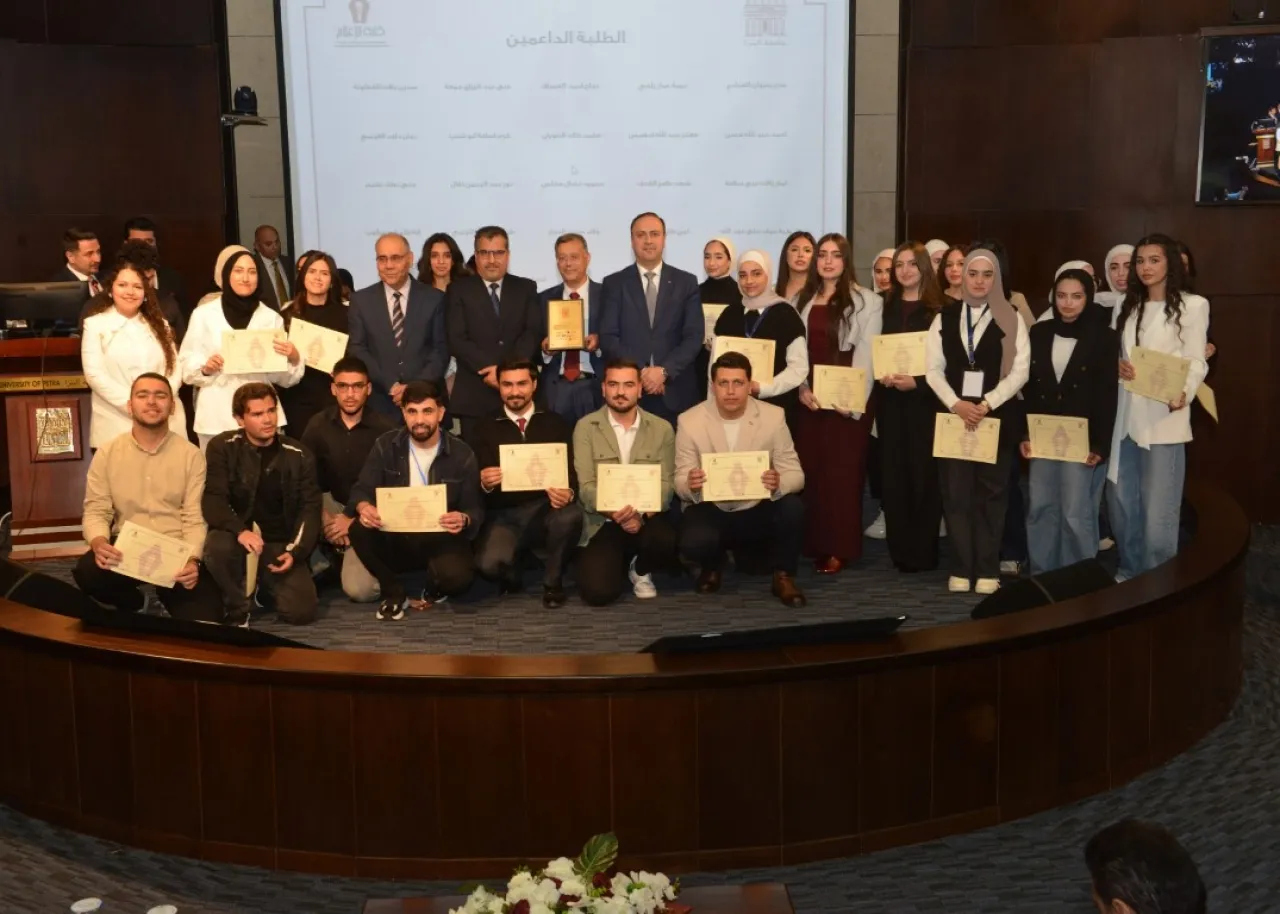
Khaberni - Government Communication Minister Dr. Mohammed Al-Momani described the Cybercrime Law as a tool for protecting the community from hate speech and defamation, emphasizing that the overwhelming majority of cases are "individuals against individuals" and not "official institutions against citizens". During an open meeting at Petra University on the occasion of World Press Freedom Day, Al-Momani warned that discrimination among Jordanians on the basis of race or religion represents a "sedition" that is not allowed by laws or entrenched community values.
Al-Momani attributed the occasional delay in official narratives to the state's adoption of the "school of accuracy" rather than the "school of speed which overlooks accuracy", to ensure the credibility of information and to prevent slipping behind sensationalism. In the dialogue moderated by Dr. Obeida al-Rababah, Head of Journalism and Digital Media, the minister cited a case where an early social media post by a student caused a panic in the community, illustrating the dangers of the influx of misleading information in the digital space and its impact on the stability of the state and public tranquility.
Al-Momani affirmed that freedom of the press and expression is an inherent right of the citizen, adding strength to the state rather than being a burden on it, stressing the need to balance "freedom and responsibility" to prevent the media landscape from turning into chaos. The minister noted that the enactment of the "Digital Media Regulation System" came as a regulatory framework that keeps up with the technical moment and aims to protect the profession from intruders, considering that the future of media relations depends on producing quality content that meets the aspirations of new generations who consume visual and digital products intensively.
Petra University President Professor Rami Abdel Rahim showcased the importance of journalists' commitment to the professional oath of honesty and credibility, quoting the rule "not everything known should be said" as a guideline for the responsible journalist in protecting the nation from the negative effects of information. Abdel Rahim warned of attempts by a "troublesome minority" in the digital space to spread information for extortion purposes, confirming the university's approach to graduating journalists who are objective, preserve intellectual freedom, and commit to social responsibility.
Dean of the Faculty of Media, Professor Ali Nejadat criticized international standards in ranking press freedoms, pointing to the citation of more than "260" journalists killed in the Gaza Strip since the beginning of 2026 without an effective international response. Nejadat called for a review of the "Right to Information Law" to ensure the rapid flow of news to journalists, asserting that freedom of the press is the real measure of the freedom enjoyed by the community in any country.
The meeting was attended by deans of colleges and a crowd of academics and students. The event included discussions about the role of traditional media in the digital age and the need to build a "media literacy" system to fortify the internal front, thereby establishing the university's role as a platform for national dialogue and linking the academic environment with decision-makers in the field of government communication.