Khaberni - U.S. Secretary of State Marco Rubio said on Tuesday, "The United States has ended its offensive operations against Iran, and is now in a defensive stage," while Tehran announced "the establishment of a new mechanism to manage the transit of ships through the Strait of Hormuz," and the Revolutionary Guard vowed a "decisive response" to ships trying to cross the strait without following the imposed course.
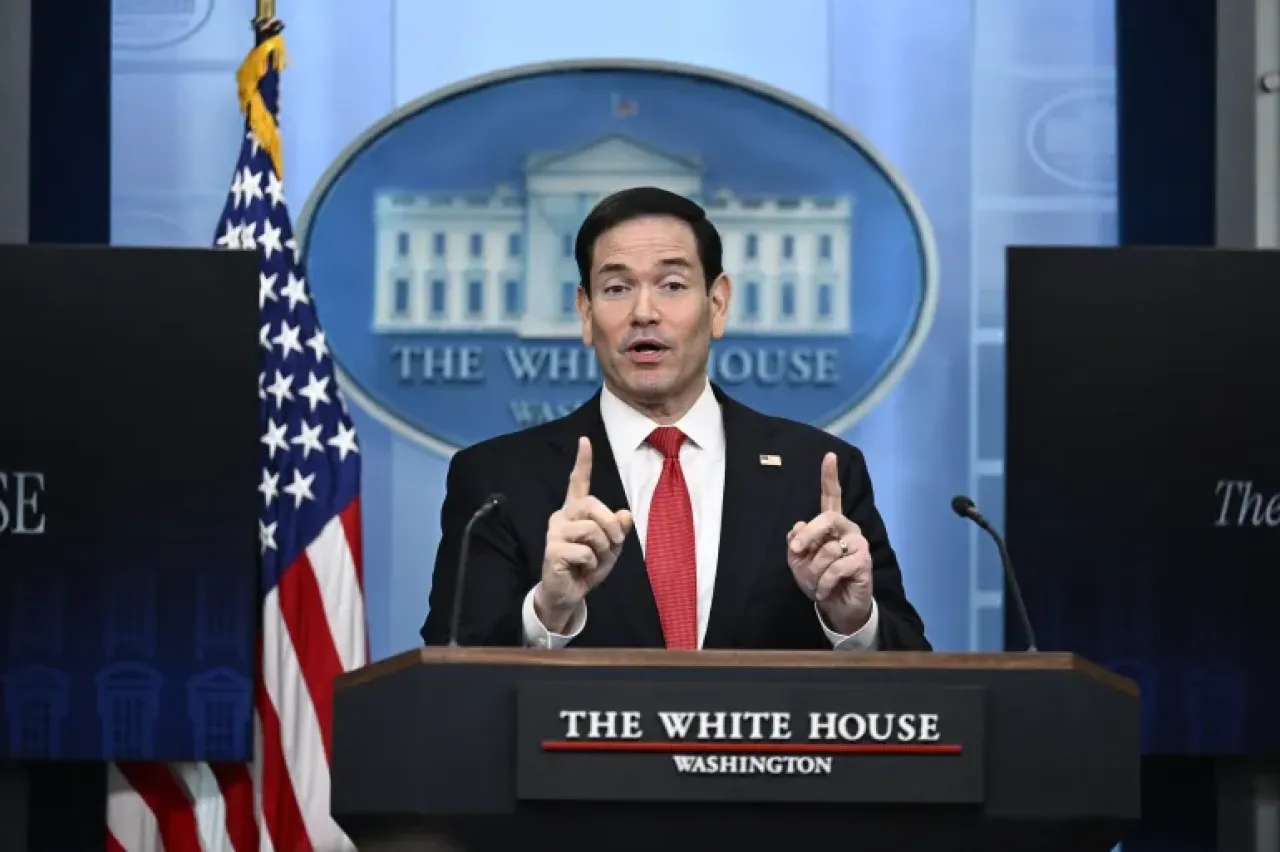
Rubio announced during a press conference at the White House that "Operation Epic Rage has ended, as President Donald Trump has informed Congress. We have finished this phase of it," adding that Washington is now in a "defensive" phase, with a new operation announced by President Trump called "Freedom Project."
He further explained that the primary goal of this operation is to aid the crews of ships stuck in the Strait of Hormuz, noting that sailors in the Gulf "are isolated, starving, vulnerable, and at least 10 sailors have died as a result, who were civilian sailors," without providing further details.
He affirmed that the United States will not initiate shooting, but he emphasized that the American forces carrying out this operation will respond "with deadly effectiveness" if targeted.
Trump had informed the presidencies of both the House of Representatives and the Senate in the United States, on Friday, that hostilities in Iran had ended, following pressures exerted by Congress urging him to seek a mandate to proceed in the conflict now in its third month.
This confirmed his compliance with a law that requires the president to obtain authorization from the legislature if troops are deployed for more than 60 days.
Rubio called on Tehran to come to the negotiating table and accept the terms, indicating that American envoys Steve Whitcov and Jared Kushner continue to reach a diplomatic solution.
He emphasized that the solution must address any nuclear material Iran still holds and is buried "somewhere deep."
Rubio pointed out the possibility of achieving peace between Israel and Lebanon, but he stated that "the problem between Israel and Lebanon is not Israel or Lebanon, but Hezbollah."
Rubio said "what needs to happen in Lebanon, and what everyone wants to see is a Lebanese government capable of confronting and dismantling Hezbollah."
Rubio's statements came after the announcement by the U.S. Chief of Staff General Dan Kin that his forces were ready to resume extensive combat operations against Iran if orders were received, adding that "no adversary should interpret the current restraint as a weakness in resolve."
New Transit Mechanism
In Tehran, the Chairman of the Parliament Mohammad Baqer Qalibaf confirmed that his country "has not yet begun" its escalation in this vital trade passage, while the Revolutionary Guard vowed a "decisive response" to ships trying to cross the Strait of Hormuz without following the imposed course.
Qalibaf, who led the negotiating delegation with Washington in Islamabad on April 11, announced on Tuesday on platform X that his country is working to "establish a new equation for the Strait of Hormuz."
He said, "We know that the continuation of the current situation is unsustainable for the United States, while we have not yet begun," accusing Washington and its allies of "jeopardizing" the safety of maritime transportation.
The Iranian channel "Press TV" reported from sources that Tehran has established a new mechanism for managing the transit of ships through the Strait of Hormuz, warning the U.S. Navy from entering the strait, and asking it to stay outside.
It said that commercial ships will need to coordinate any crossing with the Iranian military, indicating the issuance of a new map of the strait including the expansion of the Iranian control area.
The channel announced that all ships intending to cross the Strait of Hormuz "will receive an email containing the rules and regulations for crossing," and confirmed that the new Iranian mechanism has now entered into effect in the Strait of Hormuz.
Attacking the Emirates
These developments came after the United Arab Emirates announced that it had countered a barrage of missiles and drones from Iran for the second consecutive day, which Tehran denied.
The UAE announced that its air defenses were countering missiles and drones sourced from Iran for the second consecutive day, after considering Monday's attacks a "serious escalation."
However, the Iranian Armed Forces categorically denied carrying out attacks on the Emirates.
The official television quoted the spokesman for the "Khatam al-Anbiya Headquarters" - the central operations room for the Iranian forces - as saying, "The Armed Forces of the Islamic Republic of Iran did not carry out any missile operations or drone attacks against the United Arab Emirates in recent days."
He added, "Had such an action occurred, we would have announced it openly and strongly. Therefore, we categorically deny that country's defense ministry report and confirm that it is completely unfounded."
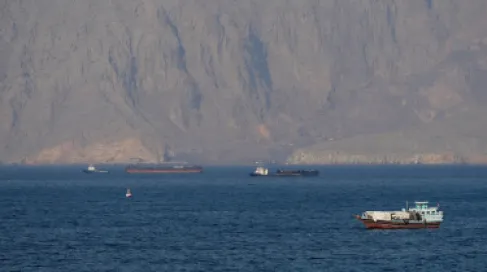
Since the outbreak of the war in the Middle East after a U.S.-Israeli attack on Iran, Tehran has controlled the strategic strait through which usually one-fifth of the world's oil production and significant amounts of liquefied natural gas pass.
Facing this situation, which has led to oil prices reaching the highest levels since 2022, Washington exerted pressure on Tehran to reopen the maritime passage.
After the United States imposed a naval blockade on Iranian ports, it launched the "Freedom Project" operation on Monday to accompany ships stuck in the Gulf to exit it through the strait.
Iran carried out missile and drone attacks on American military ships, which were intercepted according to the Central Command (Centcom).
South Korea reported on Monday an explosion followed by a fire aboard one of its ships in the strait.
By April 29, the number of commercial ships stuck in that area was more than 900, according to "X Marine" data company.
While the implementation mechanism of this mission has not been announced, the Danish shipping giant "Maersk" announced on Tuesday that one of its ships exited the Strait of Hormuz with American military escort.
This came the day after the U.S. Central Command announced that two commercial ships flying the American flag had successfully crossed the Strait of Hormuz amid American escort. While Iran denied the crossing of the two ships, Trump confirmed that the operation "is going well."
He downplayed the Iranian attacks, stating in a post on social media that they "caused limited damage."