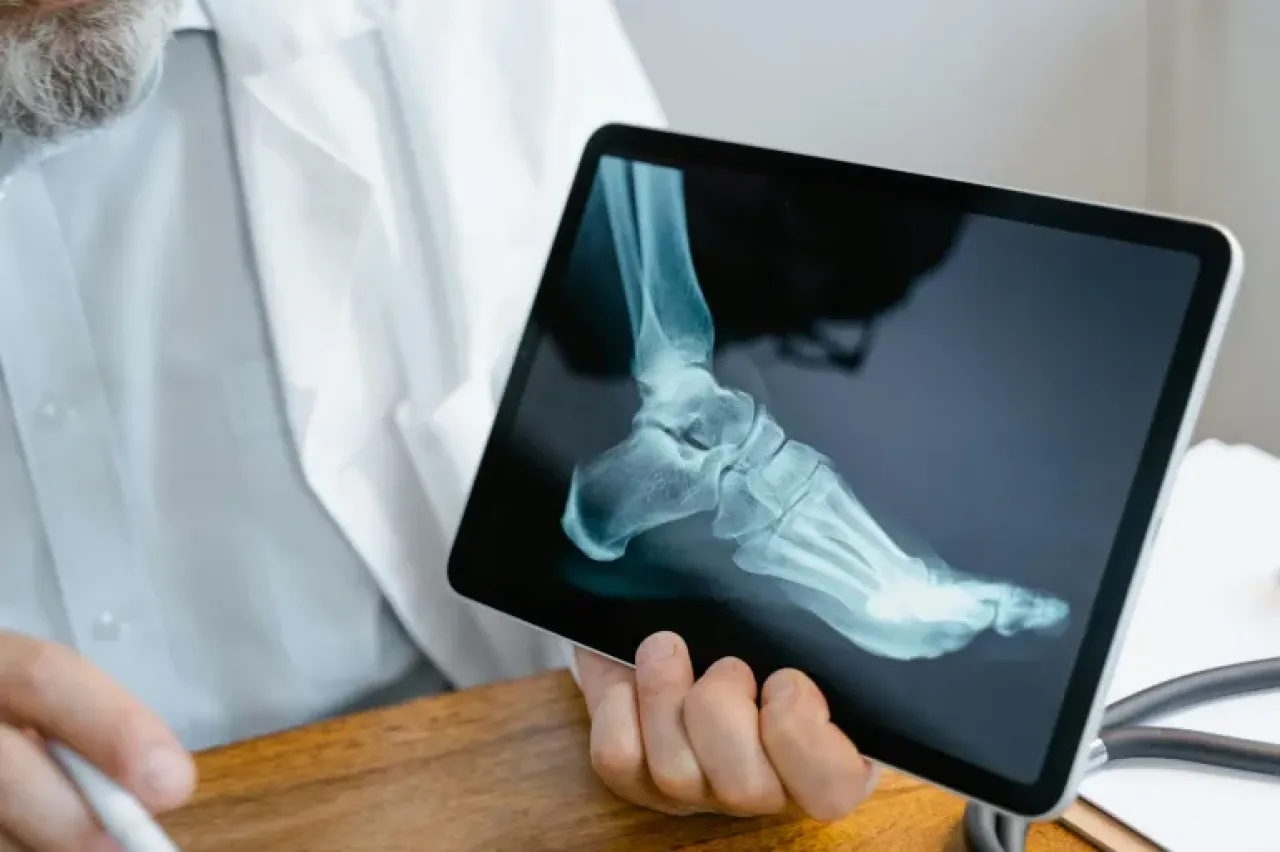
Khaberni - It has long been known that "wool" is used in the manufacture of clothing and textiles, but science has recently reached a medical surgical application for repairing damaged bones within the body of a living human using components derived from natural wool.
The research team at King’s College London tested "keratin" made from wool in animal models and found that the material was capable of repairing and growing bones in affected or damaged areas.
Promising Study
The study published in the scientific bulletin of King’s College London revealed that wool could offer an effective and sustainable alternative to the materials currently used in repairing damaged bones. Keratin - a natural structural protein extracted from wool - supported bone regeneration in a living organism, producing bone tissue that closely resembles healthy natural bones more than the current gold standard for restoration, which uses collagen.
Keratin provides the advantage of sustainability, as wool is a naturally derived material and often a byproduct of agriculture, making it a renewable and scalable resource.
Is Collagen Losing Its Status?
For many decades, collagen has been considered the gold standard for scaffolds used in many medical and regenerative applications in dental medicine to fix jaw issues, as it serves as a protective barrier, preventing soft tissues from interfering with the healing process while allowing bones to regrow.
Despite the importance of using collagen, it is relatively weak and can degrade quickly, which can pose a problem when used in bone restoration that must bear weight or withstand force. Moreover, extracting it can be complex and costly.
In contrast, keratin extracted from wool offers a strong and more stable alternative, capable of forming bones that are more organized and structurally robust.
A Long-Term Alternative
According to the new study, relying on keratin as a potential new class of biomaterials for bone regeneration and restoration could be a long-term alternative to collagen.
To explore the possibilities of keratin, researchers at King’s College London developed membranes using keratin extracted from wool and chemically treated to create stable and robust scaffolds to support damaged or injured bones.
The team first tested the membranes on human bone cells in the lab, where the cells thrived and showed clear signs of forming healthy bone. They then implanted the membranes made from keratin in mice suffering from significant cranial defects to the extent that they do not heal naturally.
During the experiment’s lifespan, the researchers observed how the keratin membranes supported new bone growth in the affected areas. This experiment also involved the use of collagen, which produced more bone overall; however, the keratin scaffolds produced more organized, structurally secure bones, merged smoothly with the surrounding tissues, and remained stable throughout the healing process.
Dr. Sherif El-Sharkawy, a member of the research team and a professor at the Dental, Oral, and Facial Medicine and Sciences College at King’s, stated in the study's report, “We have proven the effectiveness of this technique in an animal model, making it much more than just an initial concept of materials. It shows that keratin can support bone regeneration in a living biological system, bringing this technique much closer to being used in actual patients.”
Expected Hopes
When asked about the practical possibility of replacing collagen with wool in bone restoration operations, Amir Asim Abdel Monem, a consultant orthopedic and spinal surgeon at Ain Shams Medical College, told Al Jazeera Net, he believes that wool might not yet be a viable alternative for restoration operations as collagen is a main component of bone tissue. However, keratin could potentially contribute to forming bone cells and stimulating their proliferation.
Abdel Monem added, “Keratin might also help in the deposition of calcium and phosphate,” which are bone-like tissues, explaining that if proven practically and clinically through trials, it could be beneficial in bone grafting cases, or as an alternative to metal plate fixation methods, and accelerate healing in cases of osteoporosis.