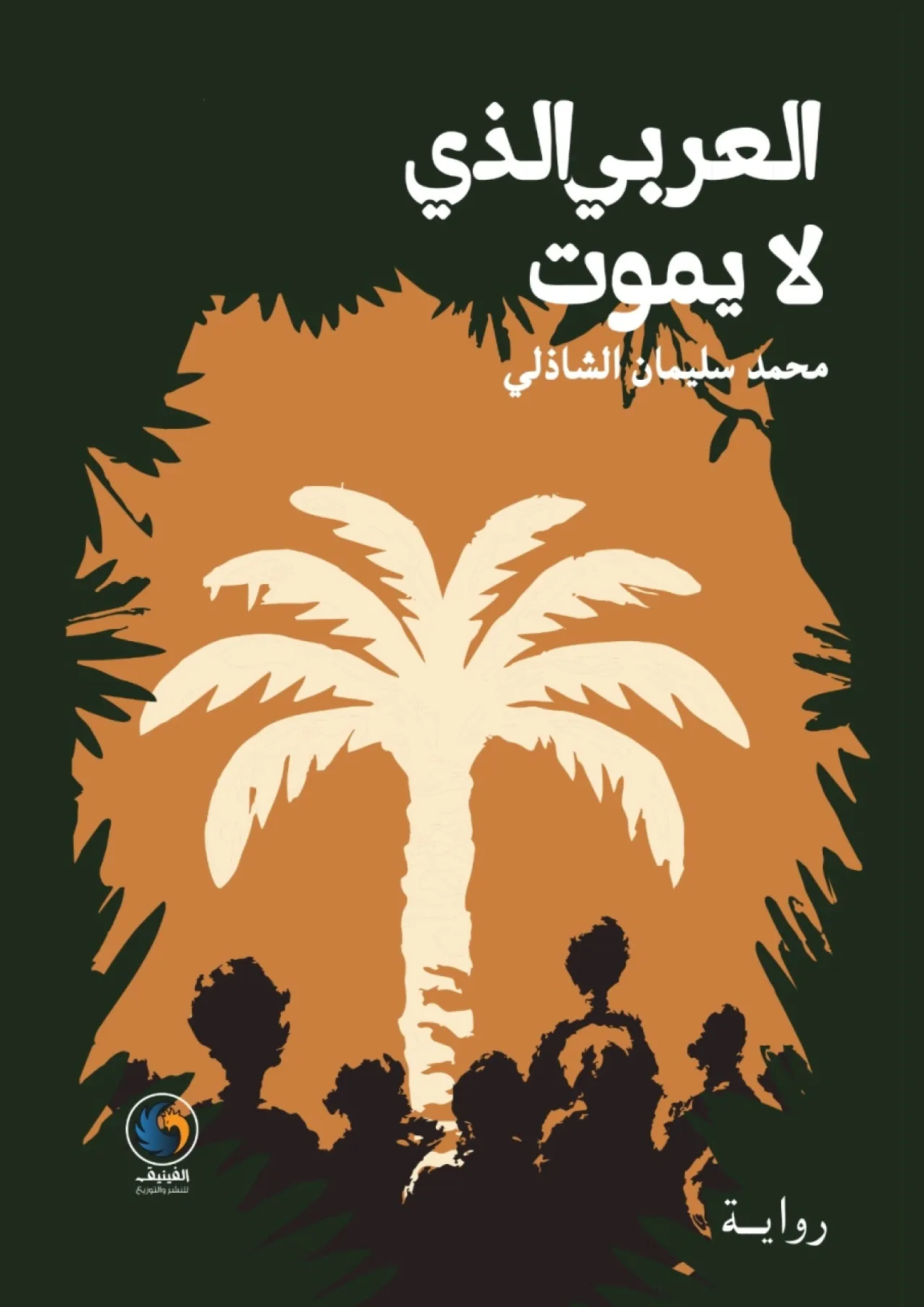
Khaberni - "The Arab Who Never Dies" is a human epic that sits on your chest with the weight of history and the lightness of poetry simultaneously, an equation mastered only by those writers who were born with the language in their blood, not just in their heads.
You will understand this upon seeing what the Arabs are experiencing today in bleeding, overcrowded Gaza, full of the wounded, hungry, and bitter; when you look at Lebanon, at the bombings and forced displacement; when you hear the echo of bombs that fell on the Gulf states; when you look at Sudan; following all this, the novel speaks with an unshaking voice: This is not new. The Arab has been fought against and besieged before, and the Arab has not died.
A world not yet trodden by an Arab novel
The novel transports you to "Ramon," a towering Arab trade city, on the banks of the Moon Mountain river, in the heart of the conflict between the remnants of decaying Rome and ambitious Byzantium. It's a setting no one dared to invoke for the Arab novel with this breadth: Arab Muslim traders, Romans weary from their imperial exile, African locals with their magic, rituals, leaders, and epidemics rising from the river like dark clouds, and boats bleeding into the waves.
"Ramon is Gaza in the deepest historical language, and Ramnous the Bald, the Roman slave trader, represents everyone who has turned a human being into merchandise."
This place does not exist on the map, but it exists in the heart, and when you read it today while Gaza is besieged, bombarded, and its people are forcibly displaced from their homes, fields, and memories, it becomes a place closer than any other on Earth.
A pulse that does not fade
Obaidallah the Arab, a young man clinging to Ramon, refuses to leave his land when everyone else has abandoned it. He is not a boring saint; he is a broken human who loves deeply and loses just as deeply, deliriously murmuring the name of his town on his sickbed as lovers whisper the name of their beloved. When you read this today, you cannot help but see in him every Arab youth who refuses to be displaced, who digs under the rubble and tends to the wounded with his own hands, saying: "My place is here." The same heroism, the same wound, the same determination.
Thuriya, endowed by Al-Shazly with something deeper than the usual delicate, lovesick woman's image in Arabic literature: complete madness, a love that ignites fires, and a pride that breaks. She is the most humanly wounded character in the novel, hates and cries, pulls her hair, holds a knife, and ends lost in the desert, with a tragedy dripping real blood resembling that of every woman who lost everything overnight.
Sarina is the most beautiful impossible love in the novel. The border girl who sits on a rock by the river bank, her feet in the water and her eyes in the stars. Her conclusion is among the most horrific and impactful pages in contemporary Arabic literature, as beauty turns to ashes through a crime that the heart cannot bear, just as a beautiful home turns into debris in a moment that the mind cannot stand.
Thuriya, endowed by Al-Shazly with something deeper than the usual delicate, lovesick woman's image in Arabic literature
Laughter in the face of death
Asim bin Saeb, he is the character that will delight you, make you laugh as you cry. A short, chubby boy who rolls like a barrel of oil, teaches people the Quran and never stops visiting the brothel, singing "Tralal Tralal" in all seasons. He is the lively popular heart of the town, and when he dies, the novel simply says: "It was not the death of a man. It was the death of a town." How many times have we said this! He did not die alone; laughter, music, and memory died with him.
"The language in this novel is a physical rhythm... as if you are hearing a distant drum approaching as you turn the pages"
And the novel does not speak to you from the outside, it sits beside you on the ground and tells its story. The voices of the four narrators, Ekklesiastes, Ibn Zabiyyah, the Priest of the Two Rocks, and the Storyteller, alternate in composing the scene like a chorus in a Greek theater play but with an Arabic soul.
Facing the empire
Identity in the face of the empire is the heart of the matter. Ramon is not a sovereign state, it is a small town besieged between two competing imperial forces. Rome on one side and Byzantium on the other, both trading their promises and selling their vows as the balances shift. The Arabs there pay the protection tax in gold, silver, and ivory only to find themselves unprotected when a crisis comes.
This structure is the loud background for Gaza facing the war machine supported by arsenals larger than itself, and the people paying for balances they did not create. And in a more distant and quieter background, like smoke threads in the horizon of the narrative, echo the complex regional calculations: the presence looming behind a curtain, and the power moving according to the logic of interest, not the logic of principle, just as men of Arousan...