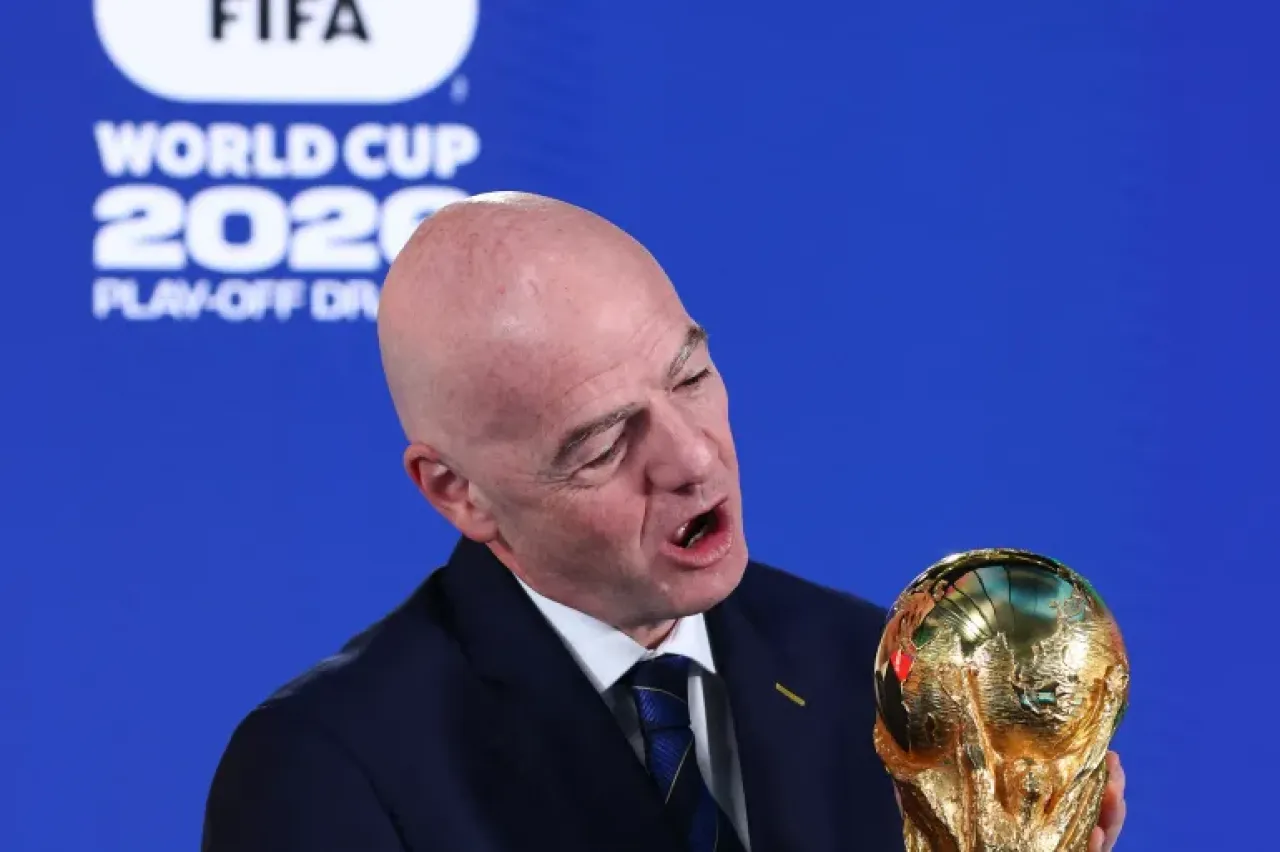
Khaberni - In a report published by the British newspaper "The Guardian" (The Guardian), the enormous financial dimensions of the 2026 World Cup, an event that the president of the International Football Federation Gianni Infantino described as "the greatest humanity will ever witness," were revealed.
This description does not seem to be an exaggeration, as the upcoming edition of the World Cup, to be held in the United States, Mexico, and Canada, is expected to be the largest in the history of the sport, not only in terms of the number of teams (48 teams), but also in terms of unprecedented financial returns.
According to the latest estimates of the International Federation, the total revenue for the four-year financial cycle, which peaks at the 2026 World Cup, will reach about 13 billion dollars. Even more notably, nearly 9 billion dollars of this amount will be achieved during the tournament year alone, reflecting the immense commercial scale of the event.
For comparison, the Paris 2024 Olympics, one of the biggest sporting events in the world, generated revenues estimated at only about 5.24 billion dollars, highlighting the vast difference in marketing and economic power that the World Cup now holds.
This significant increase in returns confirms that football is no longer just a game, but has transformed into a global industry giant, where broadcasting rights, sponsorships, and advertising intersect with an expanding fan base, making the 2026 World Cup a potential candidate to be the most profitable sporting event in history.
An Unprecedented Financial Leap
In the same context, a report by "The Guardian" noted that the financial dominance of the World Cup has not always been this way. Until the 2010 World Cup in South Africa, the Olympics surpassed it in terms of returns, before the balance of power gradually shifted in favor of football.
But the real turning point came with FIFA's decision to host the 2026 edition in the United States, the largest advertising and media market in the world. This choice was not only a sporting decision but also an economic one, as it opened the door to an unprecedented leap in revenues.
After the revenues for the 2018-2022 cycle reached about 7.5 billion dollars, it is expected that they will rise by up to an additional 73% by the summer of 2026, a massive growth that reflects the well-considered expansion in the tournament model.
Television broadcasting rights remain the backbone of FIFA's revenues, with significant increases compared to previous editions, driven by the inflation in the global media market value and the competition among networks and digital platforms for exclusive content. The decision to expand the tournament from 32 to 48 teams also played a pivotal role in this growth, as the number of matches increased from 64 to 104, meaning longer broadcasting hours, more diverse content, and new markets being tapped, particularly in North America and Europe.
FIFA has not stopped there but adopted a more flexible and innovative approach to content marketing by selling separate broadcasting rights for the Women's World Cup and leveraging modern digital platforms. FIFA has begun selling short broadcast clips via apps such as YouTube and TikTok, in an attempt to attract a younger audience increasingly oriented towards rapid consumption and brief content.
Tickets and Hospitality.. Record Prices
The report highlighted that ticket sales and hospitality packages have become the second-largest source of income for the International Football Federation, with a total estimated at about 3 billion dollars, compared to about 950 million dollars only in the 2022 World Cup. This reflects a tremendous leap in this specific sector.
This significant rise is not only due to an increase in the number of matches but also to a shift in pricing philosophy, where FIFA has adopted a model closer to an "all-inclusive experience" that combines the ticket with accompanying services, such as luxury hospitality and premium seating, which raises the average return per fan.
However, these prices have sparked widespread controversy, as the cost of following a single team through to the final match could reach about 6900 dollars, a figure that puts the full experience out of reach for a wide segment of fans.
Meanwhile, the price of the most expensive ticket for the final, scheduled to be held at MetLife Stadium, is about 10990 dollars, clearly indicating a shift towards pricing aimed at higher-income individuals and sponsoring companies.
Four tickets for the final match were also offered at an amount close to 2.3 million dollars.
Despite these criticisms, fan demand remains overwhelming. FIFA has received over 500 million requests for about 7 million tickets only, reflecting the huge gap between supply and demand, and confirming that the World Cup remains the most attractive sporting event for fans worldwide, even amid rising costs.
In terms of sponsorship and commercial marketing, FIFA achieved new record numbers, with sponsorship revenues reaching about 2.7 billion dollars, plus 670 million dollars from licensing rights, in a clear sign of the growing appeal of the World Cup brand to major companies. Agreements were signed with global companies such as Adidas, Aramco, and Coca-Cola, with greater flexibility in offering customized commercial packages to companies.
Where does the money go?
As a non-profit organization, FIFA confirms that it will reinvest approximately 11.67 billion dollars in global football development, through infrastructure programs, supporting federations, and funding football projects in developing countries.
However, on the ground, the distribution of these funds raises much debate. Each national federation receives 5 million dollars during the cycle, with the possibility of adding another 3 million dollars for specific projects, numbers some see as limited compared to the huge revenue amounts, especially for countries that suffer from weak football resources.
On the other hand, a significant portion of the funds goes to the costs of organizing the tournaments, which reached about 7.6 billion dollars during the current cycle, including 3.8 billion dollars allocated for the 2026 World Cup alone. These costs include organizational infrastructure, logistics, security, and operations, reflecting the immense complexity of managing an event of this size across three countries.
Team Prizes... Are they sufficient?
FIFA raised the total prize money to 871 million dollars, with a guarantee that each participating team will receive a minimum of 12.5 million dollars. Although these figures seem large, several federations have expressed concern that these returns may not cover the actual costs of participation, especially given the high expenses of travel, accommodation, and preparation.
The situation is further complicated by the tax system in the United States, where taxes may reach 21% on federations and 37% on players, significantly reducing the net profits, and putting some teams, especially from less wealthy countries, under real financial pressure.
Although an earlier report by the same newspaper said that all the teams participating in the 2026 World Cup are nearing a tax exemption in the United States, following talks FIFA had with the U.S. Treasury Department.
According to a report by "The Guardian" (The Guardian), FIFA is close to reaching a final agreement that grants 48 teams a federal tax exemption, though they may still be subject to state and city taxes.
The report explained that FIFA obtained a commitment that allows national federations to apply for tax exemption under section (501 c 3) of the U.S. Internal Revenue Code, a system designed for non-profit organizations.
According to the same source, obtaining the exemption is not guaranteed automatically, but it is likely if the required legal procedures are met, especially since the conditions of this section typically require no personal gains or political activity, conditions that usually align with the nature of national sports federations.
Who benefits the most?
In the end, FIFA itself, along with the U.S. tax authorities, appear to be among the main beneficiaries of this huge event, while some federations and host cities face financial challenges related to organizational costs and uncertain returns.
At the leadership level, FIFA president Gianni Infantino, who is heading towards a new term, has already seen his rewards rise to about 6 million dollars annually, and they are expected to increase even more in the wake of this unprecedented commercial success.
Thus, the 2026 World Cup reveals a striking paradox about a tournament that achieves historic profits, but at the same time raises deep questions about the fairness of distributing this wealth within the global football system.