Khaberni - The Grenoble University Hospital Center in France witnessed a medical trial that is the first of its kind in Europe for the treatment of pancreatic cancer.
The trial was conducted using an innovative radiation therapy technique tested on a patient on April 22nd, according to the French station "France Info".
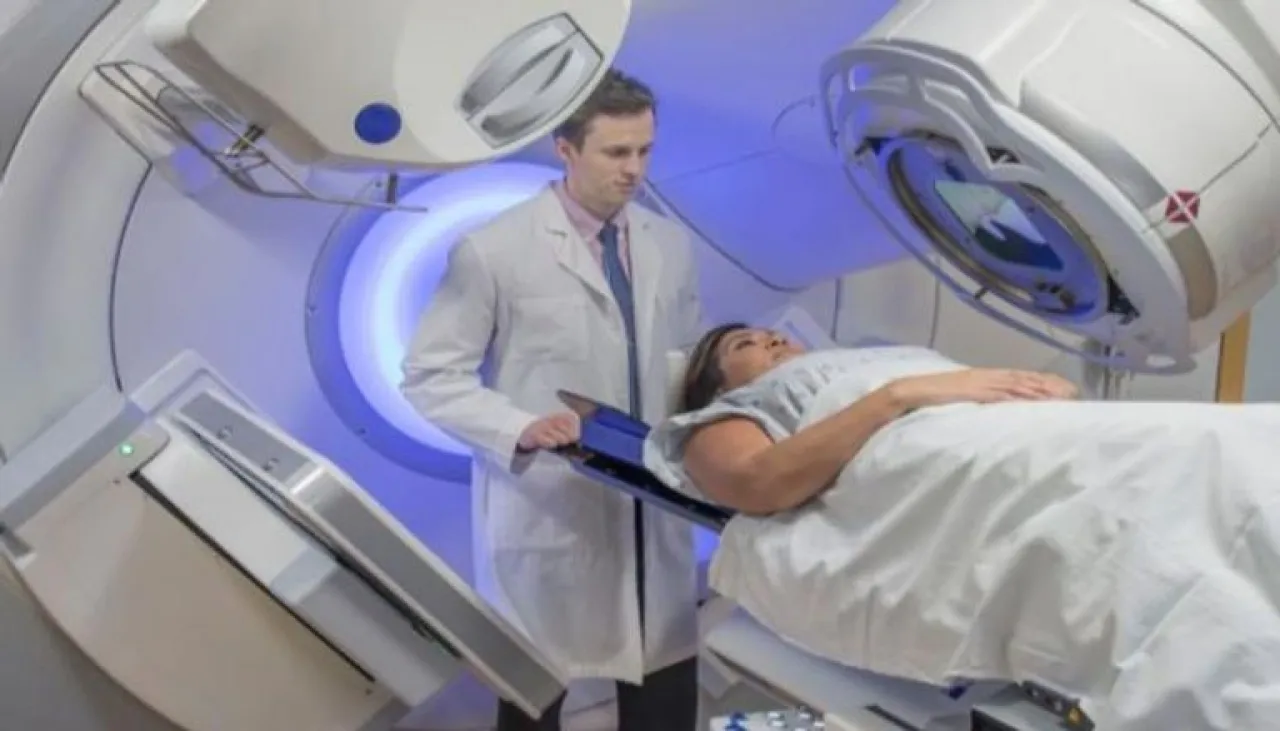
This new treatment relies on what is known as high-precision localized radiotherapy, where radiation is directly targeted to the tumor using "radioactive sources" in the form of tiny rods that are implanted inside the patient's body near the tumor site, in the pancreatic area behind the stomach.
These rods are inserted through a thin needle that passes through the mouth, under precise guidance using a camera and ultrasound, allowing for highly accurate targeting of the tumor and minimizing the impact on healthy tissues.
During the procedure, the medical team explained that the needle is used to locate the tumor, then it is withdrawn after placing the radioactive sources inside the affected tissue, in a step aimed at delivering a "strong radiation strike" to the remaining cancer cells.
Professor Gaël Roth, a specialist in digestive oncology at the hospital, stated that the goal of this treatment is "to deliver a high and concentrated radiation dose to eliminate the remaining tumor, resembling a final strike to the cancer cells."
He added that the patients then undergo a mild chemotherapy treatment for two months in pill form, noting that some cases may later become eligible for surgery, while others may benefit from a long period of disease stabilization, allowing them to improve quality of life and slow the progression of the tumor.
Currently, preparations are underway for a larger clinical trial involving around 40 patients in France with localized pancreatic cancer without metastases. This technique has been developed in collaboration between researchers from the French National Centre for Scientific Research, the Léon Bérard Center, the National Institute of Health and Medical Research, and Claude Bernard University Lyon 1.
The researchers believe that this new therapeutic approach represents a promising step in combating one of the most aggressive types of cancer, as pancreatic cancer is expected to become one of the main causes of cancer death in the coming decades, due to its high resistance to traditional treatments such as chemotherapy.