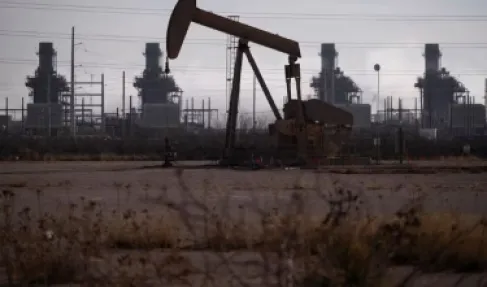
Under the spell of the booming artificial intelligence market that has pushed stocks to record levels, and clinging to the hope of a short war on Iran, investors have yet to prepare for a scenario where oil prices could double, and they may not have much longer to ready themselves for this possibility.
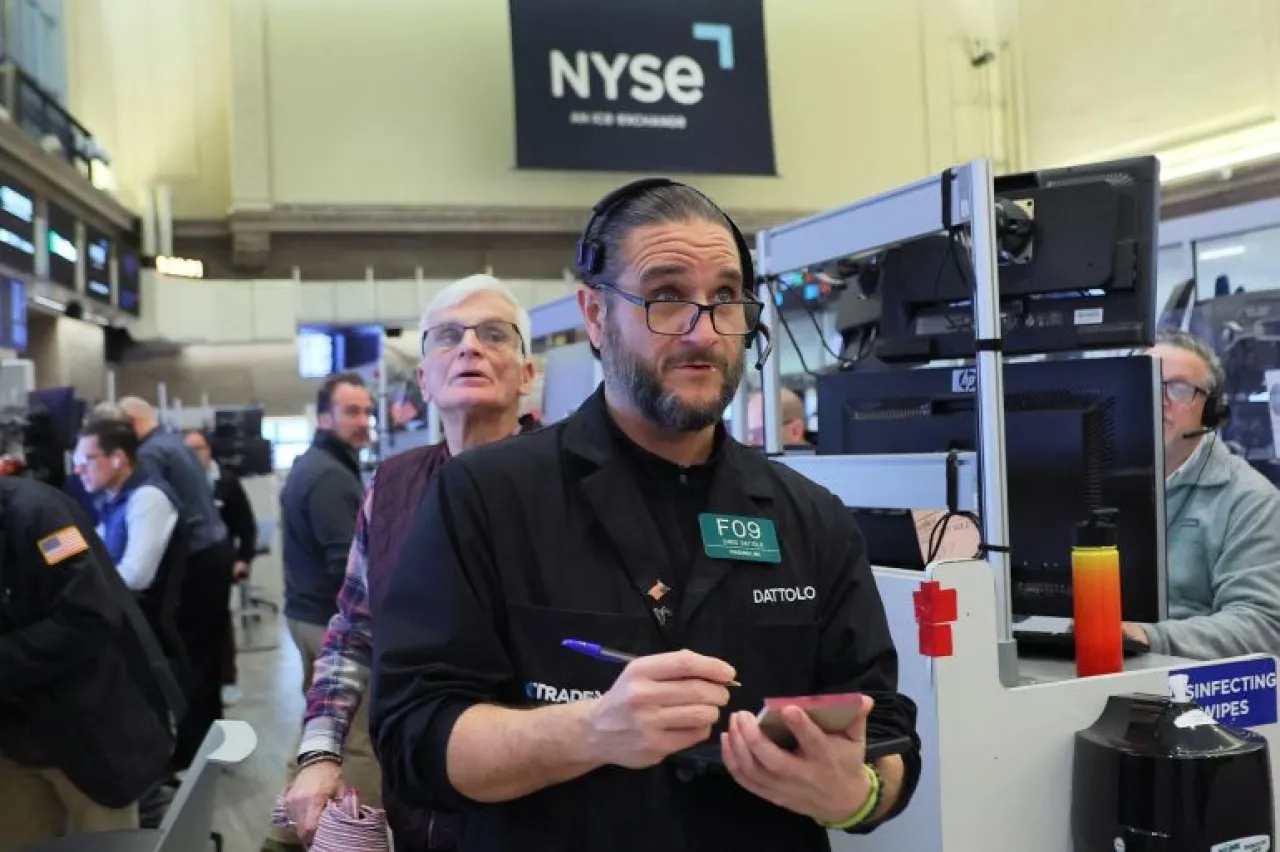
The current market confidence is based on several factors, mainly giant AI companies, semiconductor manufacturers, software developers, solid profit growth, and the S&P 500 index hitting new record levels yesterday, Thursday.
While price pressures are apparent in business activity surveys and inflation expectations, growth and employment remain relatively stable, and global central banks indicate that they will not rush to raise interest rates while assessing the impact of the war.
But the most sensitive part in the energy scene is not in the electronic futures contracts, but in the actual physical market, where crude oil barrels and refined products are actually traded.
Prices in this part of the market have risen to about $130 per barrel, up about 70% from what they were in February, whether it be North Sea Forties crude, Angolan Cabinda oil, or Norwegian Troll oil.
These prices reflect a spike in the cost of energy to the global economy much larger than is suggested by the futures contracts for Brent crude, which are trading around $110 per barrel, a 50% increase since the end of February.
The price of Brent crude for delivery after 12 months has also risen to $80 per barrel, up 20% from late February.
Reuters quoted Tamas Varga, an analyst at energy brokerage firm PVM Oil Associates, as saying, "Physical markets reflect the reality on the ground, while the futures market is more inclined to represent perceptions and hopes."
He added, "It can be said that the physical markets are the true reflection of what is actually happening around the Strait of Hormuz."
Loss of a Billion Barrels
The war has indeed led to the closure of the Strait of Hormuz, through which 20% of the global energy supplies pass, and Vitol, the world's largest oil trading firm, estimates that the market might lose a billion barrels of supplies by the time it recovers.
The head of the International Energy Agency, Fatih Birol, said in April that oil prices do not reflect the current situation, and that the world needs to prepare for much higher prices.
RBC Wealth Management's Investment Strategist Head, Frederic Carrier, says there's a general rule used by the company's chief economist, based on his experience, indicating that an oil shock should last between 3 to 6 months to have a lasting impact on inflation.
She added, "We haven't reached that stage yet, but we're going to get there soon," explaining that her company takes a neutral stance on stocks, but favors commodity-linked investments such as shipping and storage.
The CEO of commodity trading group Gunvor, Geoff Webster, said during the Financial Times Global Commodities Summit in April that oil traders are preparing and testing their budgets in anticipation of a scenario where crude prices could reach between $200 and $300.
Andrew Chorlton, head of fixed income at M&G, said, "What's somewhat surprising is the idea that the situation will inevitably turn into stagflation, or that it will be okay."
He added that this "seems to involve a degree of complacency."
Chorlton mentioned that he is increasingly inclined towards immediate tactical measures rather than a long-term strategic approach regarding fixed income, given the differences between countries or the curves of government bond yields.
Expected Inflation
Inflation expectations are on the rise, as are market-based indicators such as inflation swaps, which show that investors expect inflation in the United States to be around 3.53% in one year, and about 2.75% over five years, which is higher than the Federal Reserve's target of 2%.
London Stock Exchange Group's data indicates that these indicators were closer to 2.4% in February, before the war broke out. This picture is similar across the Eurozone and Britain.
Investment analyst at Nuveen, Laura Cooper, stated that her company continues to invest in AI technology due to its attractive profits, but balances that with investments in "companies with growing dividend distributions" and infrastructure and real assets, such as real estate and gold mining companies, as a hedge against risks.
No matter how big the disruption, markets eventually reassess the risks associated with it, supply chains adapt, volatility calms down, and investors return to focusing on long-term major trends.
Paras Gupta, who manages discretionary investment portfolios for high-net-worth individuals in Asia for UBP in Singapore, said, "You won’t know it’s a turning point until the market reacts to it."
He added, "We just have to wait and see and remain flexible. Everyone is on the lookout."
Long-Term Risks
Analysts say the main risk in the Iranian crisis lies in long-term shifts.
Within less than 18 months, the Trump administration made radical changes in the global trade landscape and international relations, leading to levels of uncertainty about America's reliability as an economic and security partner nearly unprecedented.
Tina Fordham, head of the political strategy consulting firm Fordham Global, noted that it involves something bigger than just asking when the war will end, but how the "rift" in politics and public attitudes develops.
She added, "When the winds of geopolitical risks blow across financial markets and start to have an impact, it is often too late to try to mitigate their severity."