Khaberni - The Iran war launched by President Donald Trump on February 28th ends today, Friday, under the War Powers Act. But the legal end of the war does not mean it has ended on the ground. Politico reports that President Trump has proposed a new military plan aimed at reopening the Strait of Hormuz.
As of now, there is nothing official, but leaks have led to a verbal war between Republicans and Democrats over President Trump's authority to launch a new military operation by another name.
According to Politico, the new plan proposed by President Trump to reopen the Strait of Hormuz involves continuing the siege on Iranian ports while coordinating with allies to impose higher costs on Iran for undermining free energy flow. Politico estimates Iran's daily losses from the blockade at about 500 million dollars.
As the White House’s deadline approaches, informed reports reveal President Trump's administration’s intention to proceed with an ambitious military and economic plan to expand the naval blockade in the Gulf region, aiming to impose "maximum pain" to force Tehran to accept ceasefire terms, according to CNN.
The new strategy revolves around converting "partial interception" of ships into total and sustained "closure of the Strait of Hormuz to Iranian navigation," focusing on expanding the embargo to not only include oil tankers but also all commercial vessels traveling to and from Iranian ports to ensure the complete cutoff of supply lines.
Washington bets that expanding the blockade will lead to the collapse of what remains of Iran’s commercial infrastructure, especially amid communication cut-offs and domestic economic crises, forcing Tehran to abandon its ten-year plan terms and accept the US demands related to the nuclear program and regional activities.
Meanwhile, two US officials told Axios that the American president received a briefing on new military plans against Iran.
The officials explained that Brad Cooper, commander of the US Central Command, and the chairman of the Joint Chiefs of Staff presented Trump with details about the potential new plans for operations in Iran for 45 minutes.
Prior to this, a senior official in President Trump's administration stated that combat operations that began against Iran on February 28 have ended, due to the War Powers Act, according to Reuters and Associated Press.
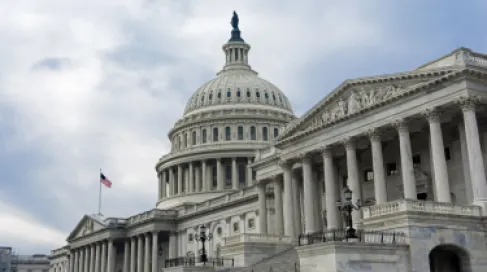
Under the War Powers Act, which aims to restrict the president's military powers, Trump had until today, Friday, to obtain an authorization from Congress to continue military operations or to stop fighting, after the expiration of the sixty-day period stipulated by the law. The law also allows the administration to extend this period for up to 30 days.
To navigate this legal quagmire, Richard Goldberg, who served as the director for countering Iranian weapons of mass destruction at the National Security Council during Trump’s first term, recommended that officials transition to a new operation under a new name to complement the original operation that began on February 28, named "Epic Fury."
He added that the "new mission" would be a "self-defense" task focused on reopening the Strait of Hormuz with the right to undertake offensive actions to support the restoration of navigation freedom.
In the midst of this debate, the US President said he does not call the confrontation with Iran a war, but a "military operation," and confirmed that Iran is desperate to reach an agreement.
In an interview with News Max, Trump affirmed that his country had already won in Iran, but it seeks a substantial victory, pointing out at the same time that military gains alone are not sufficient, and that guarantees from Tehran to never possess nuclear weapons are necessary.
He also reaffirmed that Iran is now very weak militarily and economically, and it will take about 20 years to rebuild.