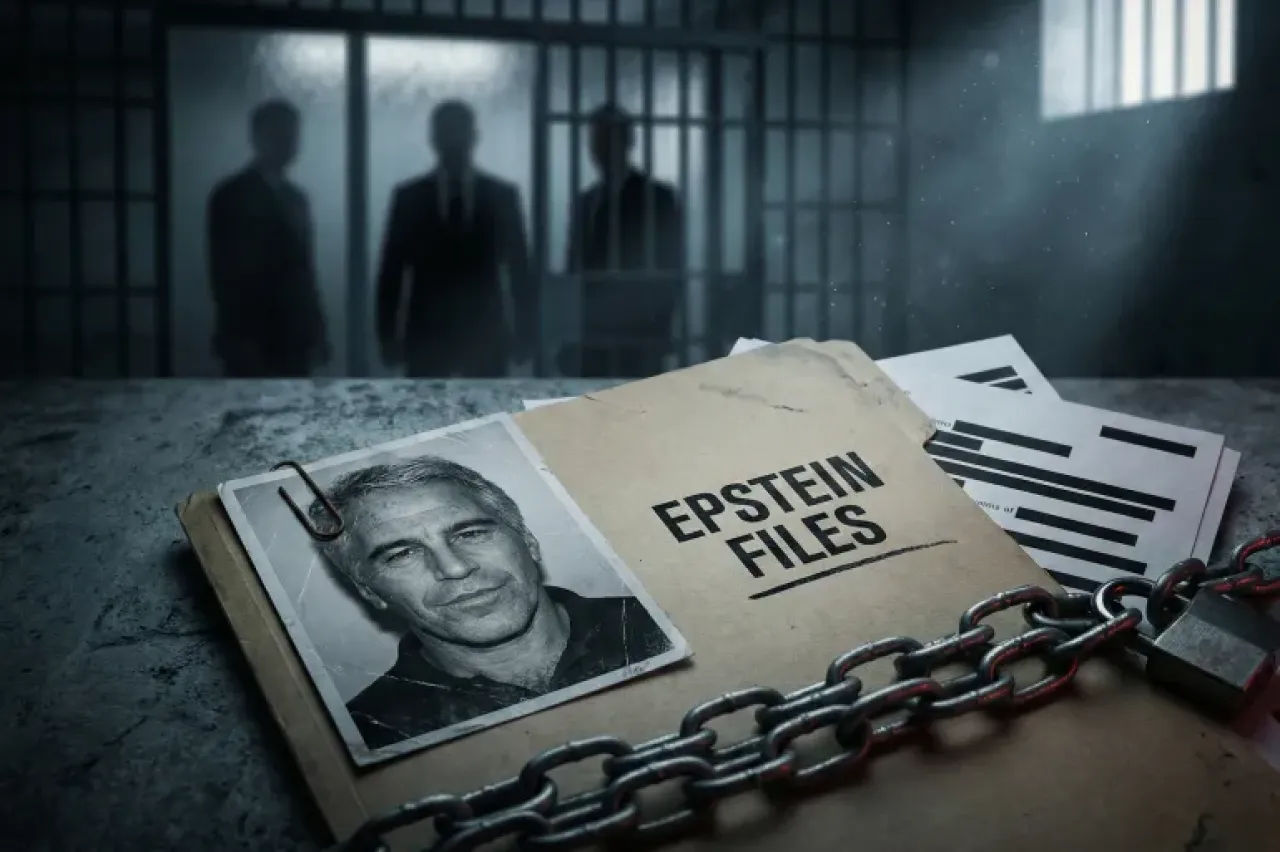
Khaberni - Between the sealed corridors of American courts and the historic headquarters of venerable European banks, the ghost of the late American billionaire Jeffrey Epstein reasserts his dominance over the global scene, opening gaps in the wall of silence that surrounded his mysterious death and transcontinental relationships.
In a dramatic development revealed by The New York Times, it appears that a potential suicide note written by the convicted sex offender, Jeffrey Epstein, weeks before his death, had been locked in a drawer of a New York court for about 7 years, raising new questions about the circumstances of his death on August 10, 2019, which was officially ruled as a suicide.
This revelation comes at a time when the Rothschild banking family is experiencing a severe shock that threatened their historical unity following the disclosure of financial and personal details linking one of its prominent figures to the convicted billionaire.
The story begins
The threads of the story—as told by The New York Times in its report—begin in a Manhattan prison cell, where Nicholas Tartaglione, Epstein's former cellmate, said he discovered the letter in July 2019, after finding Epstein unconscious with a cloth strip wrapped around his neck. Epstein survived that incident but was found dead weeks later inside the prison.
The newspaper quoted Tartaglione saying that the letter included phrases like "What do you want me to do, burst into tears? It's time to say goodbye," alongside indications that the investigations "found nothing," which could provide—if proven true—a window into Epstein's psychological state in his final days.
Despite the release of millions of pages of documents related to the case, the Justice Department confirmed that it had not seen the letter, which seems to have been included in a separate legal file related to the Tartaglione case, preventing investigators from accessing it.
However, the newspaper states that the letter never reached the investigators who later handled the death file, but it was handed to Tartaglione's lawyer as a defense against Epstein's accusations of assault on him, before Federal Judge Kenneth Karas ordered it to be placed under a stringent judicial seal, denying justice a crucial piece in the puzzle of the controversial billionaire's suicide.
These developments come in the context of ongoing controversy about Epstein's death inside the Manhattan detention center, which from the start raised widespread doubts due to documented security lapses. While the medical examiner concluded the death was a suicide, these gaps fueled alternative theories about a possible murder.
Disputes shake the Rothschild family
While the American press is striving hard to decipher this mysterious letter, the French police were raiding the main headquarters of the "Edmond de Rothschild" bank, reflecting the magnitude of the repercussions caused by the release of millions of documents by the U.S. Department of Justice.
The Wall Street Journal puts these raids in the context of an existential crisis that has shaken the family, which has withstood global wars and major economic crises.
According to the newspaper, the leaked files—which were disclosed concurrently with the French police raid—showed that Baroness Ariane de Rothschild, the CEO of Edmond de Rothschild bank, was not just a passing client for Epstein.
It also revealed that Ariane visited Epstein's island and sought his advice on complex family matters, and her bank paid him a huge sum of $25 million for consultancy services.
This close connection caused a rift in the family that is not easily mended, as the other branch of the family represented by "Rothschild & Co" hastened to distance itself from the scandal.
The newspaper quoted sources described as knowledgeable saying that Alexandre de Rothschild, the CEO of Rothschild & Co, issued strict instructions to the bank’s relationship managers to reassure concerned clients about the independence of their bank.
Extinct lineage
The tension was heightened by the leak of emails in which Ariane described her relatives in the competing branch as "the offspring of an extinct lineage," indicating the depth of the divisions within the family that has historically succeeded in overcoming major crises.
The Wall Street Journal reported that the Edmond de Rothschild bank confirmed in an official statement that its situation is "very strong," and that Ariane was unaware of the heinous sexual crimes committed by Epstein.
Despite this affirmation, the newspaper noted that officials from private Swiss banks reported that they had received inquiries from some of their wealthy clients who were worried about the implications of the case, even wondering about the possibility of reuniting the family's banking branches.
These developments highlight how the Epstein case still casts its heavy shadow not only on the American judicial system but also on global financial influence networks, as questions continue about the depth of the relationships woven by the late businessman and their ongoing effects to this day.