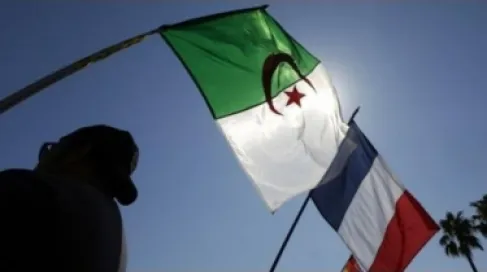
Khaberni - French historian specializing in Algerian history, Benjamin Stora, has called on the French authorities to fully and unconditionally open their archives to Algerian researchers.
Stora considered the removal of administrative, bureaucratic, and security barriers that hinder direct access to original documents as a "methodological and ethical inevitability."
This took place during a "master class" session as part of the sixth edition of the Annaba City Mediterranean Film Festival, moderated by film critic Ahmed Bajawi and hosted by the Hippo archaeological site and museum, with the presence of the veteran fighter Louisa Ighilahriz.
Stora explained that enabling academics and historians access to the military and political archives stored in France represents "the only mandatory passage" for formulating a scientific and fair historical narrative. He emphasized the need to be liberated from the unilateral readings imposed by French archival dominance for many decades, which have prevented an accurate and objective understanding of the colonial period.
The French historian criticized that key parts of the shared memory remain locked away under frivolous pretenses such as "national security" or internal archiving laws, describing this situation as an "organic barrier" to any genuine project of purging collective memory between the two nations.
He also called on Paris to "end the era of censorship" and to ensure the Algerian researcher’s right to view manuscripts and original documents related to the colonial repression system throughout the period from 1830 to 1962.
Stora, author of numerous books on colonialism in Algeria, considered archival transparency not merely a pure academic demand, but a "political act" aimed at liberating the truth from ideological exploitation. He warned that withholding documents only serves discourses of hatred and mutual suspicions, which thrive on historical gaps and a lack of precise information.
He concluded his address by affirming that "the battle of memory will not be complete unless there is a real political will to lift the secrecy on problematic files," and to make them accessible to specialists away from narrow diplomatic considerations or temporary compromises, thereby serving the construction of a shared future based on recognition of truth and justice.