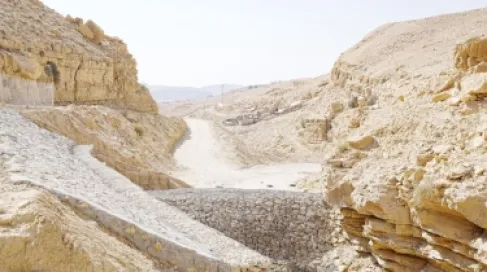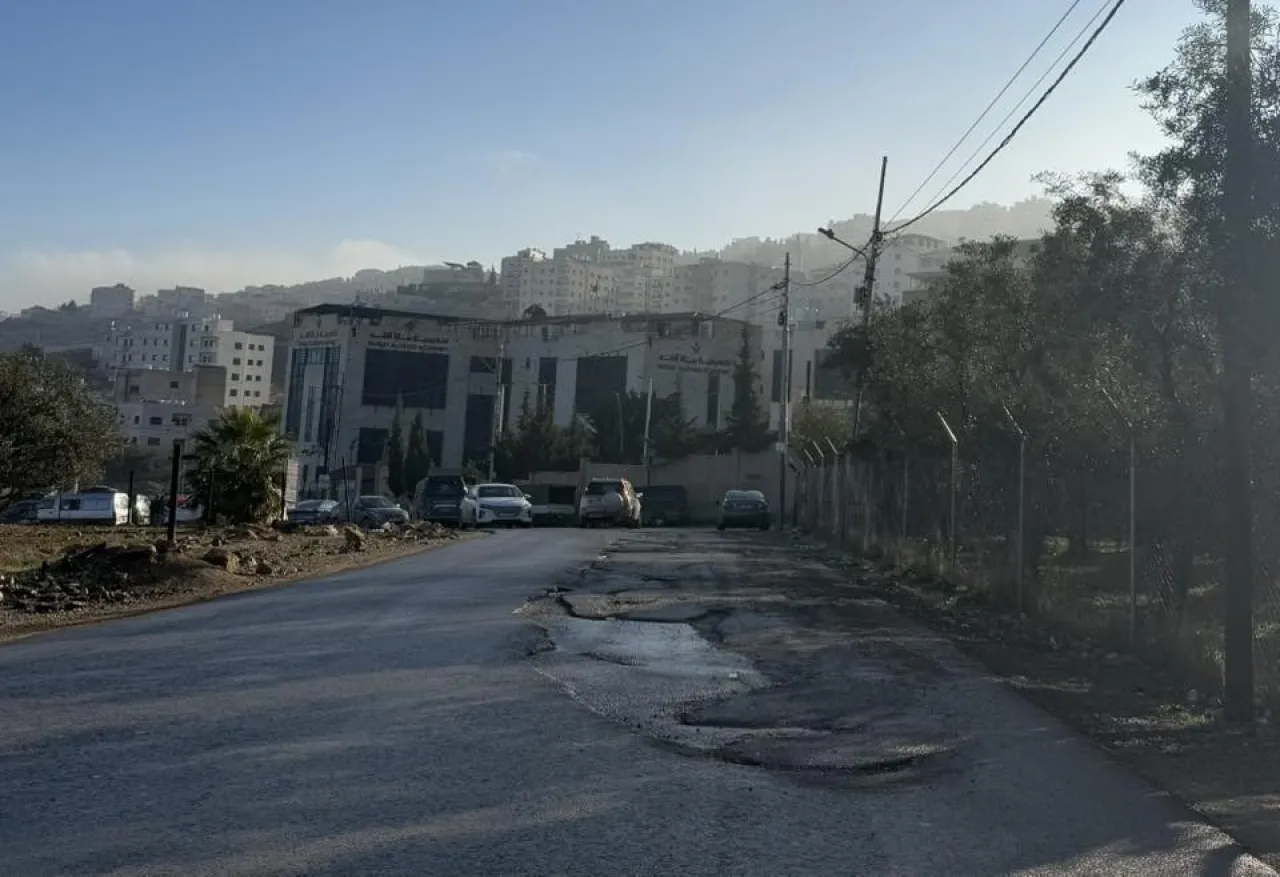
Khaberni - The Jordan Engineers Association issued a detailed technical report on the landslide incident that took place in the Safout area, after a site inspection conducted by a specialized committee from the Mining, Geological and Petroleum Engineering division, with the participation of a reconnaissance team from the engineering department in the association.
The association called for immediate and urgent measures, notably the final evacuation of the affected building and completely prohibiting its use, in addition to evacuating the areas below the slope, closing the site, and securing it.
The Secretary of the National Building Council, Mona Balawneh, said on Wednesday that the committee observed cracks at the site and old landfill areas about 30 meters from the building, high piles of rubble, and ground cavities below the embankment and along the retaining wall, along with indicators of water leakage due to water lines and absorption digs.
Balawneh added to "Al-Mamlaka" channel that the geological nature of the area, represented by dolomitic rocks, makes it prone to sliding when saturated with water, which contributed to the sudden rockslide, indicating that the risk level classified as "high and critical", necessitating the recommendation to evacuate the building and take public safety measures, and prevent interference at the site or diverting water flows from it.
Balawneh also mentioned that the committee recommended prohibiting the issuance of any new building permits or partitions in the area until the completion of geological, geotechnical, and geophysical studies, and based on their outcomes, necessary reinforcement or protection measures can be decided upon.
She explained that the council had previously addressed the Ministry of Local Administration in 2023 to prohibit any permits in the area due to previous collapses.
She confirmed that the Ministry of Local Administration is currently surveying landslide areas across the kingdom, including Safout and other areas, in preparation for conducting geological studies on them, noting that geological conditions and climatic changes, such as rainfall seasons, reveal some cracks and landslides in the soil.
She added that the results will be used to identify "critical areas" and prohibit granting permits in them, including areas in Zarqa, Madaba, and others, based on scientific studies that define safety and risk factors.
On his part, Saleh Al-Ghweiri, a member of the Engineers Association, said that what happened in Safout is linked to various geological and engineering factors, including soil nature, rainwater drainage, and infrastructure, in addition to a lack of adequate oversight during previous periods, explaining that each area has its specific causes of landslides.
He added that the association, voluntarily, offers its expertise through specialized committees to study incidents and submit technical reports to the official authorities, mentioning the preparation of reports on similar cases in other areas, including a collapse in Irbid city, and an incident at one of Madaba’s mosques, which he attributed to the nature of the landfill.
Regarding oversight, Al-Ghweiri clarified that the association focuses on monitoring licensed engineering offices and assessing their compliance with technical standards, while the responsibility for implementing oversight remains with the competent official authorities.
Al-Ghweiri mentioned that engineering solutions to reduce landslides include modifying slopes, constructing terraces, improving water drainage networks, and using stabilization techniques such as stakes, rock bolts, and cement injections, in cooperation with the competent bodies.