Khaberni - Israeli media outlets have shed light on an Egyptian project that may change the global trade map in the region.
Egypt is working to inaugurate a network of ultra-fast electric trains stretching about 2000 kilometers, in an ambitious project aimed at connecting the Red Sea to the Mediterranean Sea through Sinai, and enhancing Cairo's position as a global logistic hub.
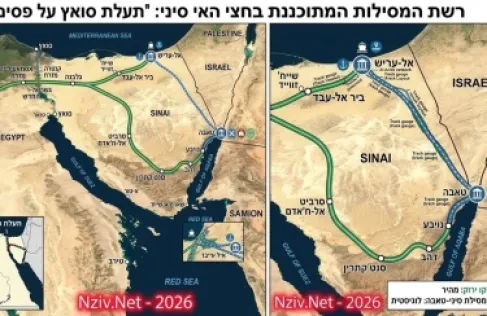
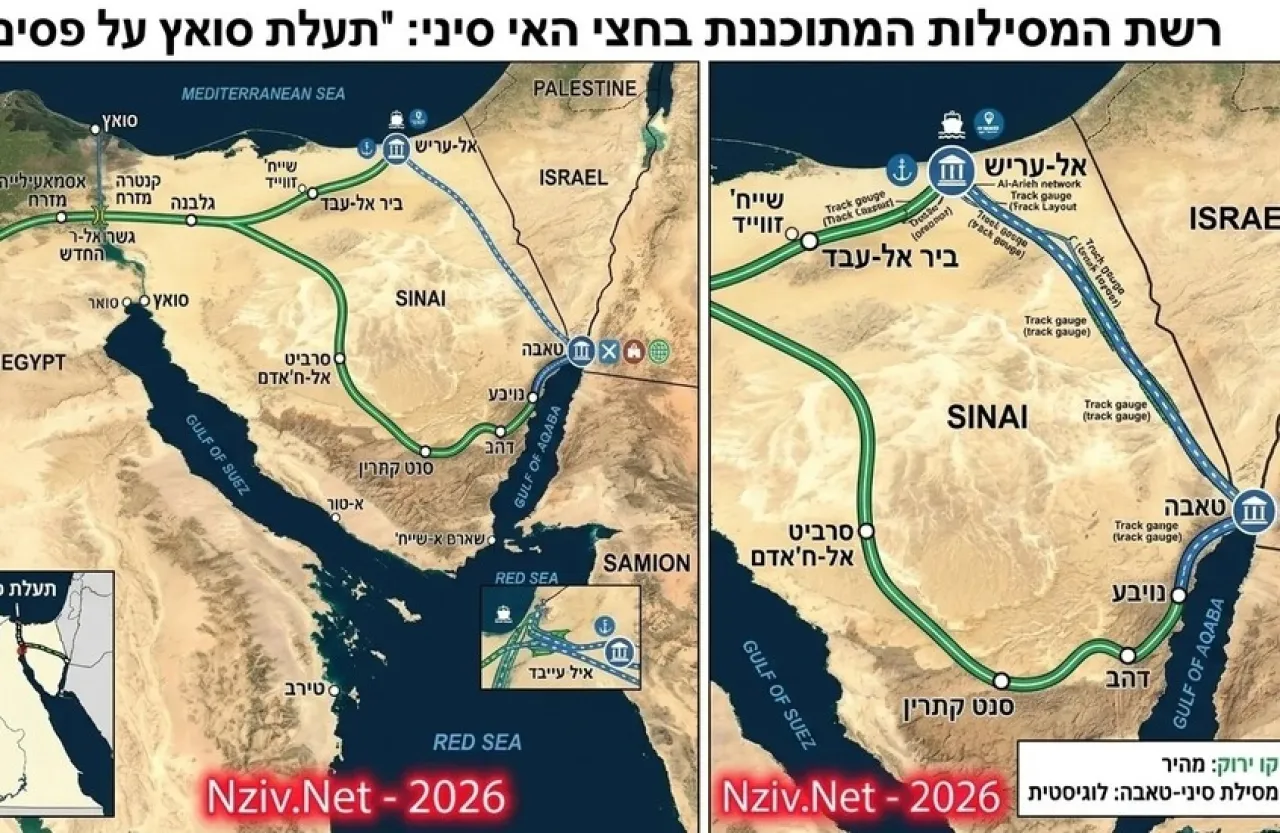
The Israeli platform "Natsiv Net" stated that Egypt is currently presenting an ultra-fast electric train network spanning about 2000 kilometers, sometimes referred to as “the Suez Canal on rails”.
The Hebrew platform added that the project aims to create a fast "land bridge" for goods and passengers between the Red Sea and the Mediterranean, complementing rather than replacing the Suez Canal.
The platform noted that the Egyptian government describes the train as a tool to enhance Egypt's position as a global logistic hub, not as a competitor to the canal.
It pointed out that the train is expected to transport about 15 million tons of goods annually, which represents only 3% of the annual shipping volume that passes through the Suez Canal, with a focus on goods that require an extremely fast transport time of about three hours from one end to the other.
The Hebrew platform added that the network provides a land alternative in case of blockages in the canal, as happened with the Ever Given ship.
It indicated that the route directly connects seaports with logistic centers and industrial areas within the country, enhancing the value of services Egypt provides to global trade.
It noted that Egypt is investing simultaneously with the main fast line in refurbishing and developing the railway network inside the Sinai Peninsula.
It added that in October 2024 a section connecting the Suez Canal area to North Sinai was reopened, after decades of closure.
It mentioned that the plan includes branches for the ports of El-Arish and Port Said East, aiming to transform Sinai into an economic and industrial hub.
It pointed out that the ultimate goal is a line about 500 kilometers long that crosses Sinai and reaches Taba and Nuweiba in the southeast, allowing future connectivity to railway networks in the Gulf and Middle East.
The Hebrew platform added that the project is expected to create 40,000 job opportunities and improve access to 60 cities across Egypt.
It indicated that the project, carried out by the German company Siemens, will reduce carbon emissions by up to 70% compared to road transport.
It pointed out that the project enhances sovereignty and development in Sinai and transforms Egypt into an indispensable transport hub between Europe, Asia, and Africa.
It added that the network consists of three main lines, the most prominent being the Green Line that stretches from Suez to Alexandria and then to Marsa Matrouh.
It noted that the Ain Sokhna station on the Red Sea represents the starting point, while connecting the new administrative capital, Cairo, and Alexandria, ending in Marsa Matrouh near the Libyan border.
It indicated that the Blue Line stretches from Cairo south along the Nile towards Abu Simbel, connecting Luxor and Aswan to the capital with high-speed mainly aimed at tourism and passengers.
It added that the Red Line connects Nile tourism cities like Luxor to the Red Sea ports in Hurghada and Safaga.
The platform noted that Egypt is building parallel to Siemens' high-speed lines the "Taba-El-Arish" logistic corridor.
It pointed out that the project includes developing a deep-water port in El-Arish on the Mediterranean, and the strategic Taba station near the borders with Israel and Jordan, which will serve as a gateway to the Gulf countries.
It is worth mentioning that Egypt is seeking through these massive infrastructure projects to enhance its position as a global logistic hub connecting the three continents, especially after the expansion of the new Suez Canal and the surrounding industrial areas.
These developments come amid increasing regional competition for global trade routes, as countries like Saudi Arabia and the UAE strive to develop alternative transport corridors.
Investment in railway networks reflects Cairo's desire to diversify national income sources and reduce dependence on conventional Suez Canal revenues, at a time when it faces significant economic challenges requiring the attraction of foreign investments and the enhancement of exports.