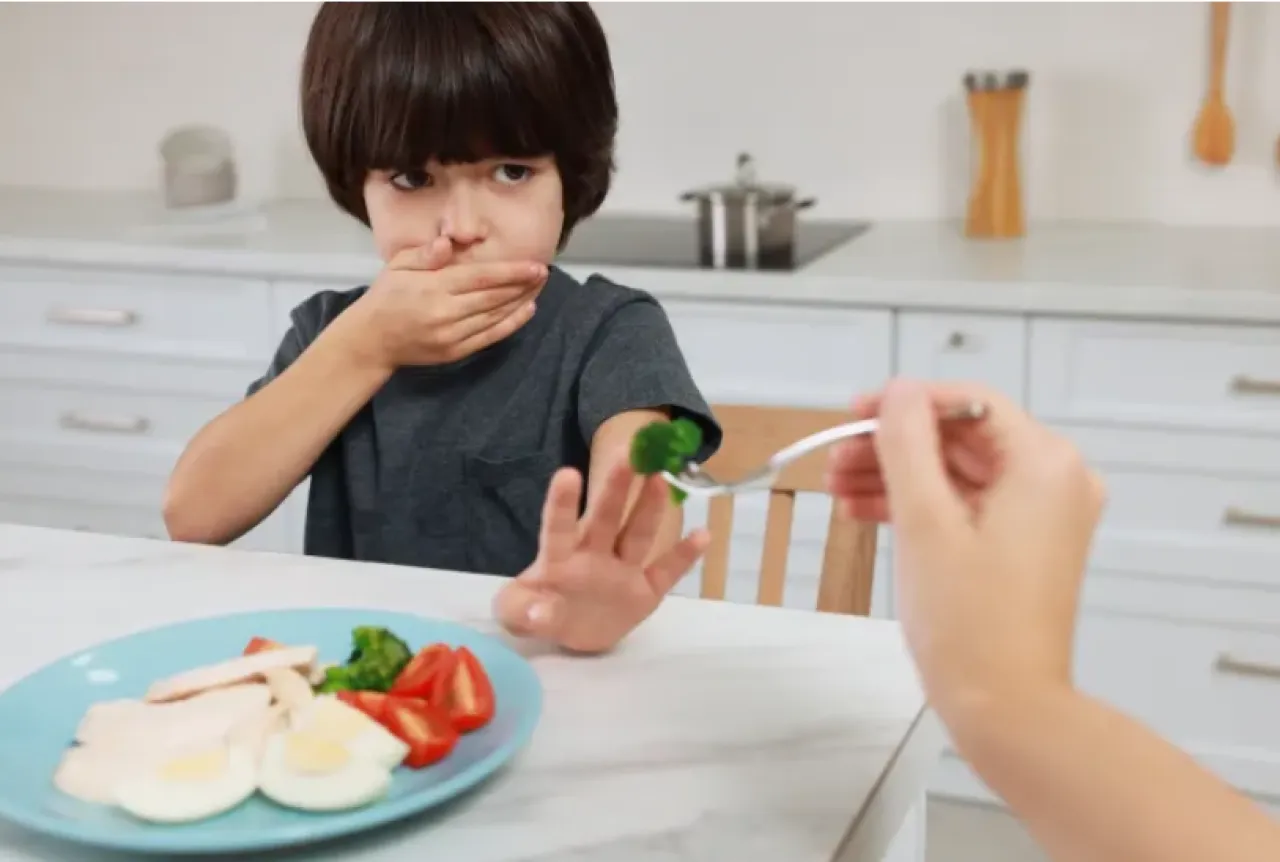
Khaberni - Child rejection of food or a weaker sense of hunger are among the most common complaints in pediatric clinics, often turning mealtime into a source of stress and pressure within the family. Nutrition specialist Jill Cassell explains to The Nourished Child website that this issue represents one of the most challenging burdens for parents, especially when it is linked to concerns about weight loss or dehydration and its impact on a child’s physical growth and development.
The global data reflects the magnitude of this crisis, with about 150 million children under five years old suffering from stunting due to malnutrition, while more than 42 million children face the problem of wasting (severe weight loss) and associated risks of diseases and increased mortality rates. But the question remains: Is a child’s refusal to eat always a concern? And how should it be appropriately addressed? And when is it an indicator of a health problem?
Why does your child refuse food?
According to HealthCare, pediatrician Cindy Gellner notes that appetite loss in children is relatively normal, especially between the ages of one and five years, which is the stage where the growth rate slows down compared to the first year of life.
Despite the frustration and stress this behavior causes the mother after exerting effort in preparing, cooking, and serving the food, it is not a cause for concern as long as the child is healthy and achieving normal growth rates.
Some common reasons include:
Pressure to eat: Forcing the child to finish their meal and constant monitoring can cause anxiety and lead them to refuse food.
Boredom with repetition: Serving the same foods repeatedly can cause the child to lose interest in them, even if they like them.
Not feeling hungry: Children’s appetites at this stage are fluctuating and unstable.
Excessive snacking: Eating snacks reduces the child’s interest in main meals.
Picky eating: Some children tend to prefer certain foods and reject others, as part of their personal makeup.
How do you enhance your child’s appetite?
If there is no health problem behind your child’s food selection, you can follow a number of effective strategies to enhance their relationship with eating:
1- Create a positive environment during meals
A Canadian study conducted in 2015 showed that children eating meals in a positive family atmosphere enhances self-confidence and improves their relationship with food. To achieve this, it is necessary:
Maintain fixed meal times to enhance the child's sense of stability.
Reduce distractions by keeping away toys and electronic devices and turning off the TV during meals to enhance the child's focus on eating.
Make mealtime enjoyable through playful atmospheres like pretend play or adding a comedic touch by making vegetables talk, or composing funny songs about food, while avoiding pressure on the child to finish their plate.
2- Involve the child in food preparation
Allow your child to help you with simple tasks like washing vegetables or mixing ingredients or setting the table, this can make them more open to trying and eating different foods.
3- Serve appropriate amounts
The American Academy of Family Physicians recommends serving one tablespoon of each type of food per year of the child’s age, for example, if they are 3 years old, serve them 3 tablespoons of each type, giving them the opportunity to ask for more without feeling pressured.
4- Introduce new foods gradually
The child may need to repeat the experience of new food between 10 to 15 times before accepting it, so it’s important to be patient and not show annoyance.
You can enhance these foods with flavors familiar to your child, such as adding a little cheese or spices or serving them with beloved additions, like serving cauliflower with ketchup or putting arugula on pizza, while ensuring to present new foods clearly and not hiding them to maintain trust between you and your child.
5- Make food attractive
Try presenting food in an innovative way such as cutting fruits and vegetables into smiling faces to attract the child’s attention and encourage them to taste.