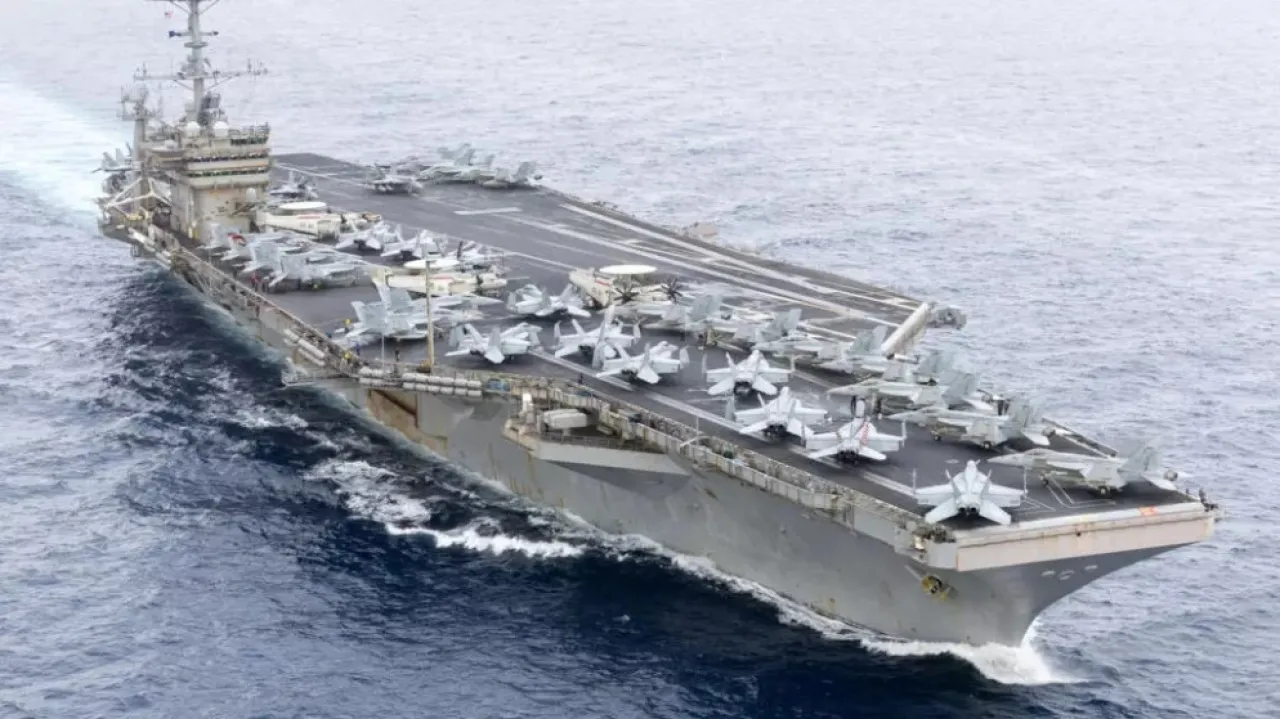
Khaberni - The Wall Street Journal reported on Tuesday, citing U.S. officials, that President Donald Trump has issued instructions to his aides to prepare for imposing a prolonged blockade on Iran.
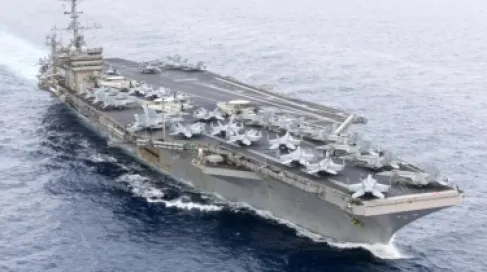
The report stated that Trump, in recent meetings, preferred to continue pressuring the Iranian economy and oil exports by preventing shipments to and from its ports, and believes the other options, including resuming bombing or withdrawing from the conflict, involve greater risks than maintaining the blockade.
Reuters has not yet been able to verify the authenticity of the report.
On Tuesday, the United States said it was considering the latest Iranian proposals concerning the reopening of the Strait of Hormuz, two months after the outbreak of the war that is pressuring the global economy.
White House spokeswoman Carola Levy mentioned that Washington is studying a new Iranian proposal, following media reports about a new offer presented by Tehran through Pakistani mediators.
However, mediations and negotiations have not led to a final cessation of the war and reopening of the Strait of Hormuz, despite a cease-fire that has been in effect for about three weeks.
According to Axios, Tehran has presented a new offer that involves opening the strait with a postponement of negotiations on the nuclear issue, information reported by the Iranian news agency IRNA without commenting on it.
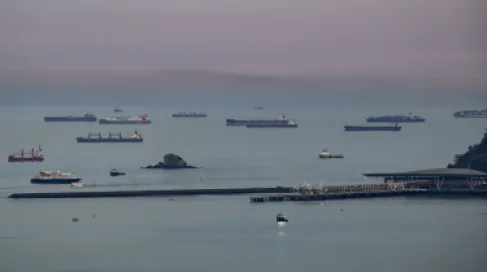
Under normal circumstances, one-fifth of the world's oil and liquefied gas production passes through the Strait of Hormuz, but it is currently subject to a dual Iranian and American blockade.
Foreign Minister Marco Rubio said, "It is clear that we will not negotiate through the media," but he described the Iranian offer as "better than we expected them to present."
He added, "We must ensure that any agreement we reach permanently prevents them from possessing nuclear weapons at any time."
After the United States canceled a second round of negotiations in Pakistan, Iranian Foreign Minister Abbas Araghchi conducted a series of intense diplomatic visits and contacts, the last of which was a visit to Russia on Monday where he met President Vladimir Putin.
Araghchi attributed the failure of negotiations with Washington to "excessive demands" from the American side, emphasizing that despite thousands of airstrikes received and the current blockade on its ports, his country remains resilient.
Putin affirmed that Russia, one of Iran's major supporters, will make every effort to achieve peace as soon as possible.
On Monday, the Iranian ambassador to the United Nations, Amir Saeid Iravani, said that Tehran needs guarantees against another American-Israeli attack before it can stabilize the Gulf region.
The Iranian ambassador's words came in a meeting of the UN Security Council where dozens of countries condemned the closure of the Strait of Hormuz.
The Iranian parliament is working on drafting a law that would place the strait under the authority of the armed forces.
According to this bill, Israeli ships would be prohibited from passing, and transit fees must be paid in Iranian Rial.
In response, Marco Rubio told Fox News, "Iranians cannot be allowed to establish a regime where they decide who can use an international waterway and how much they must pay for it."