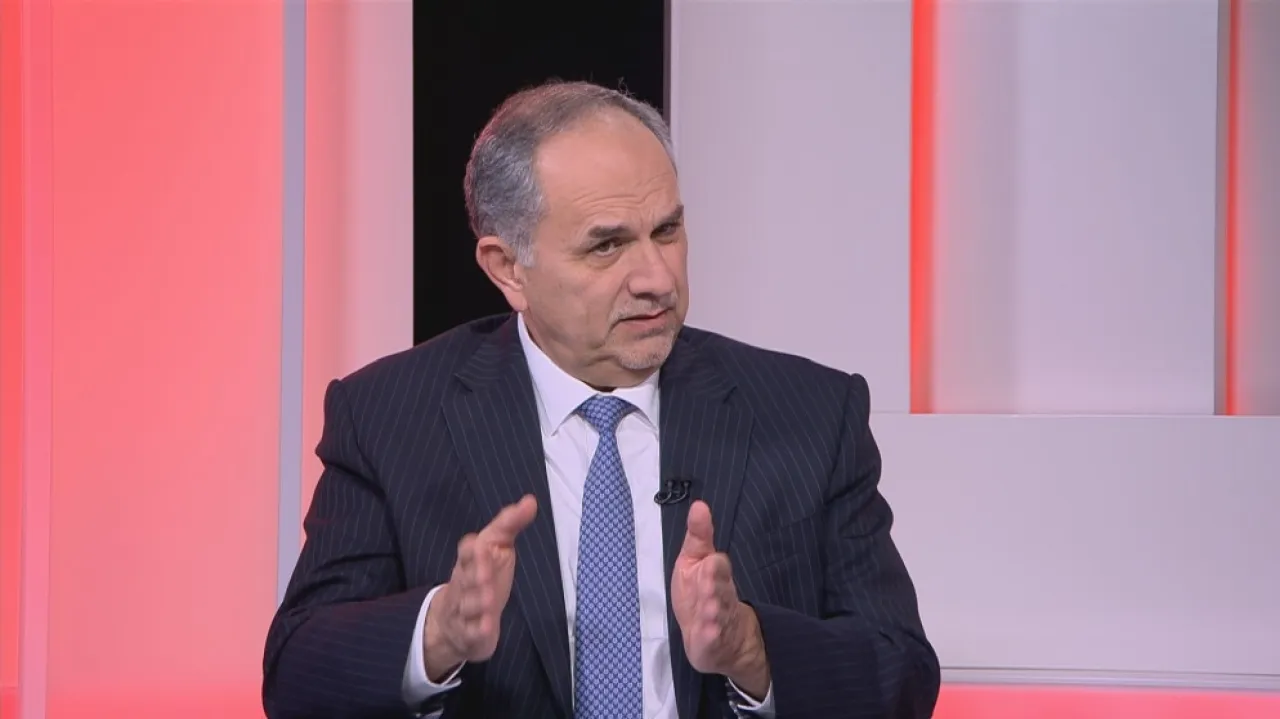
Khaberni - The Minister of Justice, Bassam Al-Talhouni, confirmed on Tuesday that within a year and a half, all services of the Ministry of Justice will be 100% automated.
He added, in his talk for the "Voice of the Kingdom" program, that the current rate achieved by the ministry is 80%.
In his discussion about the notary services, Al-Talhouni said that citizens can currently benefit from electronic notary services without going to a notary, explaining that the service requires conducting a remote call, which necessitates the availability of a digital identity to verify the identity of the service requester.
He added that the call during the service is recorded via video and kept preserved for reference upon request, indicating a partnership with the Ministry of Digital Economy.
He mentioned that there are 100 notaries in Jordan, clarifying that the service is provided in both traditional and electronic forms.
He pointed out that the requirement for notaries to be confined to a specific location has been abolished, allowing citizens to process their transactions anywhere within Jordan.
Al-Talhouni emphasized that any electronic service offered is cyber-checked by the National Cyber Security Center to ensure there are no vulnerabilities.
In his talk about electronic services, he pointed out that lawyers can submit notifications electronically.
Al-Talhouni added that the signature is done through the government application "Sanad".
He explained that vehicles can currently be sold electronically (remotely).
When asked about artificial intelligence and whether it could replace lawyers in the future, he said that artificial intelligence might replace lawyers in some transactions.
He continued: "There is a challenge that we are aware of as a ministry, lawyers, judiciary, and other related entities."
The Minister of Justice, Bassam Al-Talhouni, and the Minister of Digital Economy and Entrepreneurship, Sami Samirat, launched the electronic notary services on Tuesday, in a step aimed at developing the justice system and enhancing the efficiency of the services provided to citizens, in line with the directions of administrative modernization and digital transformation in the Kingdom.
The Cabinet approved on April 14, 2026, the Notary Transactions Fee System for the year 2026, which offers reduced fees for electronic payments, and the use of electronic means in notary transactions for the year 2026.
The system stipulates a fee reduction in case of resorting to electronic notary services, in order to encourage citizens to use digital services, noting that the same fees apply if reviewing the notary in person.
The differences between the two types of fees range from 25% to 40%, resulting from saving costs related to traditional services such as the use of paper and ink, the use of buildings, and saving energy costs, in addition to reducing congestions and facilitating and speeding up procedures for the citizen.
This comes in implementation of the provisions of the Notary Law, which allows the use of electronic and audiovisual communication means in the tasks and competencies carried out by the notary.
It also regulates procedures in case these means are used when completing notary transactions, with the aim of aligning transaction fees provisions with economic and legislative developments, and ensuring they match the nature of the services provided and the sustainability of financial resources associated with justice services, supporting principles of governance.
They support the digital transformation processes in notary services by enabling the electronic payment of fees and offering reduced fees for electronic payments, facilitating for citizens, and linking them to related government systems, which contributes to speeding up transaction completions and developing the services provided to citizens.