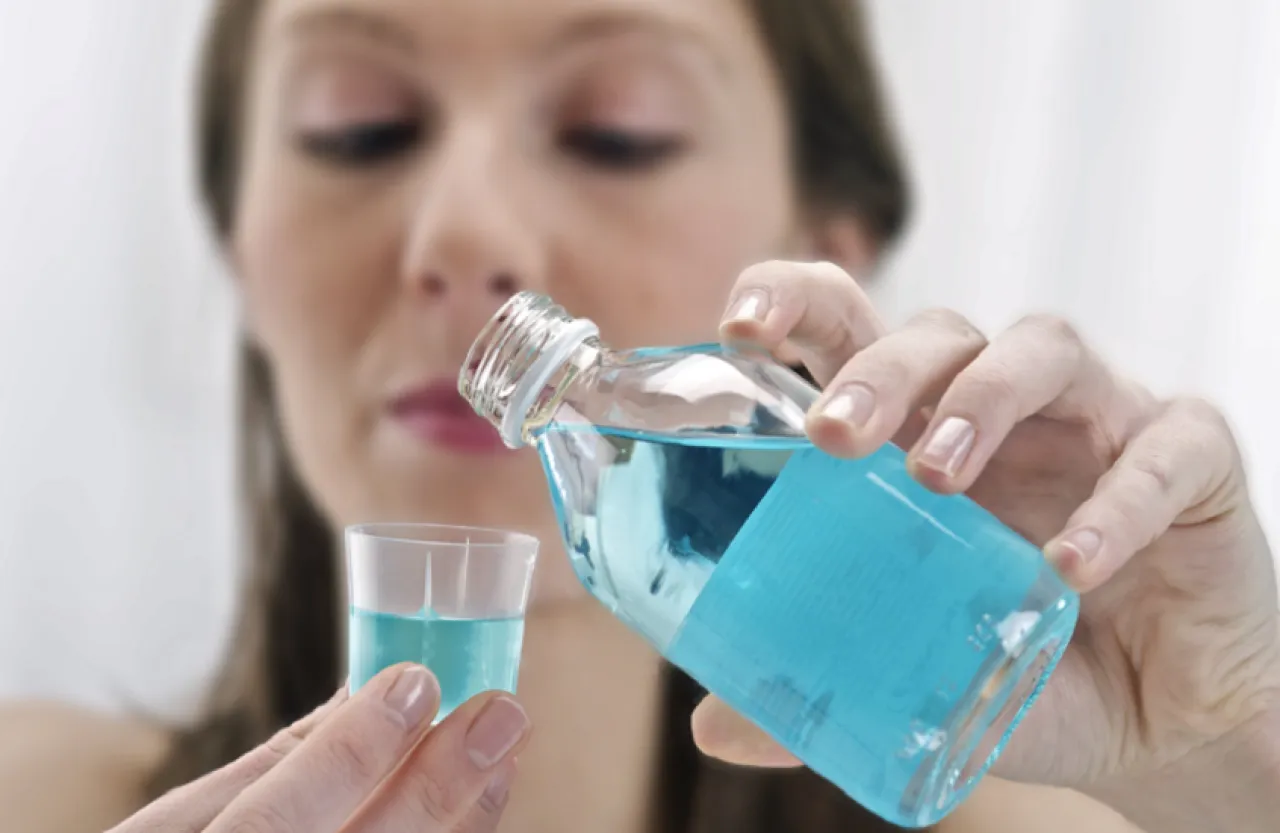
Khaberni - Videos on social media are spreading, warning that using mouthwash could increase the risk of high blood pressure and harm heart health because it kills the "beneficial" bacteria in the mouth.
Although this message sounds scary, the truth is more complex than these short clips suggest, and it does not lead to the final disposal of mouthwash.
Our mouths contain over 700 types of bacteria, present on the hard surfaces of the teeth and in the soft tissues of the oral mucosa, which together form a balanced microbiome. These bacteria help prevent the growth of harmful bacteria, support normal body functions, and contribute to oral and overall body health.
One of the most important roles of these bacteria is converting "nitrates" found in food, especially leafy vegetables, into "nitrites".
When we swallow nitrite, the body converts it into nitric oxide, a substance that plays a crucial role in regulating blood pressure and supporting brain and muscle functions. Therefore, anything that affects beneficial bacteria could impact nitric oxide production.
Several small studies have found that using mouthwash can alter the balance of bacteria in the mouth, reducing their ability to convert nitrates to nitrites.
In a study involving 19 healthy volunteers, using a mouthwash containing "chlorhexidine" for seven days led to a slight increase in blood pressure and decreased nitrite levels.
Another study on 27 healthy adults reported that rinsing twice daily with one type of strong mouthwash for a week significantly increased blood pressure.
In a third trial on 15 adults who already suffered from high blood pressure, using the same type of mouthwash for three days increased their blood pressure.
However, an important detail that the viral video clips may overlook is that most of these studies used a potent type of mouthwash called "chlorhexidine". This type is not for everyday use but is typically prescribed for gum patients or after oral surgery and is recommended only for short-term use. This means the results may not apply to the lighter mouthwashes that most people buy from stores.
Another study involving 12 adults compared the effects of three types of mouthwash, showing that both water and a mild non-harsh mouthwash caused a normal conversion of nitrates to nitrites, while a mouthwash containing "cetylpyridinium chloride" (a strong antibacterial compound) partially inhibited the process, and chlorhexidine (the strongest) nearly completely stopped the process. The stronger types of mouthwash were also associated with an increase in systolic blood pressure.
Alcohol, another common ingredient in many mouthwashes and being antimicrobial, may affect oral bacteria. Some studies have suggested a potential link between alcohol-containing mouthwashes and an increased risk of mouth cancer, but there are not enough studies about their direct impact on heart health.
Conversely, long-term studies point to a different result. In a study lasting 19 years involving 354 adults, good oral hygiene practices such as brushing teeth and flossing were linked to a reduced risk of dying from heart disease. However, the regular use of mouthwash showed no effect on heart health, irrespective of whether it was mild or strong, including mild mouthwashes that contain fluoride and alcohol, as well as strong types like chlorhexidine.
In conclusion, the type of mouthwash is very important, as strong types like chlorhexidine could disrupt beneficial bacteria if used for a long period and thus are reserved for short-term use when needed for gum patients or mouth infections. Lighter, alcohol-free mouthwashes with gentle ingredients seem safer and do not significantly affect the nitrate conversion process or blood pressure.
However, even with lighter mouthwashes, attention must be paid to their ingredients, as even alcohol-free options may contain antibacterial agents like cetylpyridinium chloride. Therefore, it is best to choose a mouthwash that suits your needs and use it in moderation, with the reminder that basic oral hygiene practices like brushing, flossing, and visiting the dentist are far more important than relying on mouthwash.