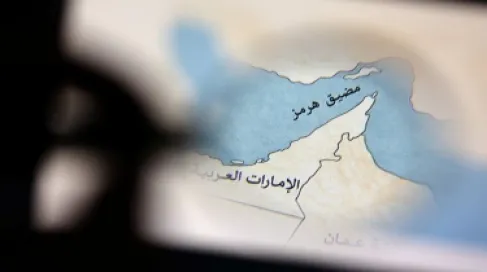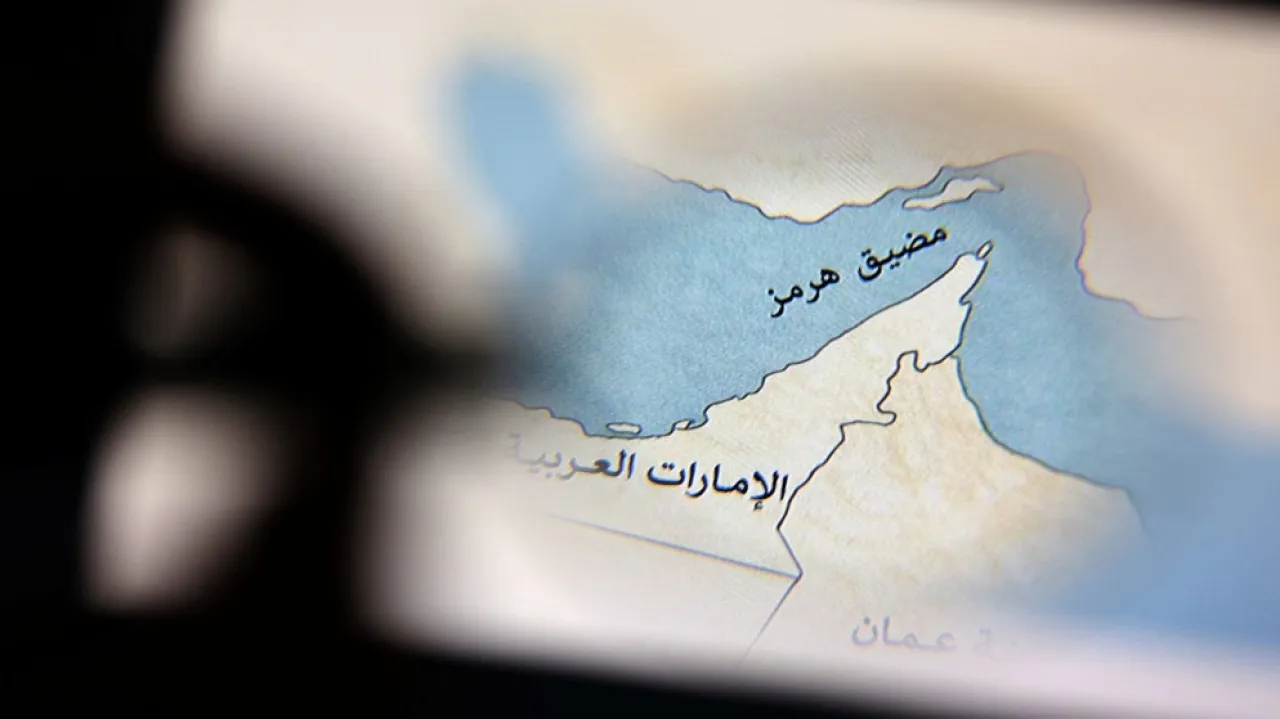
Khaberni - On Monday, the Secretary-General of the United Nations International Maritime Organization, Arsenio Dominguez, reaffirmed there is no "legal basis" for imposing a transit fee in the Strait of Hormuz, after Tehran announced its intention to implement this measure.
Dominguez said at a press conference in London, "There is no legal basis for imposing any tax, customs fees, or charges on straits used for international navigation."
Earlier on Monday, an Iranian official announced that the Iranian Armed Forces would be responsible for the Strait of Hormuz under the proposed bill for managing this strategic navigational passage.
The head of the National Security Committee in the Council of Shora concerned with studying the bill, Ibrahim Azizi, told state television that the Armed Forces would control the strait to particularly prevent the passage of "hostile ships."
The bill also stipulates that transit fees should be paid in the local currency, the Iranian Rial.
Dominguez, who was speaking on the sidelines of a meeting for the Marine Environment Protection Committee at the International Maritime Organization, mentioned he is interacting with "all countries in the region," including Iran.
He expressed his strong rejection of the possibility of including any settlement to reopen the Strait of Hormuz involving any kind of fees.
He emphasized that implementing the plan committed to by the International Maritime Organization to evacuate 20,000 stranded sailors on about 1,600 ships in the Gulf would only be possible after the passage is completely secured, considering that this would not be achievable if transit fees were imposed.
Since the beginning of the war in the Middle East on February 28, with American-Israeli strikes on Iran, Tehran has controlled traffic in the Strait of Hormuz and disrupted it.
In response, the United States imposed a naval blockade on the Iranian ports.
With the truce between Washington and Tehran in effect since April 8, tensions now focus on this strategic passage through which normally passes about one-fifth of the world's crude oil and liquefied natural gas.