Khaberni - A European study confirmed that the body does not respond well to remaining in a fixed position for long periods, and that continuing in one position for extended periods may lead to disorders in the musculoskeletal system.
We often hear the saying "sitting is the new smoking." Although this statement is eye-catching and reflects a real problem, it is an oversimplification. If sitting were always the worst, then standing alone would suffice to solve the problem, but reality is more complicated.
For millions of people, standing is not a healthy option, but a professional necessity, as workers in hospitals, factories, teachers, salespeople, and hairdressers stand for long hours, which also negatively affects their health.
A recent study showed that musculoskeletal disorders are among the most common health problems in workplaces in Europe, including back, neck, shoulder, leg, and foot pain.
So, is it better to work sitting or standing?
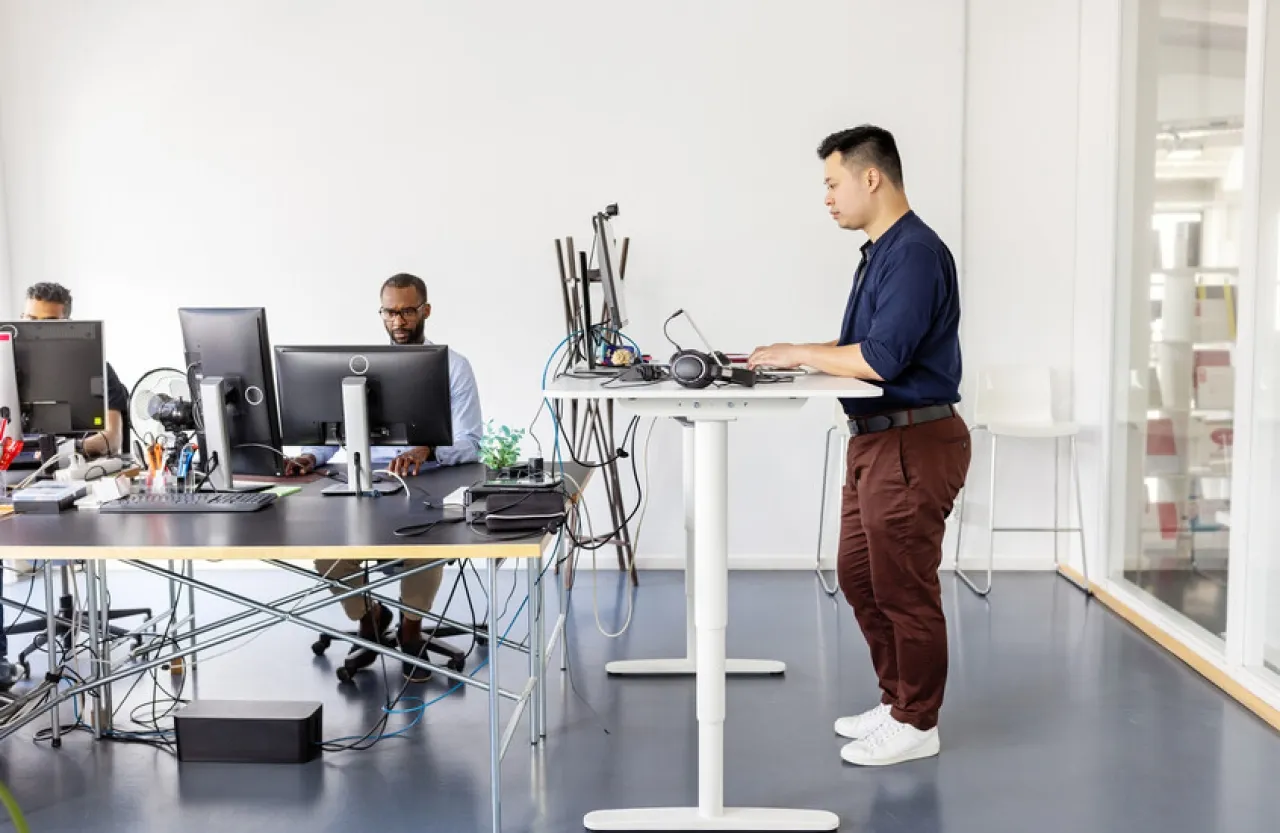
Actually, the question may not be accurate, as the problem does not lie in the posture itself, but in the duration of staying in it and the level of movement during the day. Sitting for long periods causes problems in the lower back, neck, and shoulders, while prolonged standing is associated with fatigue and pain in the lower back and increased pressure on the legs and feet. The difference lies in the type of pain, but the result is the same: both are harmful if continued for a long period.
The study confirms that staying in any fixed position for extended periods harms the body, and the solution lies in changing postures and regular movement throughout the workday.
When talking about work-related pain, the focus is often on the back, but the truth is that the problem starts from the feet, as they are the mechanical basis of the body, bearing the weight, distributing pressure, and transferring it through the joints to the spine. When they undergo long stress without rest, the rest of the body is affected.
A study on assembly line workers showed that standing all day leads to changes in body posture and pressure distribution on the soles of the feet, in addition to recurring pain in the lower back, knees, and feet.
It is notable that the response of the feet varies from one person to another, which explains the variation in pain sensations despite similar work conditions.
As for the solution, the European Agency for Safety and Health at Work recommends varying postures, increasing movement, and reducing the time spent in any fixed posture.
Despite the availability of solutions like adjustable desks and comfortable chairs, they do not replace the essentials, which are: taking short and regular rest breaks, improving the work environment, wearing suitable shoes, and engaging in physical activity.